
Paraná (state) — Southern Brazil: geography, history and culture
Overview of Paraná, a Southern Brazilian state: geography, borders, history of settlement, demographic groups, economy, key landmarks such as Iguaçu Falls and Itaipu Dam, and cultural notes.
Paraná is a state in the south of Brazil known for a varied landscape that includes Atlantic coastlines, rolling plateaus and important river systems. Its capital, Curitiba, is a major cultural and administrative center. Paraná attracts attention for two internationally famous engineering and natural landmarks: the Itaipu Dam and the Iguaçu (Iguazu) Falls, which together draw tourists and support regional energy and conservation efforts.
Image gallery
10 Images




Geography and environment
Paraná occupies a transitional zone between Brazil's tropical interior and temperate southern latitudes. It is bounded by neighboring states and countries: to the north by São Paulo, to the east by the Atlantic Ocean, to the south by Santa Catarina and Argentina's Misiones province, and to the west by Mato Grosso do Sul and the nation of Paraguay. The Paraná River defines much of the western frontier and shapes local riverine ecosystems. The state's interior includes highlands and plateaus, with remnants of the Atlantic Forest and areas of agricultural development. Climate varies from humid subtropical on the coast to milder conditions inland.
History and settlement
The territory was long inhabited by indigenous peoples before European contact. Portuguese colonization and later national developments integrated the region into Brazil's economy. From the mid-19th century onward Paraná experienced significant immigration from Europe: waves of Germans, Italians, Poles and Ukrainians arrived after 1850, bringing agricultural techniques, languages and settlement patterns that influenced towns and rural life. These immigration flows, combined with domestic migration from other Brazilian regions, helped transform Paraná's demographic and economic profile.
Population and culture
Paraná is ethnically diverse. Descendants of European settlers are prominent, especially in certain municipalities: Polish heritage is noticeable in central and southern areas; Italian communities are common in Curitiba and along parts of the coast; Ukrainian communities are concentrated in towns such as Prudentópolis; German influence appears in towns like Rolândia. There are also substantial Portuguese-descended populations and sizable communities of Middle Eastern origin — Lebanese and Syrian families are notable around Foz do Iguaçu — as well as Japanese migrants and their descendants in several northern valleys. This mix has produced a rich cultural landscape expressed in regional cuisine, religious festivals, music and local celebrations.
Economy, infrastructure and landmarks
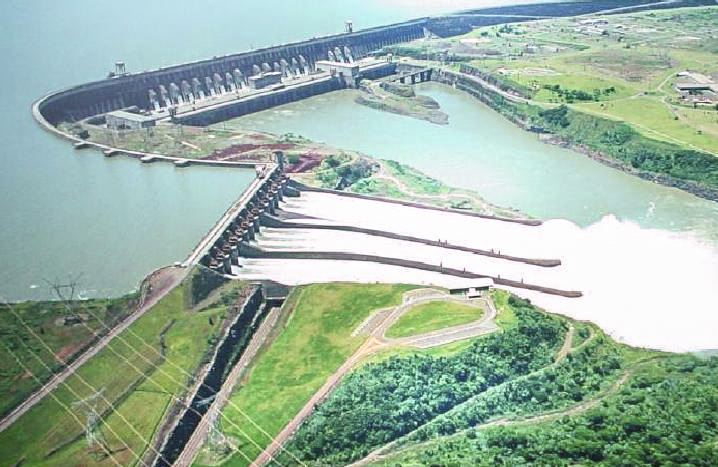
Agriculture remains a backbone of the state's economy, with major crops and livestock farming alongside agribusiness and food processing. Industry, commerce and services are concentrated in urban centers such as Curitiba, Londrina, Maringá and Cascavel. Hydroelectric power is a critical asset: the Itaipu Dam, shared with Paraguay, is one of the largest in the world by generation capacity. Tourism is driven by natural attractions, especially the Iguaçu Falls, which form part of a transnational park and draw international visitors. Transport links include highways, regional airports and river access that support trade with neighboring provinces and countries.
Distinctive features and conservation
Paraná conserves fragments of the Atlantic Forest biome, which host high biodiversity and endemic species but face pressures from development and farming. Conservation units, parks and cross-border initiatives aim to protect waterways, forest remnants and wildlife corridors. The state's cultural pluralism, strategic location on the Mercosur frontier and mix of modern cities and agricultural landscapes make it a distinctive part of Brazil's southern region.
Further links and resources
- Official state overview
- Paraguay (neighbor)
- Argentina (neighbor)
- Curitiba (capital)
- Curitiba: urban profile
- Itaipu Dam information
- Iguaçu Falls and park
- Northern Paraná region
- São Paulo (neighbor)
- Atlantic coast and beaches
- Southern border notes
- Santa Catarina (neighbor)
- Misiones Province (Argentina)
- Mato Grosso do Sul (neighbor)
- Paraná River basin
- Western boundary details
- European colonization in Paraná
- Demographic overview
- 19th-century immigration
- German communities
- Italian heritage
- Polish settlement
- Ukrainian communities
- Rio Grande do Sul connections
- Coastal towns and ports
- Municipal development
- Portuguese influence
- Mixed-race populations
- Foz do Iguaçu community
- Japanese immigration
Questions and answers
Q: What is the capital of Paraná?
A: The capital of Paraná is Curitiba.
Q: What are the borders of Paraná?
A: Paraná is bounded on the north by São Paulo, on the east by the Atlantic Ocean, on the south by Santa Catarina and the Misiones Province of Argentina, and on the west by Mato Grosso do Sul and the republic of Paraguay, with the Paraná River as its western boundary line.
Q: When did European colonization start in Paraná?
A: Waves of European immigrants started arriving after 1850.
Q: Who were some of these immigrants?
A: These immigrants included Germans, Italians, Poles and Ukrainians.
Q: What ethnicities predominate in different parts of Paraná?
A: People of Polish descent predominate in central and south regions around Curitiba; Italians predominate in Curitiba and along the coast; people of Ukrainian descent predominate in a few cities such as Prudentópolis; Germans predominate in a few cities such as Rolândia; almost all towns have many Portuguese people and their descendants; people with mixed-race ancestry predominate in a few towns in north; there is an important Muslim Lebanese and Syrian community around Foz do Iguaçu; there are many Japanese people living in northern part.
Q: What are some famous attractions located within Paraná?
A: Some famous attractions located within Paraná include Itaipu Dam and Iguaçu Falls.
Q: What are some main cities located within this state?
A:Some main cities located within this state include Curitiba, Prudentópolis, Rolândia, Foz do Iguaçu, among others.
Related articles
Author
AlegsaOnline.com Paraná (state) — Southern Brazil: geography, history and culture Leandro Alegsa
URL: https://en.alegsaonline.com/art/74563
Sources
- ibge.gov.br : ibge.gov.br/