
Paramecium: a common ciliate protist
Paramecium is a freshwater ciliate genus of single-celled organisms known for ciliary locomotion, visible macronucleus and micronucleus, osmoregulation, and roles in ecology and cell biology research.
Overview
Paramecium is a well-known genus of single-celled eukaryotes in the group commonly called protists. Members of this genus belong to the ciliates, a lineage defined by hairlike organelles called cilia that cover much of their surface and drive both feeding and locomotion. Individual Paramecium cells are typically visible under a light microscope and range widely in size among species; they are found chiefly in freshwater habitats where they graze on bacteria and small eukaryotic microbes.
Image gallery
6 Images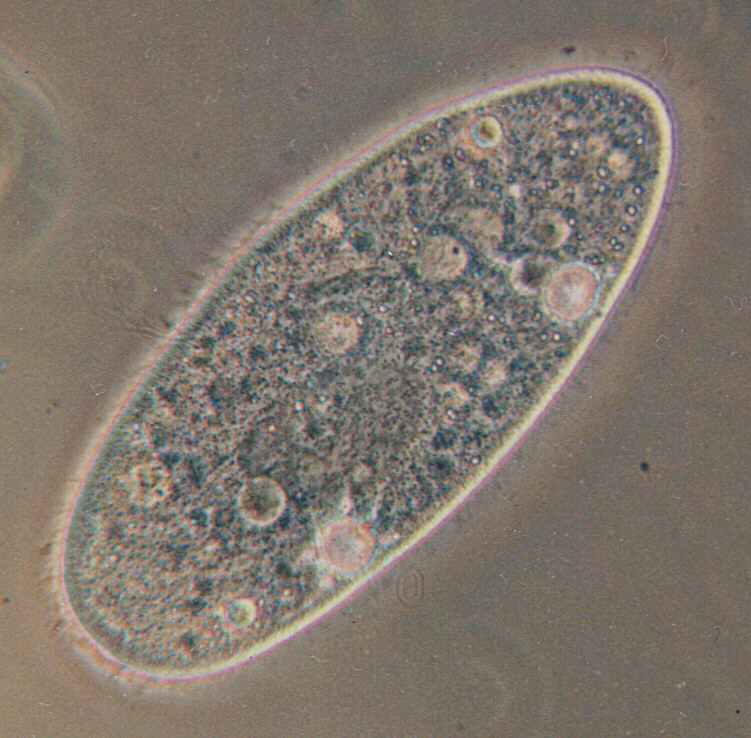



Structure and movement
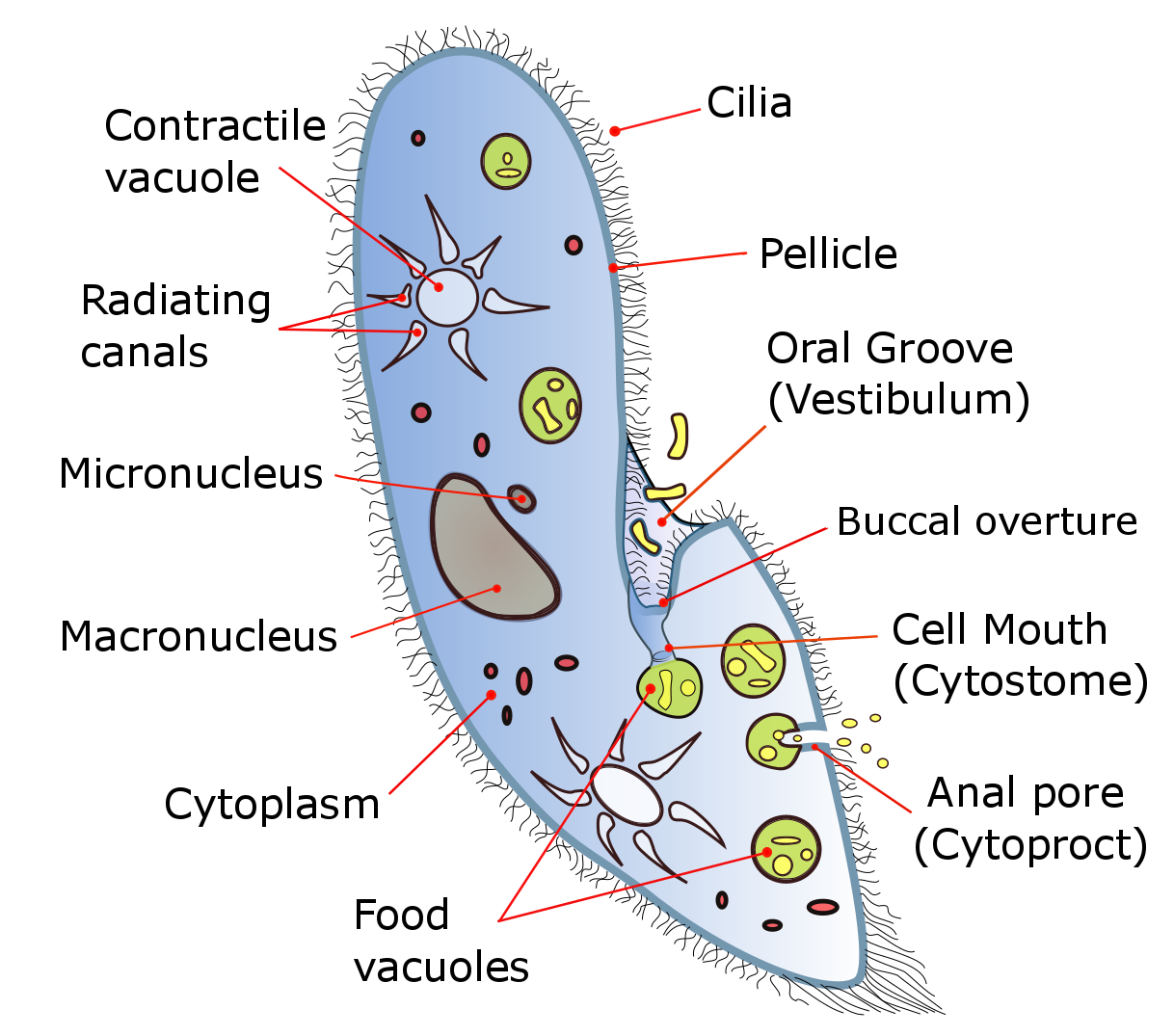
Paramecia have a characteristic slipper-shaped body supported by a flexible but firm pellicle. Key structures include:
- an oral groove leading to a cytostome (mouth) used to sweep food into food vacuoles;
- contractile vacuoles that expel excess water and help maintain osmotic balance;
- a large macronucleus controlling everyday cell functions and one or more small micronuclei involved in genetic exchange;
- trichocysts and other secretory organelles that can discharge for defense or anchoring.
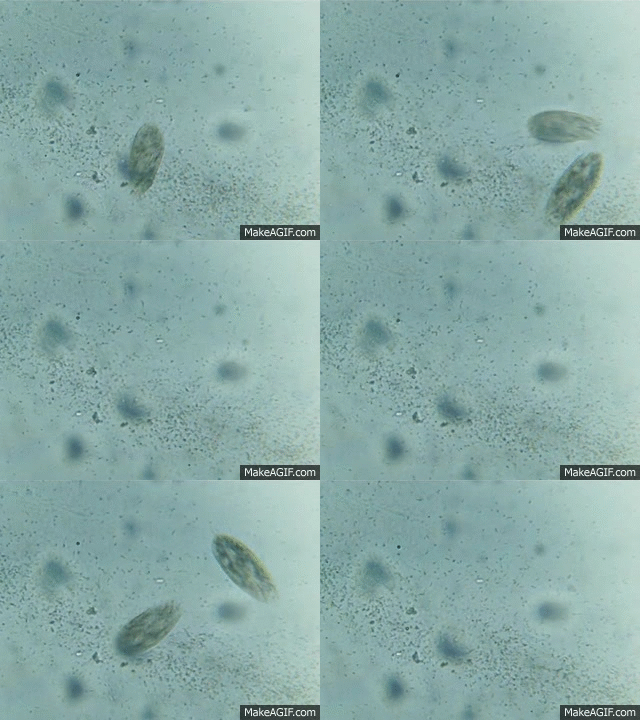
The coordinated beating of thousands of cilia produces propulsion and also creates feeding currents. Ciliary action makes Paramecium a classical model for studying cellular motility and the physiology of cilia.
Reproduction and life cycle
Paramecium reproduce asexually by binary fission, producing genetically identical daughter cells under favorable conditions. They also undergo a form of sexual exchange called conjugation in which two cells pair and swap micronuclei; conjugation increases genetic diversity without increasing population size. Food availability, temperature, and other environmental cues influence life-cycle transitions.
Ecology, uses and relationships
In ponds and freshwater sediments Paramecium are important consumers of bacteria and small algae, helping to recycle nutrients. Some species form intimate associations with bacteria (symbionts) or with green algae; for example, certain Paramecium host photosynthetic algal partners that supplement nutrition. Because they are easy to culture and observe, Paramecia are widely used in education and in laboratory studies of cell biology, toxicity testing, and host–microbe interactions (algae and protists are common prey).
History and scientific significance
Microscopists noticed Paramecium soon after microscopes were developed, and the genus has been a standard organism for describing ciliate anatomy and behavior. Modern research uses Paramecium to investigate the genetics of cilia, intracellular trafficking, and genome organization. The genus name and taxonomic placement as a genus within the ciliate phylum reflect this long history of study and classification (cilia remain central to its identity).
Paramecium illustrates how a single-celled organism can display complex behavior, cellular differentiation, and ecological importance, making it a continuing focus for both classroom teaching and research.
Questions and answers
Q: What is Paramecium?
A: Paramecium is a genus of protists that move using cilia and typically feed on bacteria and other protists.
Q: What are ciliates?
A: Ciliates are a clade of protists that move using waves of cilia, which are tiny projections from their cuticle.
Q: How do Paramecium move?
A: Paramecium move using synchronous waves of cilia.
Q: What is the range of length for Paramecium species?
A: Paramecium species range in length from 50 to 350 μm.
Q: Where do Paramecium live?
A: Paramecium live in freshwater ponds.
Q: What do Paramecium typically eat?
A: Paramecium typically eat bacteria and other protists such as single-celled algae.
Q: Do Paramecium species have symbiotic relationships with other organisms?
A: Yes, Paramecium species usually have bacterial symbionts, and some species have green algal symbionts.
Related articles
Author
AlegsaOnline.com Paramecium: a common ciliate protist Leandro Alegsa
URL: https://en.alegsaonline.com/art/74545
Sources
- american.edu : Paramacium
- 101science.com : 101 Science.com: Paramecium caudatum
- microscope-microscope.org : Paramecium