
Paper towel
Disposable absorbent sheets made from paper fibers, used for cleaning, drying and hygiene; produced in rolls or sheets and notable for absorbency, convenience and environmental trade-offs.
Overview
Paper towels are single-use absorbent sheets made from paper rather than cloth. They are sold as rolled or folded sheets and designed to soak up liquids quickly. Their ability to capture and retain water and other fluids comes from a porous structure of cellulose fibers that draws moisture into the sheet by capillary action and holds it by adhesion to the fibers.
Image gallery
3 Images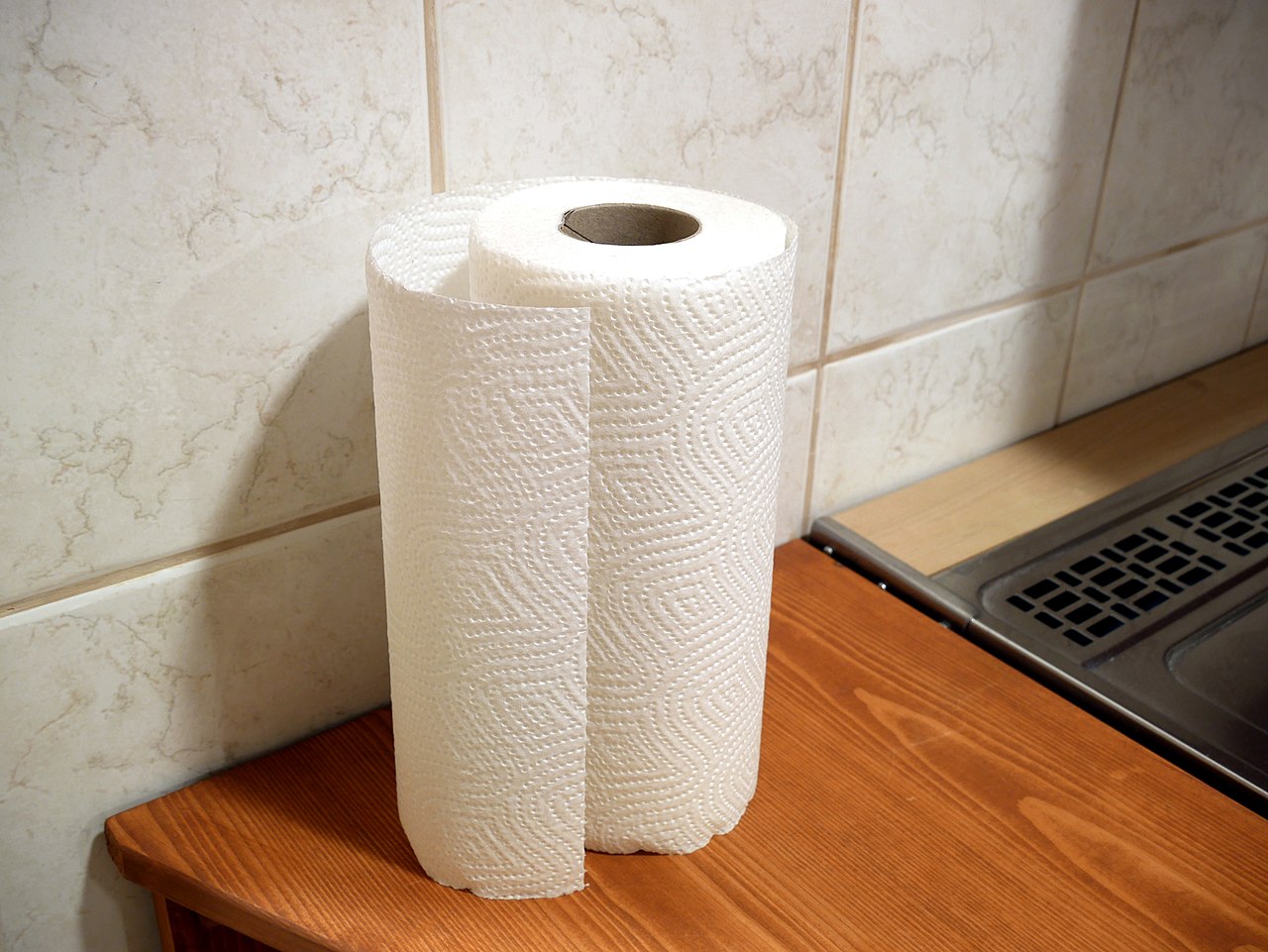

Characteristics and manufacture
Most paper towels are formed from wood pulp or a mix of virgin and recycled fibers. Producers use processes such as creping, embossing and layering (plies) to increase softness, strength and absorbency. Perforations on rolls allow consumers to tear individual sheets; variations include single-ply and multi-ply grades, heavy-duty or kitchen-specific textures, and antimicrobial-treated or compostable options. The typical components and features include:
- Cellulose fiber web that creates capillary channels
- Embossed patterns to improve liquid capture and mechanical strength
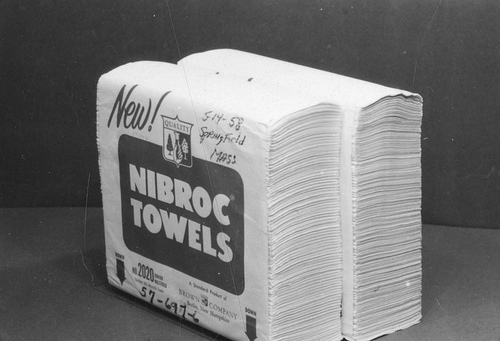
- Perforated rolls, folded dispensers, and packaged sheets for convenience
History and development
Disposable paper tissue products expanded in the 20th century as manufacturers adapted tissue and paper-making technologies for household use. Companies that produced facial tissues and paper products introduced towel formats and marketing geared to kitchens and cleaning. Over time, improvements in pulping, creping and embossing raised absorbency and lowered cost, helping paper towels become a common household and institutional item.
Uses and hygiene
Paper towels are widely used for wiping spills, drying hands, cleaning surfaces, and food preparation tasks where a disposable material is preferred to avoid cross-contamination. In clinical and public washrooms, paper towels are often recommended because they provide physical removal of contaminants. For example, a 2020 study by researchers at the University of Leeds reported that drying hands with paper towels removed more test virus material than using some jet air dryers in a hospital bathroom setting. Such findings are one part of the evidence base used to weigh drying methods for infection control.
Environmental considerations and alternatives
Because they are single-use, paper towels contribute to household and commercial waste. Some are made partly from recycled fiber or certified sustainable sources, and certain products are marketed as compostable if free of heavy inks or chemical treatments. Alternatives include reusable cloth towels, microfiber cloths, and air dryers; each option involves trade-offs between hygiene, energy or water use, and waste. Disposal and recycling guidelines vary by locality, and contaminated towels (for example, heavily soiled with food or chemicals) are often not suitable for recycling but may be accepted by composting programs.
Notable distinctions
Key distinctions among paper towel products include ply count, source of fiber (virgin vs. recycled), embossing pattern, and intended use (kitchen, industrial, medical). Technical terms associated with absorbency—such as capillary action and adhesion—explain why the material performs differently from woven cloths: the paper's loose fiber network draws liquid in and traps it, then the layers and texture determine how much liquid it will hold before leakage.
For basic definitions and materials information see paper and explanations of capillary action and adhesion for readers seeking the underlying physical mechanisms.
Questions and answers
Q: What are paper towels made of?
A: Paper towels are made of absorbent tissue made from paper.
Q: How are paper towels different from cloth towels?
A: Paper towels are disposable and thrown away after use, whereas cloth towels are reusable.
Q: How do paper towels soak up water?
A: Paper towels soak up water via capillary action, where the water travels into the paper due to its loose weave, and adhesion, where the water sticks to the fibers.
Q: What did scientists from the University of Leeds discover about paper towels in 2020?
A: Scientists from the University of Leeds discovered in 2020 that people who dried their hands with paper towels removed more viruses than those who dried their hands with jet air dryers.
Q: Where was the experiment performed to test the effectiveness of paper towels in removing viruses?
A: The experiment was performed in a hospital bathroom.
Q: When are paper towels thrown away?
A: Paper towels are thrown away after use.
Q: What is the advantage of using paper towels?
A: The advantage of using paper towels is that they can effectively remove viruses better than other methods, according to an experiment conducted by the University of Leeds.
Related articles
Author
AlegsaOnline.com Paper towel Leandro Alegsa
URL: https://en.alegsaonline.com/art/74447
Sources
- eurekalert.org : "Small study shows paper towels much more effective at removing viruses than hand dryers"