
Pan Am Flight 759
1982 air disaster: a Pan Am Boeing 727 encountered a microburst after takeoff from New Orleans and crashed into Kenner, killing all on board and several residents; prompted wind‑shear detection and training changes.
Pan Am Flight 759 was a scheduled domestic service that on July 9, 1982 departed Miami and was bound for San Diego with planned stops in New Orleans and Las Vegas. The aircraft, a Boeing 727, lifted from New Orleans shortly after encountering severe convective weather. Moments after takeoff it flew into an intense downdraft known as a microburst, lost aerodynamic lift, and crashed into a residential neighborhood in the suburb of Kenner. All 145 people aboard and eight people on the ground were killed.
Image gallery
4 Images


Flight details and crash sequence
The flight had completed its first segment and was departing the New Orleans airport when storm conditions developed nearby. During climb the airplane experienced a sudden and severe change in wind speed and direction (wind shear) associated with the microburst. The rapid loss of airspeed and lift prevented recovery, and the aircraft struck homes and trees before breaking apart and igniting on impact.
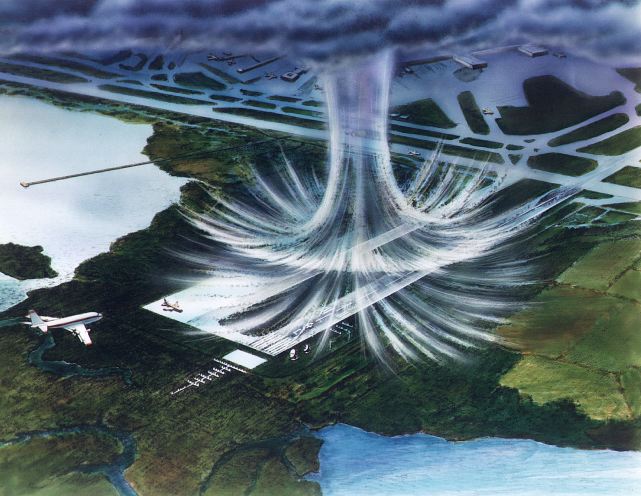
What is a microburst and why it is hazardous
A microburst is a compact, powerful downdraft that spreads outward on reaching the surface, producing strong, localized gust fronts. These events are typically short lived—minutes rather than hours—but can create sudden headwinds followed by tailwinds and rapid reductions in lift for aircraft at low altitude. Because they occur close to the ground and often in convective weather, they are particularly dangerous during takeoff and landing.
Investigation and findings
Investigators concluded that intense wind shear from a microburst caused the airplane to lose airspeed and altitude shortly after liftoff. The accident highlighted limitations in weather detection and the need for improved recognition of wind-shear hazards by crews and air traffic facilities. The formal investigation emphasized the meteorological cause and the operational vulnerability of aircraft during low-altitude flight in convective conditions.
Consequences and legacy
The crash of Flight 759 accelerated changes in aviation safety concerning wind shear: development and deployment of ground‑based wind shear alert systems, improvements in terminal Doppler weather radar, installation of on‑board predictive wind shear and escape guidance systems, and expanded pilot training on recognition and recovery from microbursts. Regulators and airports also revised procedures for monitoring convective activity around departure and arrival corridors.
Key facts
- Date: July 9, 1982.
- Aircraft: Boeing 727 (three‑engine, narrow‑body jet).
- Route: Miami to San Diego via New Orleans and Las Vegas.
- Fatalities: 145 on board and eight on the ground.
- Probable cause: encounter with a microburst‑produced wind shear during takeoff.
Pan Am Flight 759 remains a significant event in U.S. aviation history because it underscored the deadly potential of microbursts and directly influenced technological, procedural, and training responses that have reduced the risk of similar accidents. For further technical background on microbursts and wind‑shear mitigation, see sources on meteorology and aviation safety systems (microburst, Boeing 727).
Questions and answers
Q: What was Pan Am Flight 759?
A: Pan Am Flight 759 was a domestic flight from Miami to San Diego with stopovers at New Orleans and Las Vegas.
Q: What type of plane was used for Pan Am Flight 759?
A: The plane used for Pan Am Flight 759 was a Boeing 727.
Q: How many people were on-board the plane during Pan Am Flight 759?
A: There were 145 people on-board the plane during Pan Am Flight 759.
Q: What happened to Pan Am Flight 759 during takeoff?
A: Pan Am Flight 759 was forced down by a microburst shortly after takeoff.
Q: When did the crash involving Pan Am Flight 759 occur?
A: The crash involving Pan Am Flight 759 occurred on July 9, 1982.
Q: How many people died in the crash of Pan Am Flight 759?
A: All 145 people on-board the plane along with eight more on the ground died in the crash of Pan Am Flight 759.
Q: Where did Pan Am Flight 759 crash?
A: Pan Am Flight 759 crashed into a suburb of Kenner.
Related articles
Author
AlegsaOnline.com Pan Am Flight 759 Leandro Alegsa
URL: https://en.alegsaonline.com/art/74289