
Palpatine (Darth Sidious) — Sith Lord and Emperor of the Galactic Empire
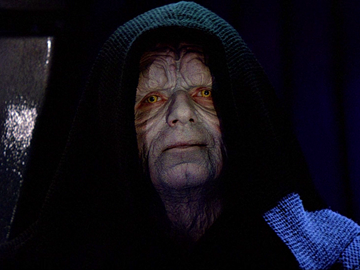
Palpatine, born Sheev Palpatine and also called Darth Sidious, is the central antagonist of the Star Wars saga: a Sith manipulator who rose from senator to Emperor and shaped the galaxy’s fall to tyranny.
Overview
Sheev Palpatine, best known by his Sith name Darth Sidious, is the principal villain of the Star Wars narrative. Introduced on screen as a mysterious political figure and revealed over multiple films to be a masterful practitioner of the dark side of the Force, he engineers the collapse of the democratic Galactic Republic and the creation of the autocratic Galactic Empire. The character appears across the Skywalker saga and extended media and is portrayed in the films by Ian McDiarmid.
Image gallery
10 Images



Character and abilities
Palpatine is depicted as both a skilled politician and a powerful Sith Lord. His public persona is that of a calm, persuasive senator and later a statesman, while his hidden identity relies on secrecy, manipulation and mastery of dark side techniques. Cinematically notable powers associated with him include the ability to manipulate minds, enhanced lightsaber combat when required, and the dramatic use of Force lightning — a crackling, destructive energy often shown as a blue‑purple discharge. These abilities underline his role as a charismatic strategist who combines political cunning with lethal supernatural force.
Rise to power
In the storyline, Palpatine begins as a senator from Naboo who exploits periods of crisis to expand his influence. He creates and amplifies political conflict behind the scenes so that he can be granted exceptional authority by the legislative body he aims to dominate. Over successive episodes he recruits and discards apprentices among the Sith (notably Darth Maul and Count Dooku), manipulates military forces, and ultimately transforms the Republic into the Empire while assuming the title of Emperor.
Major events and relationships
- His early machinations contribute to the blockade of Naboo and the rise of political crises used to justify emergency powers.
- He orchestrates the Clone Wars through covert influence and the leadership of separatist figures, while consolidating control over the Republic’s military, including the clone army.
- He plays a central role in the fall of the Jedi Order by ordering the execution of Order 66 and ordering assaults that wipe out many Jedi.
- Palpatine is responsible for turning Anakin Skywalker to the dark side; that transformation produces his chief enforcer, Darth Vader.
- Late in the saga he confronts powerful Jedi such as Yoda, and his rule is opposed by multiple rebel movements and later by the Skywalker heirs.
Appearances and later developments
Palpatine’s narrative arc spans the prequel, original and later sequel films, where his methods and fate are shown in different contexts. He first appears on screen as a camouflaged figure among the ruling class and is later revealed to have been the hidden instigator of galactic events. In the original trilogy he is seen at the height of imperial power; by the end of that cycle he is seemingly defeated. Subsequent installments revisit his influence: some stories depict attempts by surviving forces to restore or mimic him, and a later film sequence presents him as returning through mysterious means and connected by lineage to the new generation of protagonists, though those elements have been the subject of varied interpretation and discussion among fans.
Cultural impact and themes
Palpatine functions as an archetype of authoritarian corruption and subtle deception. Critics and commentators often cite the character as a cautionary example of how democratic institutions can be subverted from within by charismatic leaders who exploit crises and legal mechanisms to seize power. The figure of the Emperor has become a widely recognized symbol of tyranny in popular culture, and the character’s rise from elected official to dictator has been examined in analyses of politics, ethics and storytelling.
Notable facts and related names
- Palpatine’s public and private identities emphasize his talent for concealment: he maintains the polite façade of a statesman while practicing Sith teachings in secret.
- Several on‑screen apprentices and opponents are closely tied to his story: Obi‑Wan Kenobi, the Jedi collectively, and the fallen Anakin Skywalker (who later acts against him).
- Key locations and events associated with him include the planet Naboo and the legislative chambers of the Galactic Senate, where his legal accumulation of power takes place.
- His membership in and leadership of the Sith tradition make him central to the fictional metaphysics of the Force on which the saga hinges.
- The character’s long‑term influence reaches later protagonists such as Rey, whose story intersects with Palpatine’s legacy, and continues to be explored in novels, comics and on screen.
For further reading about the character and his place in the Star Wars universe, consult official film materials, interviews with performers and creators, and critical studies of the saga’s political and mythic themes. Additional resources and background can be found through curated franchise guides and retrospective analyses referenced by fans and scholars alike: see general character entries such as Star Wars character lists and dedicated profiles archived at reputable fan and academic sites, as well as actor profiles like Ian McDiarmid’s filmography.
Related terms and figures frequently connected with Palpatine in discussions include the Sith philosophy, the Clone Wars, the fall of the Jedi Order and the symbolic use of the Emperor as an embodiment of unchecked political ambition and the dangers of secretive manipulation in governance. See also notable adversaries and allies named in the saga: Darth Sidious (alternate title), Darth Maul, Count Dooku, Obi‑Wan Kenobi, the Jedi, Yoda, Darth Vader, and individual figures like Anakin Skywalker and Rey.
Questions and answers
Q: Who is Darth Sidious?
A: Darth Sidious is a fictional character from the Star Wars universe. He is the main villain of the Star Wars movies and is played by Ian McDiarmid.
Q: What power does he possess?
A: His most famous power, seen only once, is force lightning seen in the last episode Return of the Jedi which is forked to spread the damage even further and is blueish purple.
Q: How did Anakin Skywalker join the Dark Side of the Force?
A: Darth Sidious caused Anakin Skywalker to join the Dark Side of the Force by pulling strings behind-the-scenes to cause unrest and dispute in the corrupt Galactic Senate.
Q: Who was his apprentice during Episode I?
A: During Episode I, The Phantom Menace, his apprentice was Darth Maul who was slain in battle by Obi-Wan Kenobi.
Q: What happened at the end of Episode III?
A: At the end of Episode III, Revenge of Sith, Sidious rose to complete power when he sent Anakin to lead an attack on Jedi Temple and ordered Clone Troopers to execute Order 66, killing many Jedi in process.
Q: How did he rule over galaxy?
A: He ruled over galaxy through fear as a cold and merciless Emperor with his ruthless enforcer Darth Vader.
Q: How long did he rule for before being killed by his own apprentice?
A: He ruled for 23 years before being killed by his own apprentice Darth Vader.
Related articles
Author
AlegsaOnline.com Palpatine (Darth Sidious) — Sith Lord and Emperor of the Galactic Empire Leandro Alegsa
URL: https://en.alegsaonline.com/art/74263