
Palmeral of Elche (Palm Grove of Elche)
Historic irrigated date‑palm orchards surrounding Elche, Spain; a Mediterranean cultural landscape notable for its size, traditional irrigation, UNESCO status, and role in local life.
Overview
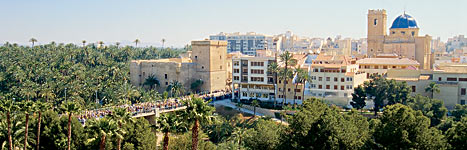
The Palmeral of Elche, known in Spanish as the Palmeral de Elche and in Valencian as the Palmerar d'Elx, is a widespread system of date‑palm orchards that frames the city of Elche in southeastern Spain. It represents a managed urban and peri‑urban landscape of date palms (Phoenix dactylifera) integrated with irrigation works, pathways and small plots. The grove is famous for its extent within a European context and for surviving a long history of cultivation, urban growth and conservation efforts.
Image gallery
8 Images


Characteristics and structure
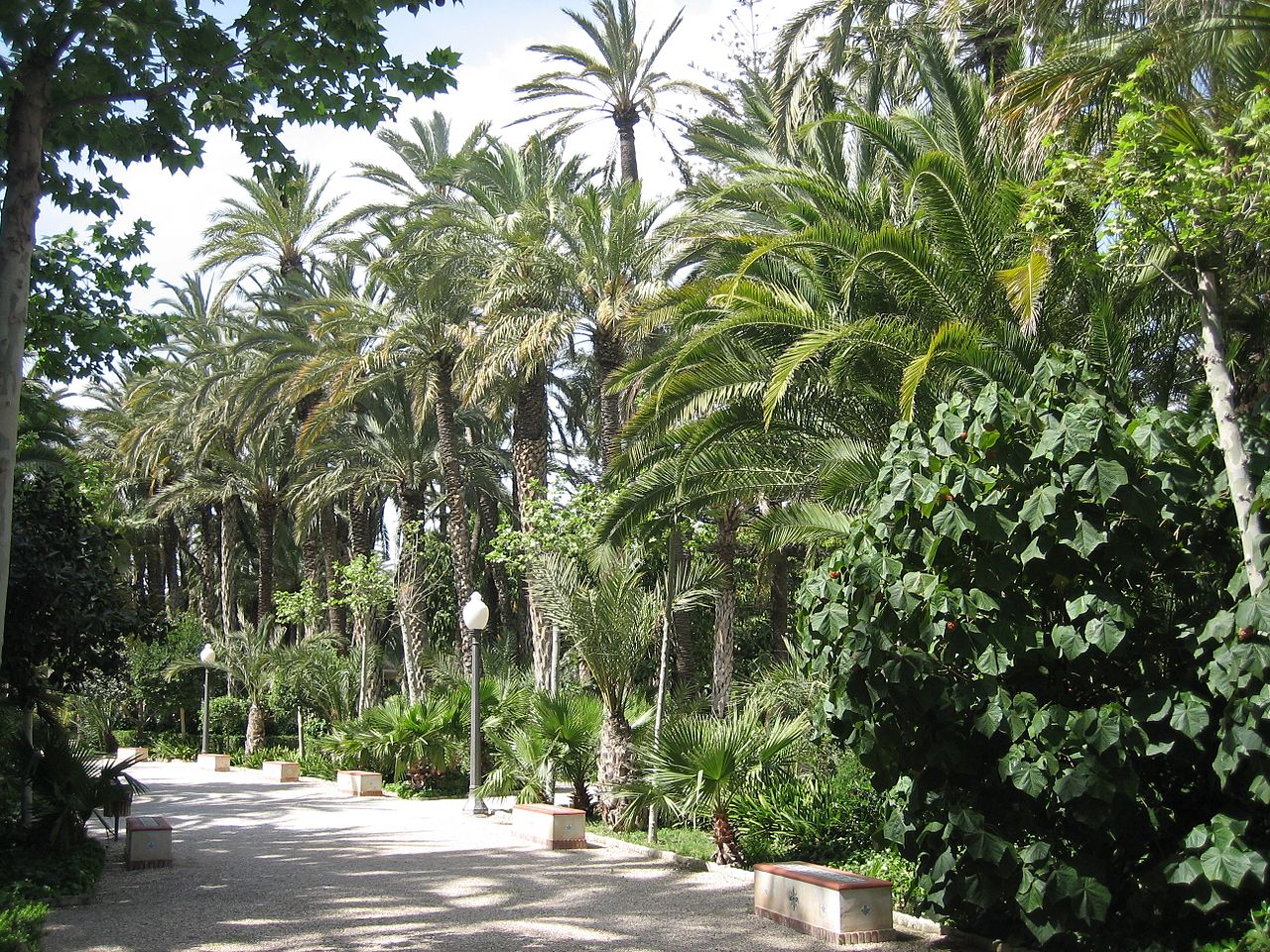
The Palmeral is not a single plantation but a mosaic of dozens of orchards and gardens. Within the urban area there are about ninety‑seven distinct palm orchards that together host roughly seventy thousand date palms; when surrounding plantations are counted the total number of trees may approach two hundred thousand. The whole system covers more than 3.5 square kilometres, with about 1.5 square kilometres inside municipal limits. These palms are arranged in alleys, small plots and private huertas, often combined with other fruit trees, vegetable beds and water channels.
Origins and historical development
The grove's pattern and irrigation derive from techniques introduced during the period of Islamic rule on the Iberian Peninsula. Local acequias (irrigation channels), wells and qanat‑like systems were adapted to the Mediterranean climate to support date palms and other crops. Over centuries the Palmeral evolved through medieval, agricultural and urban phases, shaped by rural practices, municipal planning and changing land ownership. Its cultural landscape reflects both agricultural utility and ornamental, civic uses that developed as Elche grew around the orchards.
Uses, management and cultural importance
Date palms in Elche have been managed for fruit production, shade, ornamental value and microclimate regulation. Small‑scale cultivation provides dates and supports other crops grown in the shade of palms. The groves are woven into local customs, festivals and identity: they form public parks, private gardens and historic orchards that contribute recreational, aesthetic and ecological benefits. Management combines traditional pruning and irrigation knowledge with modern conservation practices to maintain tree health and soil moisture amid urban pressures.
Conservation, recognition and threats
Because of its uniqueness and cultural significance, the Palmeral has attracted national and international attention. It was inscribed as a UNESCO World Heritage Site, a recognition that highlights its outstanding historic landscape and the survival of traditional irrigation and plantation patterns. Ongoing challenges include urban expansion, disease, water scarcity and the need to balance tourism with preservation. Local authorities, landowners and conservation organizations work to protect irrigation networks, replant affected trees and maintain the historic layout.
Notable facts and distinctions
- The Palmeral is widely regarded as the most extensive palm orchard system of its kind in Europe and one of the largest in the world.
- Within the city the orchards form distinct named huertas and public sites that visitors can explore.
- It has been included in national heritage discussions and was a candidate in cultural listings such as the 12 Treasures of Spain selection process; see the nomination notes for context here.
- For botanical and cultural studies, further resources can be consulted via regional archives and botanical surveys represented by local institutions (species info) and water‑management studies (irrigation).
- Local tourism and municipal guides provide visitor information and mapped routes through principal orchards (Elche region), conservation programs (regional plantations), and official heritage pages (European context).
The Palmeral of Elche remains a living cultural landscape: an agricultural system shaped by centuries of human care and adapted to changing environmental and social conditions. It continues to serve as a model for integrating historic agricultural practices within a modern city while preserving biodiversity, local traditions and public green space.
Questions and answers
Q: What is the Palmeral or Palm Grove of Elche?
A: It is the generic name for the date palm orchards in the city of Elche (Spain).
Q: How many orchards are there in the urban area of Elche?
A: There are 97 different orchards in the urban area of Elche.
Q: How many date palms are contained in the orchards of the urban area of Elche?
A: The orchards in the urban area of Elche contain about 70,000 date palms.
Q: Where are most of the date palms located in Elche?
A: Most of the date palms are located in the east bank of the Vinalopó.
Q: Is the Palmeral of Elche the only palm grove in Europe?
A: Yes, the Palmeral of Elche is the only palm grove of its type anywhere in Europe.
Q: How large is the Palm Grove of Elche?
A: The Palm Grove of Elche covers over 3.5 km2 (1.4 sq mi), including 1.5 km2 (0.58 sq mi) in the city of Elche.
Q: Has the Palmeral of Elche received any recognition?
A: Yes, the Palm Grove of Elche was one of 100 finalists for the 12 Treasures of Spain in 2007.
Related articles
Author
AlegsaOnline.com Palmeral of Elche (Palm Grove of Elche) Leandro Alegsa
URL: https://en.alegsaonline.com/art/74241
Sources
- laverdad.es : "El Palmeral crece a la sombra del picudo"
- visitelche.com : "The Palm Grove"
- whc.unesco.org : "Palmeral of Elche"
- mecd.gob.es : "El Palmeral de Elche"
- sobreturismo.es : "Lista de 100 finalistas de Nuestros 12 Tesoros de España"