
Palmengarten, Frankfurt am Main
A major public botanical garden in Frankfurt, Germany. Founded in 1871, the Palmengarten features large glasshouses, tropical and subtropical collections, historical architecture and public events across 29 hectares.
Overview
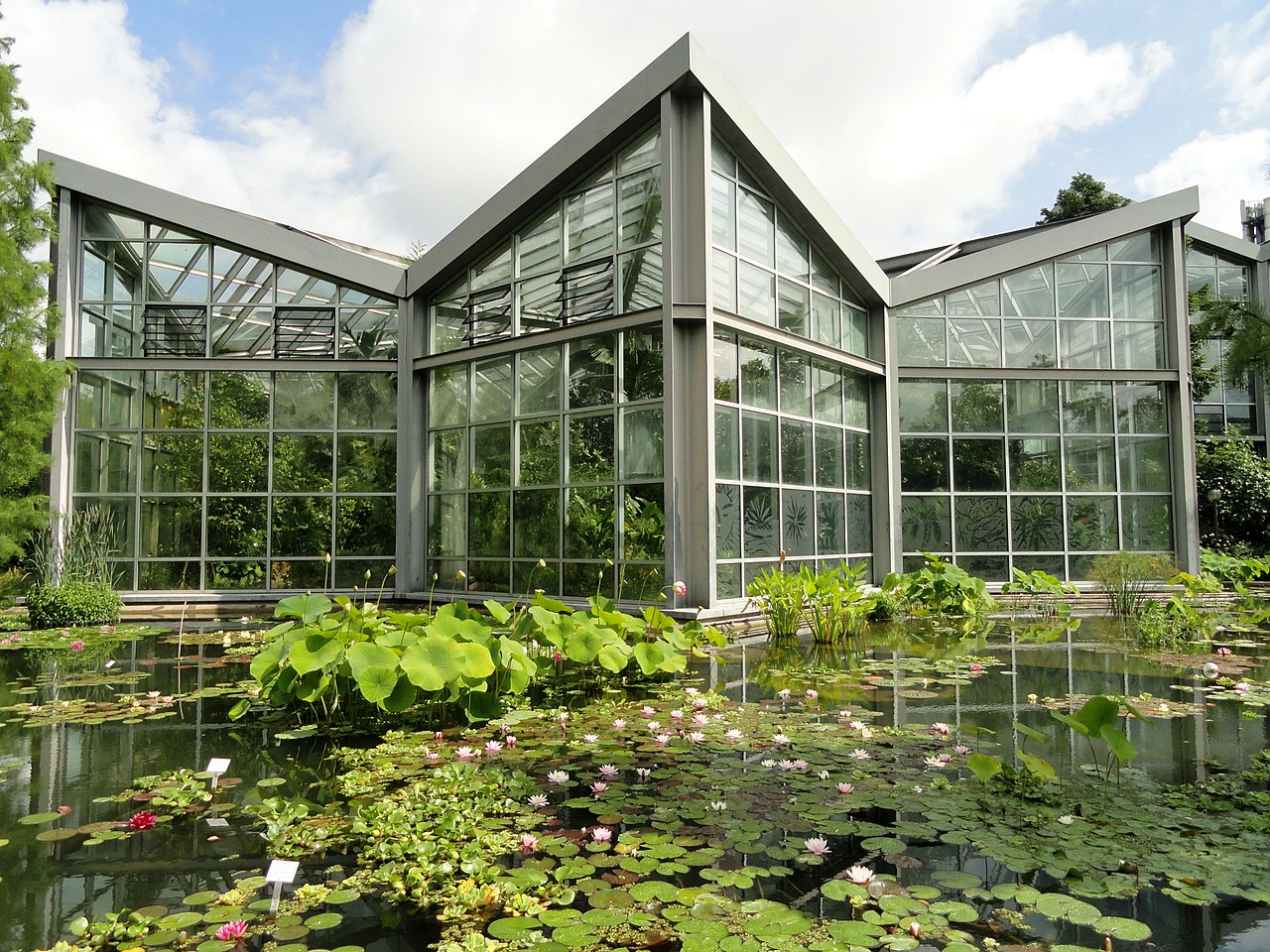
The Palmengarten is one of Frankfurt's principal public botanical gardens and a prominent green space in the Westend-Nord quarter. It is frequently mentioned alongside other local botanical institutions such as the city's botanical gardens. Located within Frankfurt am Main in Germany, the Palmengarten covers about 29 hectares, making it one of the largest gardens of its kind in the country. The site combines outdoor plantings, historical glasshouses and purpose-built climate-controlled halls that together present a broad range of plant communities.
Image gallery
10 Images




Origins and historical development
The garden was created in the late 19th century through private initiative and the work of the landscape architect Heinrich Siesmayer. Construction began in 1871 and the garden opened to the public later that year, reflecting Victorian-era interest in exotic plants and public leisure. In 1890 the Palmengarten hosted a performance by the American entertainer Buffalo Bill, who presented his Wild West show to local audiences; contemporary accounts also refer to the same event under the billing of Buffalo Bill's Wild West.
20th century to modern restoration
Responsibility for the Palmengarten passed to municipal authorities in 1931, and the site suffered damage during the Second World War. After the conflict parts of the garden came under the administration of the Allied occupation, including the American occupation authorities, before civic control was re-established in the 1960s. A major rebuilding programme began after the war: destroyed or damaged glasshouses and halls were repaired or replaced, and the facility was substantially modernized. The most recent large-scale reconstruction efforts were completed in 1992, restoring historic elements while updating climate systems and visitor facilities.
Layout, collections and facilities
The Palmengarten organises its displays by environment and plant group: open-air beds and themed gardens showcase temperate and seasonal plantings, while a sequence of conservatories and climate-controlled greenhouses exhibits tropical, subtropical and arid-region flora. Visitors encounter palms, cycads, orchids and other characteristic groups in specially maintained halls. The garden's greenhouses and technical systems enable year-round displays and seasonal exhibitions, and they are a focal point for conservation and education efforts. The adjacent university-run collection is the Frankfurt Botanical Garden, managed by the biology faculty of Johann Wolfgang Goethe University and focused on scientific collections and teaching.
Uses, programming and public value
Today the Palmengarten serves multiple functions: it is a place for recreation, a stage for cultural events, and an educational resource. Regular activities include guided plant tours, family and school programmes, temporary horticultural exhibitions and occasional concerts or festivals held in the garden's lawns and halls. The conservatories are used for both display and research, supporting horticultural practice, botanical education and the cultivation of species that require controlled environments.
Practical notes and notable facts
- Size and setting: approximately 29 hectares, situated in the Westend-Nord district of Frankfurt.
- Historic landmarks: original 19th-century design elements remain alongside modernized glasshouses.
- Visitor facilities: seasonal displays, climate-controlled conservatories (greenhouses), cafés and event spaces.
- Nearby institutions: the university botanical garden (Frankfurt Botanical Garden) provides a scientific complement to the Palmengarten's public displays.
- Historical administration: private founding by Heinrich Siesmayer, municipal stewardship from 1931, and a period under American authority after World War II.
For those interested in urban horticulture, historical garden design or plant conservation, the Palmengarten remains an important and accessible institution in the heart of Frankfurt. Further reference materials and visitor updates can typically be found through city and cultural information services covering local botanical attractions.
Questions and answers
Q: What is the Palmengarten?
A: The Palmengarten is one of two botanical gardens in Frankfurt am Main, Germany.
Q: Who built the Palmengarten?
A: The garden was privately paid for and built by the architect Heinrich Siesmayer.
Q: When did the Palmengarten open to the public?
A: The garden opened to the public in 1871.
Q: Who visited the Palmengarten in 1890?
A: American entertainer Buffalo Bill visited the garden in 1890 and performed his Western show there.
Q: Who took control of the Palmengarten after World War II?
A: Control of the garden was moved to the American occupation authorities after World War II.
Q: When did the reconstruction of the Palmengarten finish?
A: The reconstruction finished in 1992 and the Palmengarten showed in its new form.
Q: What is the Frankfurt Botanical Garden?
A: The Frankfurt Botanical Garden is located next to the Palmengarten and belongs to the biology department of Johann Wolfgang Goethe-Universität Frankfurt.
Related articles
Author
AlegsaOnline.com Palmengarten, Frankfurt am Main Leandro Alegsa
URL: https://en.alegsaonline.com/art/74237