
Palmas, Tocantins
Palmas is the planned capital of Brazil's state of Tocantins, established around 1990. A young city on the Rio Tocantins, it functions as an administrative, commercial and regional transport hub for northern Brazil.

Overview
Palmas is the capital and largest city of the state of Tocantins in Brazil. Created as a planned capital after the formation of the state, it is the youngest of the country's state capitals, established at the end of the 20th century. The municipality covers roughly 2,227.4 square kilometers and had an estimated population of about 306,296 in 2020. Situated along the Rio Tocantins at an elevation around 230–280 meters above sea level, Palmas serves as the political, economic and service center for the surrounding region.
Image gallery
10 Images



Geography and climate
Palmas lies on the eastern bank of the Tocantins River in central-northern Brazil. Its location places it roughly 1,000 kilometers from the federal capital, Brasília, and about 900 kilometers from the larger central-west city of Goiânia. The landscape around Palmas is a mix of cerrado (Brazilian savanna) and riverine corridors. The climate is tropical savanna with pronounced wet and dry seasons: temperatures average near 27 °C annually and can reach or exceed 40 °C in the hottest months, while the dry season brings lower humidity and clearer skies.
History and urban design
Palmas was conceived as a new administrative capital for Tocantins after the state was created in the late 1980s. Rather than growing organically over centuries, the city was planned and built to concentrate government functions, public services and infrastructure. Its layout follows a master plan that organized residential, commercial and institutional sectors into a radial and grid pattern to facilitate mobility and future expansion. Public spaces and wide avenues were prioritized to give the new capital a modern, orderly character.
Economy, transport and institutions
The economy of Palmas is dominated by public administration, commerce, services and activities that support the agricultural and pastoral economy of the surrounding state. The region around the city produces cattle, soybeans and other crops, and Palmas functions as a regional marketplace and logistics node. Transport links include a regional airport that connects to other Brazilian cities, federal highways that link Palmas to Brasília and points north, and river transport on the Tocantins River that supports cargo movement by barge. The city hosts higher education campuses, health services and state government institutions that contribute to its labor market.
Culture, tourism and public spaces
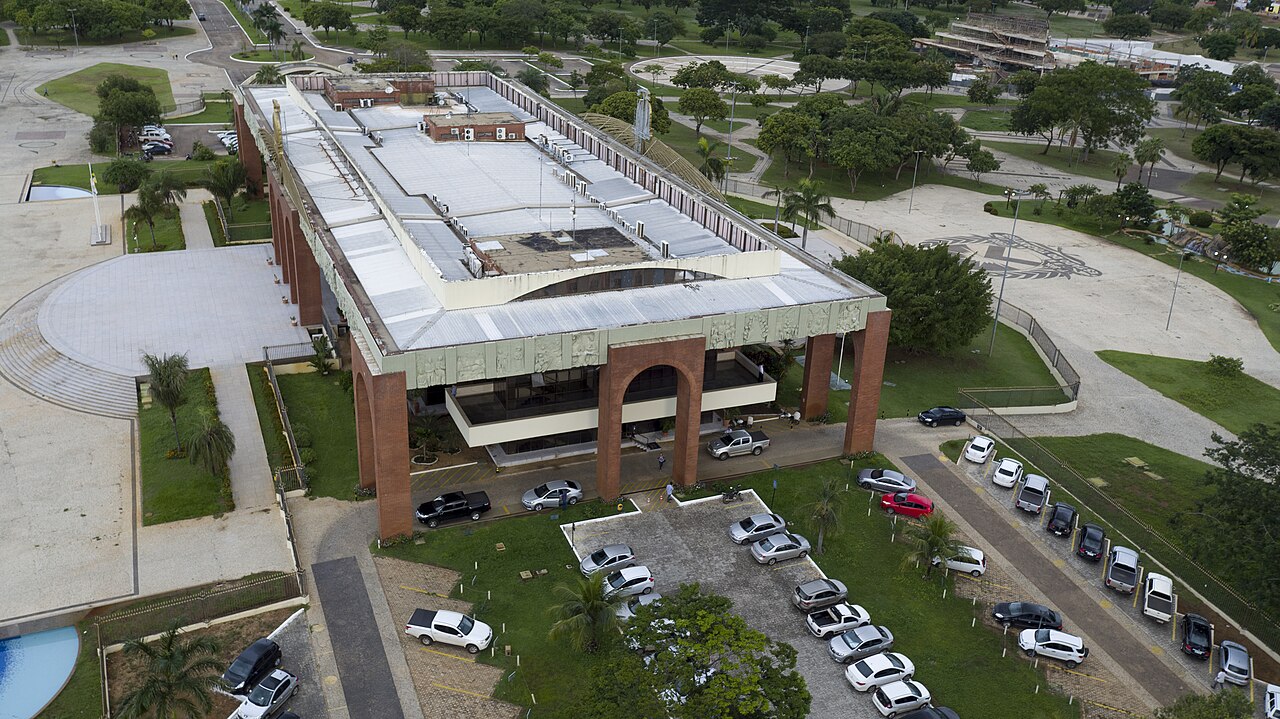
Palmas has cultural institutions, municipal events and recreational areas that reflect its role as a state capital and gateway to natural attractions. Notable urban landmarks include a large civic square and government buildings arranged around open plazas. The city is also a starting point for tourists visiting natural destinations in Tocantins, such as river fronts, waterfalls and the well-known Jalapão region — a protected area famous for dunes, clear springs and ecotourism activities. Local festivals, markets and public programming showcase regional cuisine, crafts and music traditions derived from the cerrado and northern Brazilian cultures.
Notable facts and distinctions
- Palmas is the youngest state capital in Brazil, established as a planned city to serve the newly formed state of Tocantins.
- The city's design emphasizes broad avenues, sectorized neighborhoods and civic spaces intended for administrative efficiency and future growth.
- Its riverside position on the Tocantins makes Palmas an important node for inland water transport in the region.
- Palmas is a common base for visitors exploring Tocantins' natural attractions, especially ecotourism destinations to the east and south.

History
The division of the state of Tocantins from Goiás and the creation of Palmas as the capital of the new state was decided in a constitutional amendment in 1988.
The foundation stone for the city was laid on 20 May 1989. The municipal area for Palmas was separated from the municipalities of Porto Nacional and Taquarassu do Porto. The city was named after São João da Palma, the seat of an independence movement that had established itself in the area in the early 19th century, and the many palm trees that characterize the natural landscape around Palmas.
On 1 January 1990, the government offices were transferred from Miracema do Tocantins to Palmas, making Palmas the capital.
Archdiocese of Palmas
- Archdiocese of Palmas
Related articles
Author
AlegsaOnline.com Palmas, Tocantins Leandro Alegsa
URL: https://en.alegsaonline.com/art/74234