
Palm tree: overview, biology, uses, and cultural importance
Palms (family Arecaceae) are monocot flowering plants including trees, shrubs and climbers. This article covers their characteristics, distribution, major species, uses, and ecological and cultural roles.
Palms are members of the flowering plant family Arecaceae, a distinctive group of monocots that includes familiar trees, shrubs and climbing forms. Although commonly called "palm trees," members of this family show a range of growth habits: some are single-trunked canopy trees, others form clumps or trunks that branch little, and several genera are climbing palms often described as climbing palms. As a whole, the family occupies its own order, Arecales, and is recognized by features such as large compound leaves (pinnate or palmate), an unbranched stem in many species, and a single apical growing point.
Image gallery
10 Images



Characteristics and biology
Most palms are evergreen and adapted to warm environments. They typically have large, often compound leaves arising at the stem apex; these leaves may form a crown that gives classic palm silhouettes. Palms are monocots, so their internal structure differs from that of typical woody trees: they lack true secondary growth and therefore do not form annual rings in the same way. Many palms produce dense inflorescences with small flowers and fruit that are often drupes. A notable physiological trait is the single terminal bud (apical meristem) in many species—damage to this bud can halt upward growth.
Distribution, diversity and taxonomy
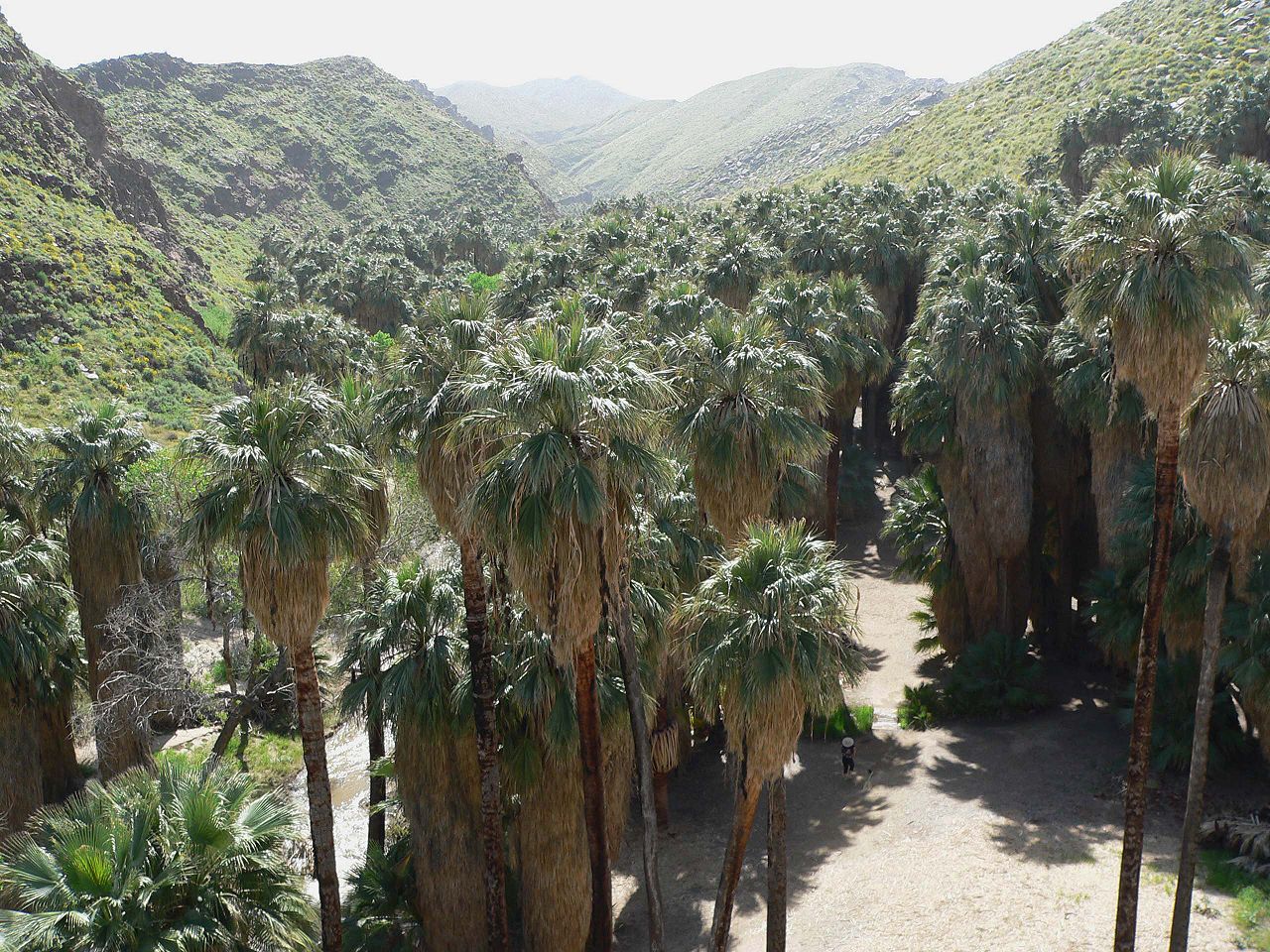
There are about 2,600 species of palms distributed mostly across tropical, subtropical and warm temperate regions. Palms thrive in a variety of habitats from coastal dunes and mangroves to mountain slopes and rainforests. Regions with tropical and subtropical climates support the greatest diversity. Within human landscapes, palms are widely planted for aesthetic and practical reasons; they are common in landscaping in frost-free regions and in urban parks and gardens.
Major species and economic importance
- Coconut palm (Cocos nucifera): valued for its edible coconut, fiber, oil and timber.
- Date palm (Phoenix dactylifera): cultivated for sweet fruit across arid regions for millennia.
- Oil palm (Elaeis spp.): a major source of vegetable oil with wide industrial and food uses.
Beyond these headline species, palms yield an array of products—fruit, vegetable oils, sugar, thatch, leaves used for weaving, and materials like rattan from climbing palms. They remain crucial to local economies in many tropical communities and are staples in traditional diets and crafts.
History, culture and symbolism
Palms have deep cultural resonance in many societies. Historically they have symbolized victory, fertility and peace and feature in religious and civic iconography. Date cultivation goes back thousands of years in the Middle East, while coconut and oil palms have been central to island and coastal cultures. Today palms also function as icons of tropical landscapes and leisure.
Ecology and conservation
Palms play important ecological roles: they provide food and habitat for wildlife and contribute to forest structure in tropical ecosystems. However, certain palm species face threats from habitat loss, overharvesting and land-use change—issues particularly visible where oil palm expansion replaces native forests. Conservation and sustainable management are active concerns among botanists, foresters and communities reliant on palm resources.
Practical notes and distinctions
When cultivating palms, gardeners should note climate tolerance (many species are frost-sensitive) and growth habits—some palms cannot be coppiced due to their single growing tip. The term "palm" may be used loosely in landscaping, but true palms belong to Arecaceae. For further reading and species databases consult specialist resources and horticultural guides: for example, regional floras and conservation pages provide genus- and species-level information and management advice (shrubs and trees, general references).
Palms remain one of the most recognizable plant families worldwide, valued for their economic, ecological and symbolic roles. Whether lining a boulevard, yielding staple foods, or forming intricate tropical forest understories, palms connect human cultures and natural systems across warm regions of the globe.
Additional resources: climbing palms overview, Arecales classification, coconut uses, date cultivation, species list, habitat guide, landscaping advice, horticultural tips.
Questions and answers
Q: What is a palm tree?
A: Palm tree is a perennial plant that belongs to the family Arecaceae and grows in hot climates.
Q: How many species of palm trees are there?
A: There are approximately 2600 species of palm trees, with most of them living in tropical, subtropical, and warm temperate climates.
Q: What are some of the well-known palm trees?
A: Some of the well-known palm trees are coconut palm, date palm, and oil palm.
Q: What is the significance of palms in human history?
A: Palms have been important to humans throughout much of history, as many common products and foods come from them. They were also symbols of victory, peace, and fertility in the past.
Q: Where are palms commonly planted?
A: Palms are commonly planted in parks and gardens that are in areas without heavy frosts.
Q: Why are palms a popular symbol for vacations?
A: Palms are a popular symbol for vacations as they are associated with tropical locations.
Q: What is the family and order of palm trees?
A: Palm trees belong to the family Arecaceae, which is the only family in the order Arecales.
Related articles
Author
AlegsaOnline.com Palm tree: overview, biology, uses, and cultural importance Leandro Alegsa
URL: https://en.alegsaonline.com/art/74227
Sources
- palms.org : Landscaping with Palms in the Mediterranean
- dipbot.unict.it : Arecaceae - Università di Catania
- botany.hawaii.edu : Arecaceae - University of Hawaii Botany
- efloras.org : Arecaceae in Flora of North America
- plantapalm.com : Virtual Palm Encyclopedia - Introduction
- fao.org : Tropical Palms by Food and Agriculture Organization
- pacsoa.org.au : Palm and Cycad Societies of Australia
- plantapalm.com : Virtual Palm Encyclopedia - Evolution and the fossil record
- iucn.org : Palms: their conservation and sustained utilization
- plantapalm.com : Palm Conservation: Its Atecedents, Status, and Needs
- biblegateway.com : Bible search for "palm"
- hti.umich.edu : Koran search for "palm"
- nps.gov : Revolutionary War Exhibit Text - November 2002
- members.cox.net : Growing Hardy Palms
- byzantines.net : Palm Sunday according to the Byzantine Rite Tradition