
Palm Beach, Florida: overview, history, landmarks and local character
Palm Beach is a small, affluent incorporated town on a barrier island in Palm Beach County, Florida, known for its beaches, historic estates, upscale shopping, and seasonal resort character.
Overview
Palm Beach is an incorporated town on a narrow barrier island off the east coast of Florida. It lies within Palm Beach County and is part of the Atlantic seaboard of the United States. The Intracoastal Waterway separates the island from the mainland and the adjacent cities of West Palm Beach and Lake Worth, creating a distinct civic and geographic identity.
Image gallery
10 Images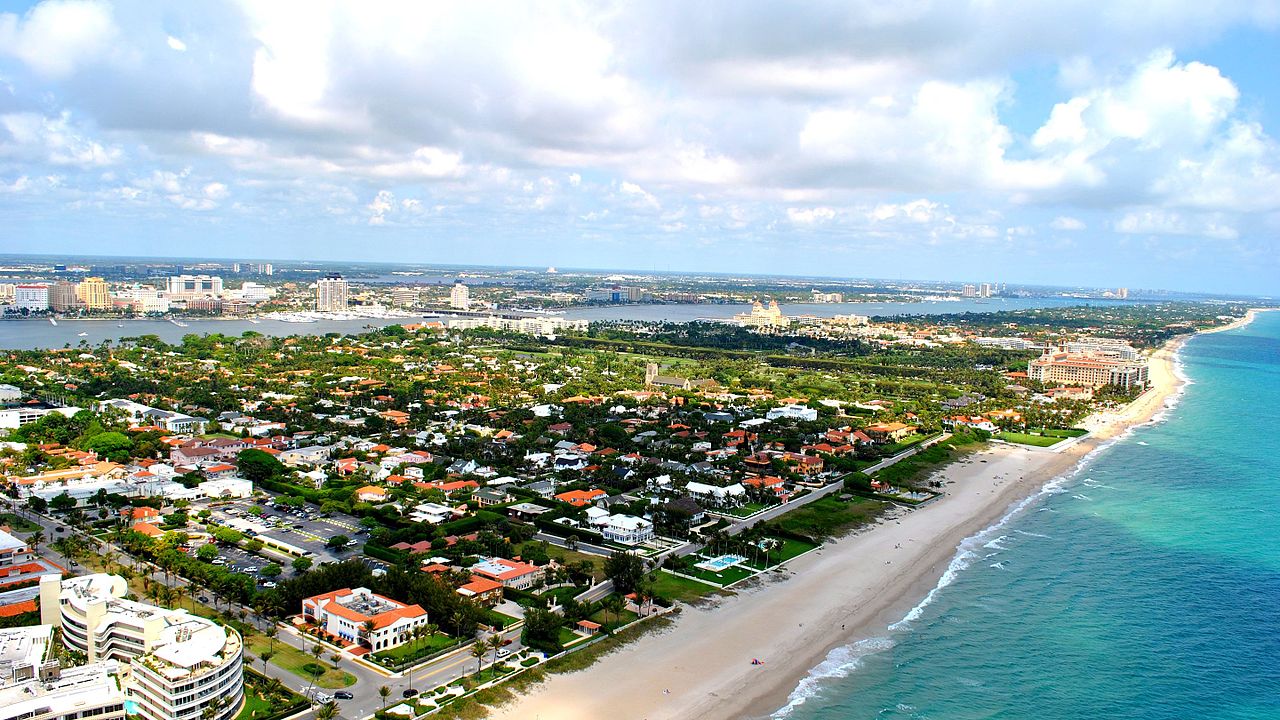


Geography and character
The town occupies a long, thin strip of land with ocean beach on the east and the Intracoastal on the west. Public beaches, oceanfront parks and residential blocks define its pattern: large private estates, condominium developments, small commercial zones and limited civic space. The climate is subtropical, with warm, humid summers and mild winters, which supports year‑round outdoor living and a strong winter tourist season.
History and development
Palm Beach grew as a winter resort and residential enclave during the late 19th and early 20th centuries when railway and steamship connections opened Florida to wealthy visitors from the northeastern United States. Influential developers and industrialists invested in hotels, private clubs and grand homes, shaping the town’s architectural mix of historic mansions and revival styles that remain visible today.
Landmarks and cultural life
- Historic houses and museum properties that recall the resort era.
- Upscale shopping streets and galleries that serve both residents and visitors.
- Oceanfront resorts, private clubs and cultural organizations offering concerts, exhibitions and lectures.
Economy, government and population patterns
The local economy leans on luxury hospitality, retail and property services, augmented by year‑round residents and a large seasonal population of visitors and second‑home owners. Palm Beach is governed as a small municipality with zoning and land‑use rules intended to preserve residential character and public access to the waterfront.
Distinctions and access
Palm Beach is distinguished by its island setting and concentrated wealth, which set it apart from neighboring mainland cities. Vehicular bridges and causeways provide regular connections to West Palm Beach and nearby communities, while marina facilities and coastal roads emphasize the town’s maritime orientation. Visitors typically come to enjoy beaches, historic architecture and the refined shopping and dining that have defined the town for more than a century.
Questions and answers
Q: What is Palm Beach?
A: Palm Beach is an incorporated town in Palm Beach County, Florida, United States.
Q: Which body of water separates Palm Beach from West Palm Beach and Lake Worth?
A: The Intracoastal Waterway separates Palm Beach from West Palm Beach and Lake Worth.
Q: How many people lived in Palm Beach in 2004?
A: As of 2004, 9,860 people lived in Palm Beach.
Q: Is Palm Beach a city or a town?
A: Palm Beach is a town.
Q: Which county is Palm Beach in?
A: Palm Beach is in Palm Beach County, Florida.
Q: What is the population of Palm Beach at present?
A: The text does not provide the population of Palm Beach at present.
Q: What are some nearby cities of Palm Beach?
A: Some nearby cities of Palm Beach are West Palm Beach and Lake Worth.
Related articles
Author
AlegsaOnline.com Palm Beach, Florida: overview, history, landmarks and local character Leandro Alegsa
URL: https://en.alegsaonline.com/art/74208
Sources
- factfinder.census.gov : "American FactFinder"
- geonames.usgs.gov : "US Board on Geographic Names"
- census.gov : United States Census
- reuters.com : "Madoff scandal stuns Palm Beach Jewish community"
- pbchistoryonline.org : "The Styx: Removal"
- commons.wikimedia.org : Palm Beach, Florida