
Palace of Ardashir — Sasanian royal complex near Firuzabad
Early Sasanian palace and probable ceremonial complex founded by Ardashir I (AD 224) near Gor (Firuzabad), notable for its large domed hall, vaulted iwans and influence on later Persian architecture.
Overview
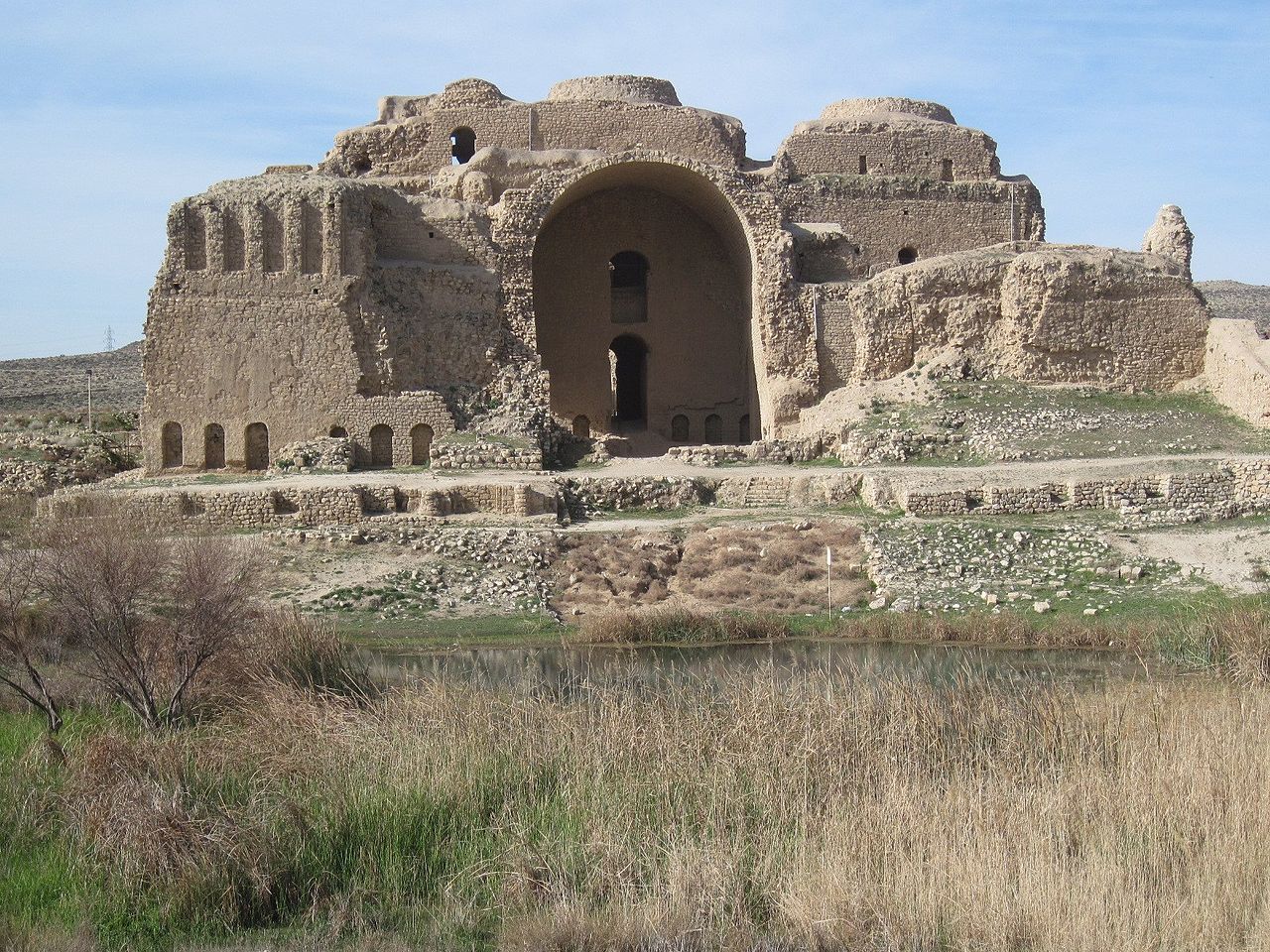
The Palace of Ardashir Pāpakan is an important Sasanian-era building erected by Ardashir I in the early third century AD on a rocky slope north of the ancient city of Gor (modern Firuzabad). The site is known in Persian as Qasr-eh Ardashir-eh Pāpakān and is also called the Atash-kadeh, a name that reflects a suggested—though debated—connection with a fire sanctuary. Its approximate geographic position is recorded at the coordinates linked here. The fortification Dezh Dokhtar occupies the ridge above the palace and forms part of the same defensive and ceremonial landscape; it is described further at Dezh Dokhtar.
Image gallery
10 Images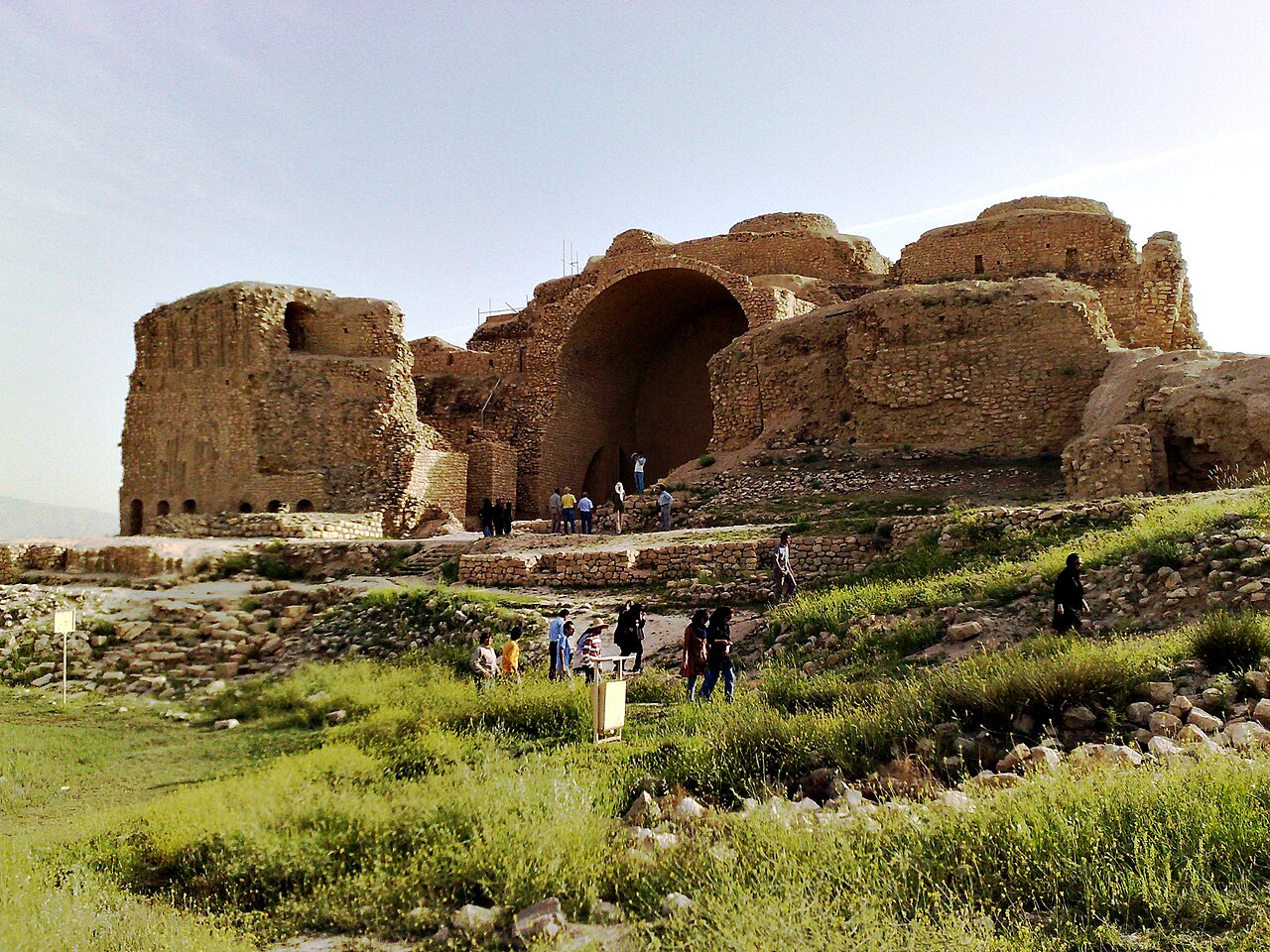




Historical context
Ardashir I, the founder of the Sasanian dynasty, established a new royal centre in Pars and promoted monumental building to assert dynastic legitimacy. The Palace of Ardashir belongs to this effort and stands close to the planned city of Gor (Firuzabad), which functioned as a royal capital and demonstration of Sasanian authority in the region. The complex dates to the foundation years of the dynasty and is associated with the ruler Ardashir I, whose reign marked the consolidation of Sasanian political and cultural institutions within what is now Iran.
Architecture and construction
The surviving arrangement emphasises a dominant, central domed chamber flanked by large vaulted iwans (wide vaulted portals) opening onto an internal court. Thick masonry walls and substantial buttressing support the heavy vaults and dome. Builders used locally available stone and mortar with interior plaster finishes; traces of stucco and painted plaster have been recorded in earlier descriptions. Structural solutions include transitional supports beneath the dome—forms akin to squinches or other squinch-like devices enable the dome to span a rectangular or square base. The combination of rectilinear halls and curved, vaulted spaces is a hallmark of late antique Iranian architecture and was developed further in later regional traditions.
Function and symbolism
The exact original function of the palace remains a subject of scholarly discussion. Interpretations range from a royal audience hall and residence to a ceremonial pavilion connected with state ritual or a fire cult. The alternative name Atash-kadeh arises from this ambiguity. Regardless of its specific liturgical or domestic uses, the building clearly had a ceremonial and representational role within the broader complex of Gor and the fortified ridge that includes Dezh Dokhtar.
Influence and legacy
The Palace of Ardashir is frequently cited as an influential example of Sasanian monumental design. Its large-scale iwans and domed central space anticipate structural and spatial ideas that reappear in later Persian and Islamic architecture, including palace and mosque plans. The techniques of vaulting and massing used here contributed to an architectural vocabulary that persisted in the region for centuries.
Preservation and study
The site has been the subject of archaeological observation and conservation by regional cultural heritage authorities and visiting scholars. Conservation work has aimed to stabilise the masonry and preserve surviving plaster and architectural details while allowing public access. The palace attracts researchers interested in Sasanian building technology, imperial imagery and the urban planning of early Sasanian capitals.
Visiting and further reading
- Location and coordinates: see map reference.
- Persian name and local sources: Qasr-eh Ardashir-eh Pāpakān.
- Related nearby fort: Dezh Dokhtar.
- Founder and historical context: Ardashir I.
- Modern state and administration: Iran.
The Palace of Ardashir remains a key monument for understanding early Sasanian royal architecture and the development of large-scale vaulting in Iran. Ongoing study seeks to clarify elements of its original decoration, its precise programme of use and its role within the ceremonial geography of Gor/Firuzabad.
Questions and answers
Q: What are the coordinates of the Palace of Ardashir Pāpakan?
A: The coordinates of the Palace of Ardashir Pāpakan are 28°53′53″N 52°32′22″E.
Q: What is the Palace of Ardashir Pāpakan?
A: The Palace of Ardashir Pāpakan is a castle located on the slopes of the mountain on which Dezh Dokhtar is situated.
Q: Who built the Palace of Ardashir Pāpakan?
A: The Palace of Ardashir Pāpakan was built by King Ardashir I of the Sassanian Empire in AD 224.
Q: Where is the ancient city of Gor located?
A: The ancient city of Gor is located two kilometers (1.2 miles) north of the Palace of Ardashir Pāpakan.
Q: What is the ancient name of Gor?
A: The ancient name of Gor is Artakhsher Khwarah/Khor Adashir/Gor Adesheer (Glory of [king] Ardasher).
Q: In what country is the Palace of Ardashir Pāpakan located?
A: The Palace of Ardashir Pāpakan is located in ancient Persia, which is now known as Iran.
Q: What is the other name for the Palace of Ardashir Pāpakan?
A: The other name for the Palace of Ardashir Pāpakan is the Atash-kadeh.
Related articles
Author
AlegsaOnline.com Palace of Ardashir — Sasanian royal complex near Firuzabad Leandro Alegsa
URL: https://en.alegsaonline.com/art/74098