
Padma River: course, importance, and role in Bangladesh
The Padma is the principal Ganges distributary in Bangladesh, joining major rivers before reaching the Bay of Bengal. This article explains its course, ecology, human uses, and historical and cultural importance.

The Padma is the principal distributary of the Ganges within Bangladesh and one of the country’s most important waterways. It carries water and sediment from the Ganges system southeast across the floodplain, and together with the Jamuna and Meghna rivers forms the delta that drains into the Bay of Bengal. The river has shaped settlement patterns, agriculture and transport for centuries and remains central to national identity.
Image gallery
10 Images


Course and connections
The Padma enters Bangladesh from India near the district of Chapai Nawabganj and flows generally southeast. In its upper reaches it is the main outlet of the Ganges into Bangladesh. Not far downstream it meets the Jamuna (the main channel of the Brahmaputra system) near Aricha and then, further east, joins the Meghna near Chandpur before the combined waters reach the Bay of Bengal. Major urban centres such as Rajshahi lie along its banks and depend on it for commerce and irrigation.
Physical and ecological characteristics
The Padma is characterised by a wide, shifting channel with extensive sandbars and islands that change with seasonal floods. Its flow regime is highly seasonal: high water during the monsoon transports large amounts of sediment, while dry-season flows are reduced by upstream diversions. These patterns influence riverine habitats and fisheries. The river supports wetlands, riparian forests and a diversity of fish species that are important for local livelihoods.
Human uses and infrastructure
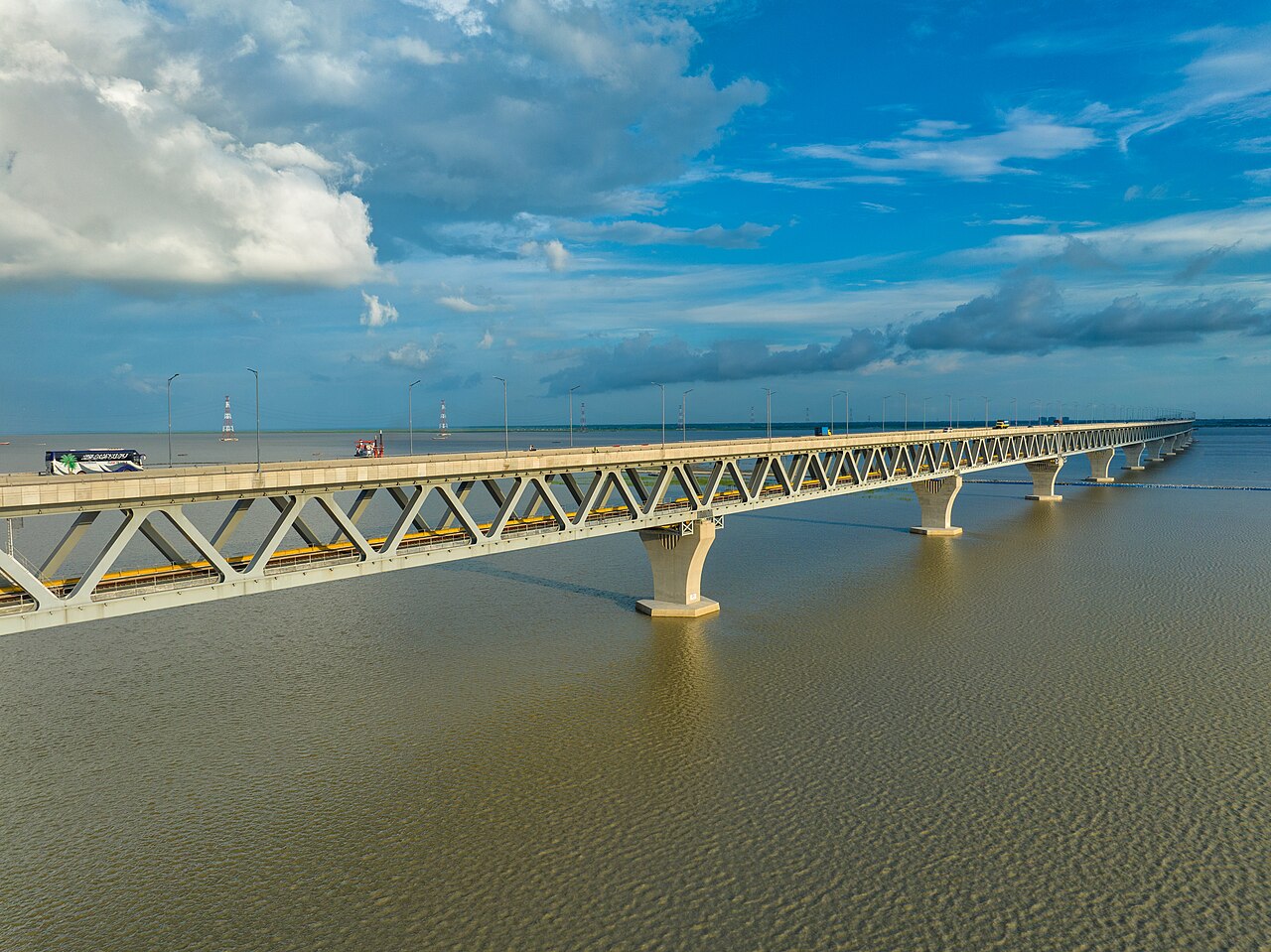
People rely on the Padma for irrigation, inland navigation, fishing and sand extraction. Bridges, ferry routes and road links cross or run along the river to connect districts. The river’s dynamics present challenges for infrastructure: banks erode, channels migrate, and flood management requires continual adaptation. The Padma is often central to regional development projects and river engineering schemes.
History, cultural significance and management
Historically the Padma has influenced settlement, agriculture and trade in Bengal for centuries. It is commonly recognised as a national symbol and is sometimes referred to as the national river of Bangladesh. Modern river management involves balancing navigation, flood protection, ecological health and the needs of upstream and downstream communities. Coordination with neighbouring river systems such as the Jamuna and the Meghna is critical for overall delta resilience.
Notable facts and distinctions
- The Padma is not a separate river source but a major distributary of the Ganges system inside Bangladesh.
- Its channels and islands are highly dynamic, making mapping and local planning challenging.
- Conservation and sustainable use of the river are central to protecting fisheries, agriculture and densely populated floodplains.
Questions and answers
Q: Where is Padma River located?
A: Padma River is located in Bangladesh.
Q: What is the source of Padma River?
A: The main distributary of the Ganges is the source of Padma River.
Q: How long is Padma River?
A: Padma River is 120 kilometers (75 mi) long.
Q: Where is the city of Rajshahi located?
A: The city of Rajshahi is located on the banks of Padma River.
Q: What is the significance of Padma River in Bangladesh?
A: Padma River is the "National river of Bangladesh".
Q: What is the name of the river that Padma River meets near Chandpur?
A: The river that Padma River meets near Chandpur is Meghna River.
Q: What is the final destination of Padma River?
A: Padma River flows into the Bay of Bengal after meeting with Meghna near Chandpur.
Related articles
Author
AlegsaOnline.com Padma River: course, importance, and role in Bangladesh Leandro Alegsa
URL: https://en.alegsaonline.com/art/73972