
Overseas departments of France
French overseas departments are integral parts of France located outside Europe. They share French law and citizenship, are in the EU and use the euro, but retain distinctive local governance and geographic features.
Overview
The overseas departments of France (French: département d’outre-mer) are territorial divisions that lie beyond the European continent but are legally and politically parts of the French Republic. They are administered with the same departmental status as those in metropolitan France and are therefore integrated into national institutions. They are included within the European Union and use the Euro as their currency, and inhabitants are French citizens with full rights. The arrangements that govern them distinguish these departments from other French possessions that have different degrees of autonomy, often described as overseas territories.
Image gallery
2 Images
Which places are overseas departments?
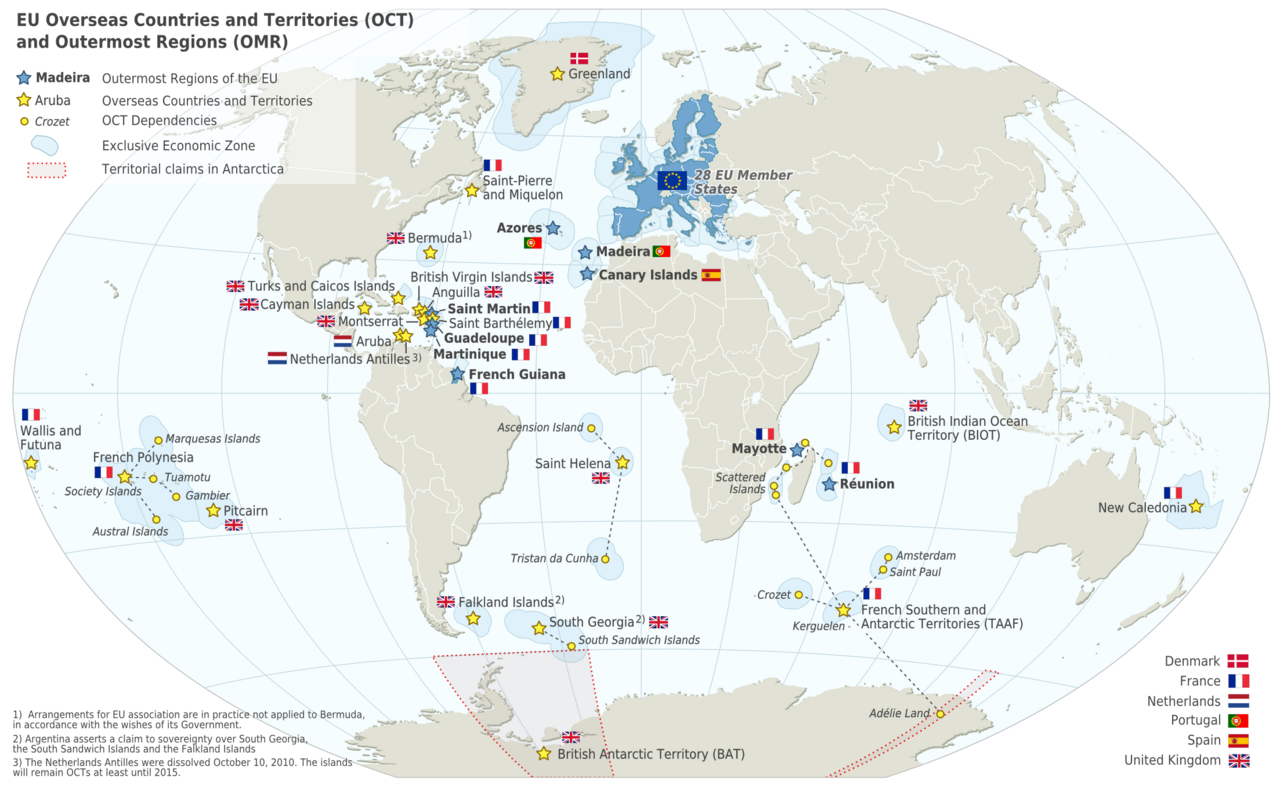
There are five departments outside continental Europe that have this status. They vary in geography, population and economy but share the same constitutional standing:
- Guadeloupe
- Martinique
- French Guiana (Guyane)
- Réunion
- Mayotte
Legal status and governance
As departments, these territories are subject to French law and are represented in France’s national institutions. Each returns elected representatives to the French National Assembly and to the Senate. They also have their own regional and departmental councils responsible for local administration, budgeting and certain social services — institutions established progressively in the late 20th century to strengthen local governance (regional councils). In European affairs they are part of the EU territorial scope and participate in European elections, being represented in the European Parliament. Their administrative label has evolved: since reforms in the early 2000s they are formally also known as overseas regions (French: région d'outre-mer), a term sometimes used in official contexts.
History and development
The current departmental status reflects historical processes of colonization, decolonization and legal assimilation. Four overseas departments — Guadeloupe, Martinique, Réunion and French Guiana — were transformed into departments in the mid-20th century during a period of legal integration with metropolitan France. Mayotte later changed its status to become a department in the early 21st century, following local referendums and legal adjustments. These changes aimed to extend French public services, social protections and political representation to populations in overseas territories while preserving links with France and Europe.
Economic, social and strategic importance
Overseas departments contribute to the diversity of the French Republic. They are often important for fisheries, biodiversity, maritime zones and local agriculture or tourism. Their locations give France extended exclusive economic zones and strategic presence in several oceans. Socio-economic challenges in these departments can include higher costs of living, infrastructure needs and disparities in income and employment compared with metropolitan regions, issues that are addressed through national and regional policies.
Distinctions and notable facts
While overseas departments are fully part of France, other overseas entities have distinct legal arrangements: some are semi-autonomous collectivities, others have unique statuses (for example, New Caledonia has a special status). The term department emphasizes administrative parity with metropolitan divisions, whereas the phrase European part is often used to distinguish continental France. For readers seeking an entry point to official or detailed resources about these territories, the country name France and the various link markers above can guide further research.
Because arrangements and local dynamics evolve, consult up-to-date official sources for current electoral representation, economic data and administrative changes (France, EU, European Parliament and local council pages are typical starting points).
European part · overseas territories · Euro · département d’outre-mer · regional councils
Questions and answers
Q: What are overseas departments in France?
A: Overseas departments are territorial divisions that are located outside the European part of France but are officially part of France and have the same political status as departments in Europe.
Q: How many overseas departments does France have?
A: France currently has five overseas departments in Guadeloupe, Martinique, French Guiana, Réunion, and Mayotte.
Q: Are overseas departments part of the European Union?
A: Yes, overseas departments are part of the European Union and use the Euro as currency.
Q: What is the difference between overseas departments and overseas territories in France?
A: Overseas departments are part of France and have the same political status as departments in Europe, while overseas territories are not part of France and have a different political status.
Q: What is the current name for France's overseas departments?
A: Since 2003, overseas departments are officially called overseas regions, although this name has yet to be widely adopted.
Q: Do overseas regions in France have their own local government?
A: Yes, since 1974, overseas regions in France have had their own individual regional councils for local government.
Q: How many members are elected to represent overseas France in the European Parliament?
A: A total of three members are elected to the European Parliament to represent overseas France, including overseas departments and overseas territories.
Related articles
Author
AlegsaOnline.com Overseas departments of France Leandro Alegsa
URL: https://en.alegsaonline.com/art/73736
Sources
- worldtravelguide.net : "French Overseas Possessions - Overview"
- europarl.europa.eu : "Country : France; Constituency : Outre-Mer"