
Outer Banks (North Carolina): Barrier Islands, History, and Ecology
The Outer Banks are a 200‑mile chain of narrow barrier islands off North Carolina’s coast, known for shifting dunes, wildlife, maritime history, and tourism including the Wright Brothers and the Lost Colony.
Overview
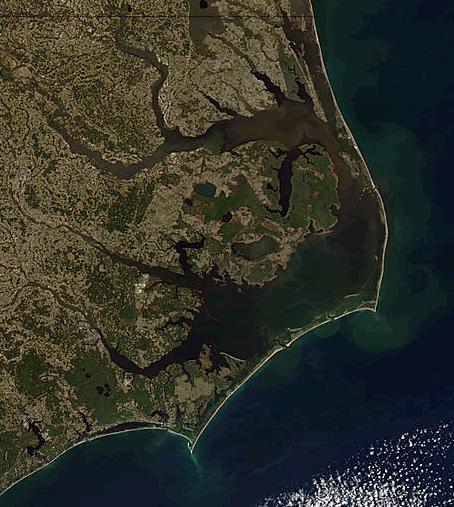
The Outer Banks are a thin chain of barrier islands that lie along the eastern seaboard of the United States. These islands form a roughly 200‑mile long arc off the Atlantic coast and are part of North Carolina. The term usually refers to the outermost coastal islands that separate the open ocean from a series of sounds, estuaries and salt marshes.
Image gallery
8 Images


Geography and physical features
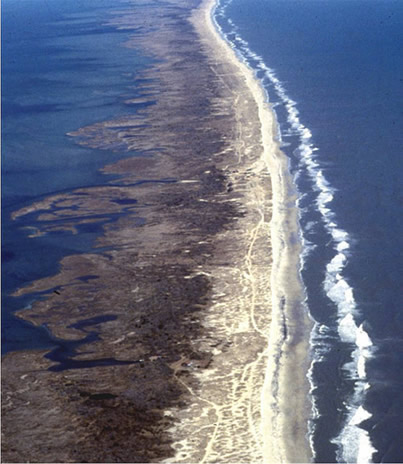
The islands are characteristically narrow, with ocean beaches on their seaward side and calmer waters of the Pamlico and Albemarle sounds to the west. The Outer Banks are classic barrier islands: they include dunes, overwash plains, tidal inlets and shifting shoals. The broad separation between the ocean and the mainland helps protect inland waters but leaves the islands highly dynamic and vulnerable to storms. For a basic map and orientation see barrier island chain overview.
Major islands and places
From north to south the region includes several well‑known segments and communities. Examples include:
- Bodie Island and the Cape Hatteras area
- Pea Island and Hatteras Island, noted for their lighthouses
- Ocracoke Island, a remote seaport reachable by ferry
The Atlantic faces beaches and surf, while the sound side supports marshes, boating and fishing. For general ocean context see Atlantic Ocean.
History
The Outer Banks have a long maritime history. They were the setting for early English colonial efforts, including the ill‑fated late 16th‑century settlement often called the Lost Colony. In 1903 the islands were the location of the Wright brothers' first sustained powered flight. Over centuries the islands have hosted fishing communities, lifesaving stations and shipping activity that shaped regional culture.
Ecology and wildlife
Barrier island habitats on the Outer Banks support shorebirds, migratory songbirds, marine mammals and nesting sea turtles. Salt marshes and sounds are productive nursery grounds for fish and crustaceans. The islands’ shifting sands and dunes create a mosaic of habitats that are important for biodiversity and coastal resilience.
People, economy and coastal management
The local economy depends heavily on tourism, recreation, commercial and sport fishing, and services that support visitors and residents. Transportation relies on bridges and ferries connecting islands to the mainland. Because of constant erosion, storm overwash and rising sea levels, communities engage in beach nourishment, dune restoration and planning efforts to balance development with natural processes and safety concerns. For regional background information see shoreline resources and coastal management.
Questions and answers
Q: What are the Outer Banks?
A: The Outer Banks are a line of barrier islands off the east coast of North Carolina.
Q: How long is the stretch of the Outer Banks?
A: The stretch of the Outer Banks is 200 miles (320 km) long.
Q: How wide are the islands that make up the Outer Banks?
A: The islands that make up the Outer Banks are narrow.
Q: What supports the economy of the Outer Banks?
A: Tourism supports the economy of the Outer Banks.
Q: What bodies of water are located on either side of the Outer Banks?
A: The Atlantic Ocean is to the east of the Outer Banks, while the Pamlico Sound is to the west.
Q: What notable occurrence happened on the Outer Banks in the 1580s?
A: In the 1580s, the Lost Colony was built on the Outer Banks.
Q: Where did the Wright Brothers have their first flight?
A: The Wright Brothers had their first flight on the Outer Banks in 1903.
Related articles
Author
AlegsaOnline.com Outer Banks (North Carolina): Barrier Islands, History, and Ecology Leandro Alegsa
URL: https://en.alegsaonline.com/art/73651
Sources
- ncpedia.org : "Outer Banks"
- outerbanks.com : "Outer Banks History"