
Ouroboros: Symbol of Self-Consumption and Renewal
Ancient emblem of a serpent or dragon eating its own tail, the ouroboros symbolizes cyclicality, eternity, and renewal across cultures from Egypt and Greece to alchemy and modern thought.
Overview
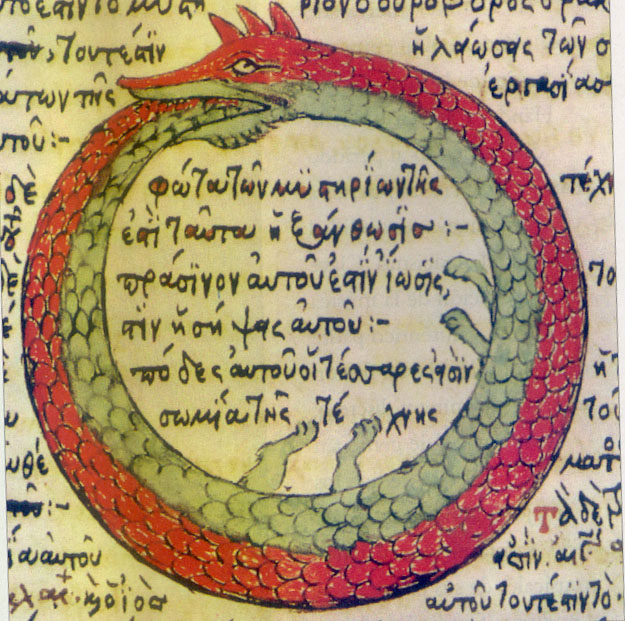
The ouroboros is a graphic motif showing a serpent or dragon consuming its own tail. As a compact image it conveys several interrelated ideas: a closed and self-sustaining cycle, the unity of beginning and end, and the idea of continual regeneration. The form has been used independently in many cultures and artistic traditions, often carrying philosophical, religious or cosmological meanings rather than literal natural history.
Image gallery
10 Images




Characteristics and symbolic meanings
As a symbol the ouroboros is simple yet rich. Typical attributes include a circular or figure-eight posture; a single creature turning inward; and sometimes decorative scales, flames, or internal imagery that give additional layers of meaning. Common symbolic senses are:
- Perpetual return or cyclicality — life, death and renewal.
- Unity of opposites — beginning and end, creation and destruction.
- Self-sufficiency and enclosure — the world as a complete, self-contained system.
- Transformation and alchemical transmutation in later esoteric traditions.
Historical development
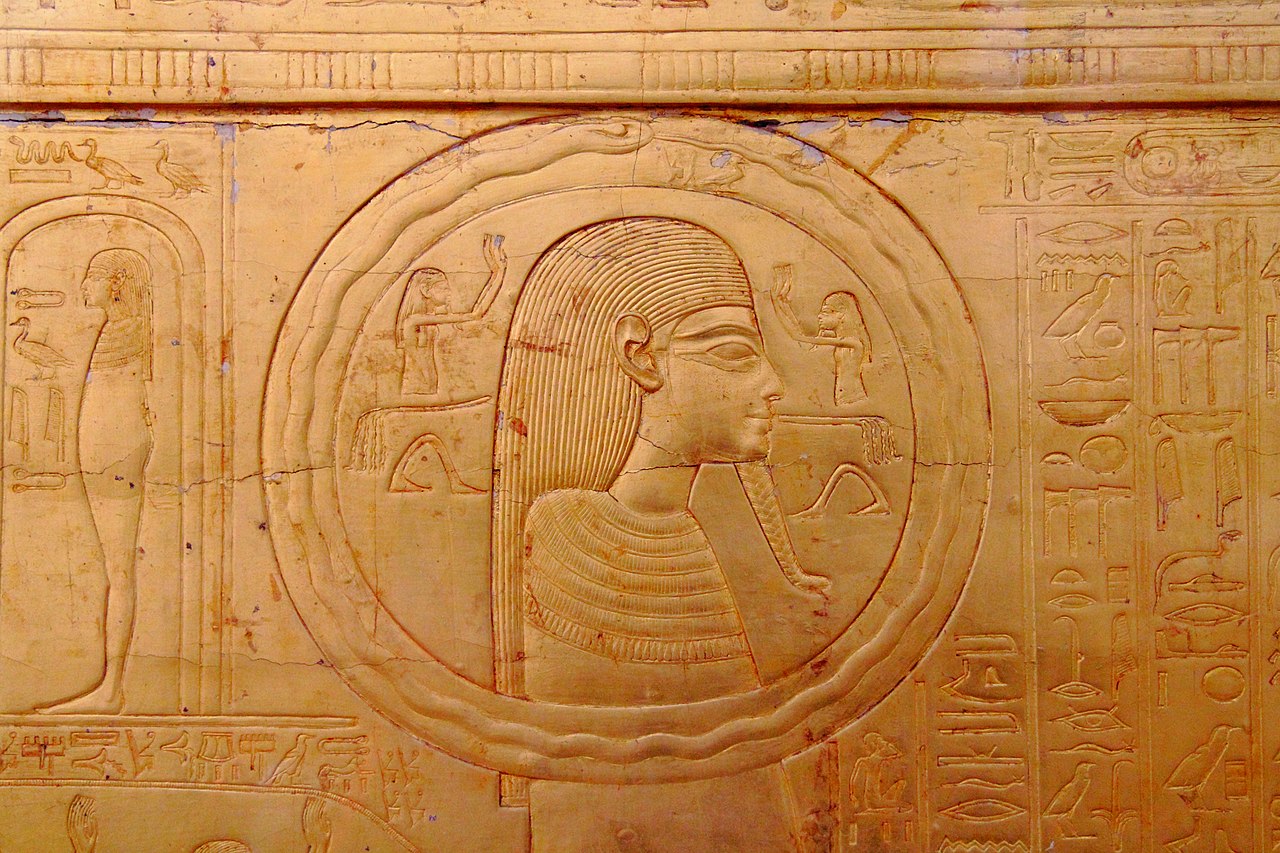
Archaeological and textual evidence places an early example of the motif in the burial context of ancient Egypt: an illustration in the tomb designated KV62, the burial chamber of Tutankhamun from the 14th century BCE, shows serpents encircling a divine figure and has been interpreted as representing cosmic endings and beginnings. From the Mediterranean the image appears in Greek and Roman art and was later adopted and adapted by Gnostic writers, Hellenistic philosophers and medieval alchemists. The symbol resurfaced in Renaissance emblem books and then in modern times in psychology, literature and popular culture.
Uses, examples, and cultural significance
Across different periods the ouroboros served varied purposes: as a funerary emblem expressing ideas about the afterlife, as a cosmological sign denoting the eternal return, and as an alchemical emblem standing for the cyclical process of purification and rebirth. In Norse myth a related idea appears in the great serpent encircling the world, and in Eastern thought similar circular motifs express samsara and cyclical time. In the 20th century, thinkers in symbolic psychology used the ouroboros to illustrate processes of individuation and self-reflection.
Notable distinctions and interpretations
Because the ouroboros recurs in widely separated traditions, scholars emphasize plurality of meanings rather than a single origin story. In some contexts it functions as a protective amulet, in others as an abstract philosophical diagram. Artistic treatments vary from naturalistic serpents to highly stylized dragons or hybrid beasts, and the image is sometimes combined with other symbols — the sun, moon, or alchemical apparatus — to produce more specific associations.
Further reading and related links
The following links point to topics and resources commonly associated with the ouroboros. They are placeholders for sources and thematic entries:
- General surveys of the ouroboros motif
- Serpents in myth and art
- Dragon imagery and symbolism
- Iconography of self-devouring creatures
- Concepts of cyclicality and eternal return
- Symbols of eternity in religion and philosophy
- Comparative motifs: phoenix and other rebirth symbols
- KV62 and Tutankhamun's burial objects
- Archaeological contexts for Egyptian symbolism
- Myths of Ra and Osiris
- Gnostic and Hellenistic interpretations
- Alchemy, Renaissance emblems, and modern receptions
Questions and answers
Q: What is the ouroboros or oroboros?
A: The ouroboros or oroboros is an ancient symbol of a serpent or dragon eating its own tail.
Q: What does the ouroboros symbolize?
A: The ouroboros symbolizes eternity or cyclicality. It is the sense of something constantly re-creating itself.
Q: What does the ouroboros represent?
A: Like the phoenix, it symbolises cycles that begin again as soon as they end.
Q: When was the ouroboros motif first known?
A: The first known appearance of the ouroboros motif is in KV62, the tomb of Tutankhamun, in the 14th century BC.
Q: What is the context of the ouroboros in KV62?
A: The text is about the god Ra and his union with Osiris in the underworld.
Q: What does the figure in KV62 represents?
A: The whole figure represents the beginning and the end of time.
Q: How many serpents are in the KV62 illustration?
A: There are two serpents in the KV62 illustration.
Related articles
Author
AlegsaOnline.com Ouroboros: Symbol of Self-Consumption and Renewal Leandro Alegsa
URL: https://en.alegsaonline.com/art/73632