
Ouro Preto — historic mining town in Minas Gerais, Brazil
Ouro Preto is a colonial-era town in Minas Gerais, Brazil, famous for its 18th-century gold-mining heritage, Baroque architecture, and status as a UNESCO World Heritage site.
Overview
Ouro Preto (Portuguese for "Black Gold") is a historic hilltop town in the state of Minas Gerais in southeastern Brazil. Perched at about 1,116 metres above sea level on a rugged slope, it developed around rich gold deposits and became a focal point of Portuguese colonial settlement in the 18th century. The town retains a dense concentration of colonial buildings, narrow winding streets and stone stairways that reflect its mining-era layout.
Image gallery
10 Images




Origins and historical development
Ouro Preto grew rapidly after gold was discovered in the region during the late 17th and early 18th centuries. Known then as Vila Rica, it became the capital of the Minas Gerais captaincy and an administrative and commercial centre for the mining economy. Wealth from gold financed churches, public buildings and private mansions. The town also played a role in the independence-era political movements of Brazil, and later lost its status as state capital when the seat of government moved to Belo Horizonte at the end of the 19th century.
Architecture, art and cultural heritage
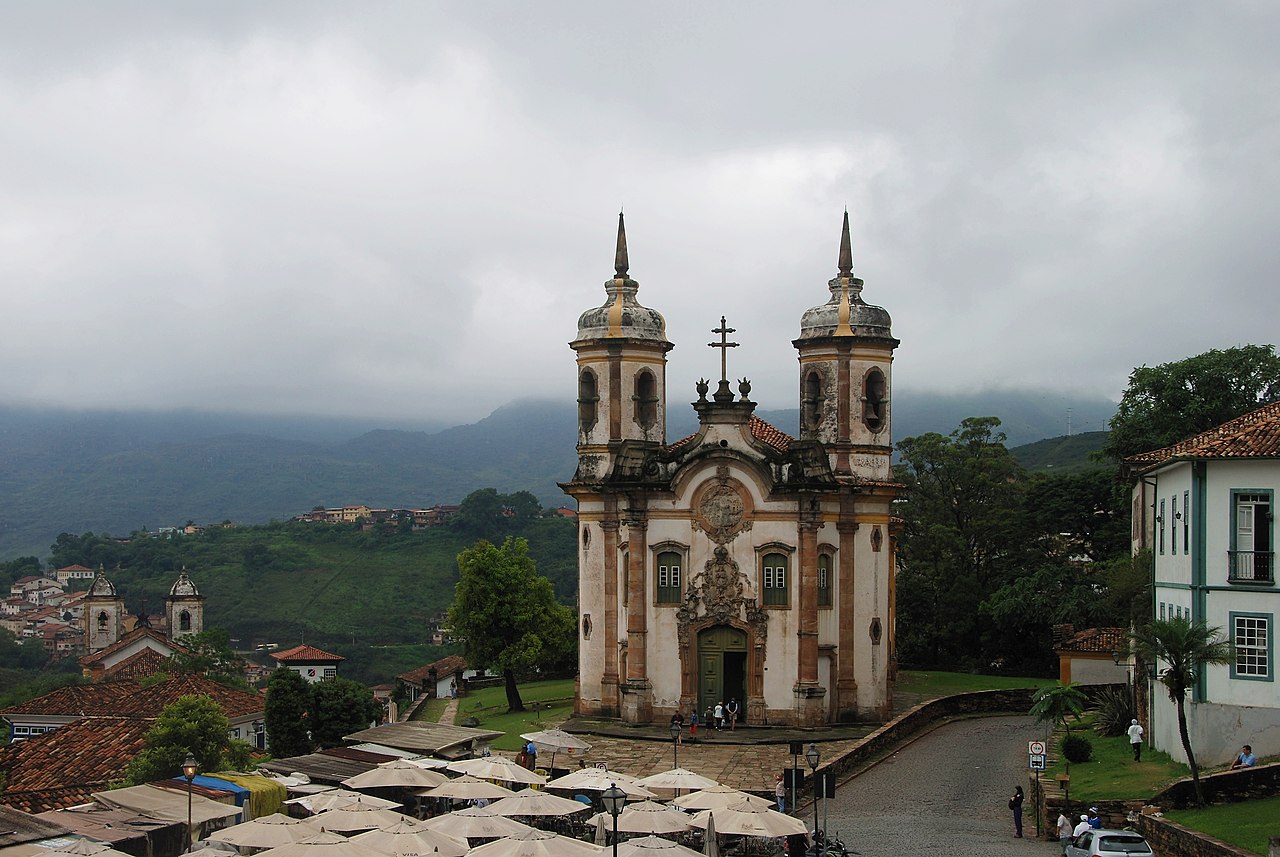
The town is celebrated for its Baroque and Rococo architecture, richly decorated churches and works by prominent colonial artists. Stone facades, gilded altars, carved woodwork and painted ceilings are common features in buildings such as the Church of São Francisco de Assis and other parish churches. The legacy of sculptors and architects from the period is a major reason Ouro Preto was designated a UNESCO World Heritage Site for its outstanding colonial urban ensemble.
Landmarks and institutions
- Churches and chapels: Notable examples of colonial ecclesiastical architecture with elaborate interior decoration.
- Museums: Museums document the mining past, colonial society and the independence movement; they occupy historic buildings and former mint houses.
- Academic life: The town is home to higher-education institutions that contribute to cultural activity and conservation efforts.
Economy, tourism and conservation
While large-scale gold extraction has long diminished, mining shaped the town’s layout and identity. Today Ouro Preto’s economy depends heavily on cultural tourism, museums, festivals and craft industries. Visitors come to see preserved colonial streets, art and architecture, to attend religious and cultural events, and to learn about Brazil’s colonial and mining history. Preservation of fragile historic fabric is an ongoing concern, balancing conservation needs with modern life and infrastructure.
Notable facts
Ouro Preto remains a primary example of Brazil’s colonial-era urbanism and a focal point for studies of Baroque art in the Americas. Its compact historic centre, public museums and preserved monuments make it one of the country’s most visited heritage towns and an important symbol of the mining period that shaped much of Brazil’s early economic and cultural history.
Questions and answers
Q: What is Ouro Preto?
A: Ouro Preto is a town in the state of Minas Gerais, Brazil.
Q: What is the meaning of the name Ouro Preto?
A: The name Ouro Preto means Black Gold in Portuguese.
Q: What are the geographic coordinates of Ouro Preto?
A: The geographic coordinates of Ouro Preto are 20°17′15″S 43°30′29″W.
Q: What is the altitude of Ouro Preto?
A: Ouro Preto is at an altitude of 1116 meters on the slope of a rocky hill.
Q: How many people lived in Ouro Preto in 2010?
A: In 2010, there were about 70,227 people living in Ouro Preto.
Q: In which state is Ouro Preto located?
A: Ouro Preto is located in the state of Minas Gerais, Brazil.
Q: What is the significance of the rocky hill where Ouro Preto is located?
A: The rocky hill is significant because it is the slope where the town of Ouro Preto is located.
Related articles
Author
AlegsaOnline.com Ouro Preto — historic mining town in Minas Gerais, Brazil Leandro Alegsa
URL: https://en.alegsaonline.com/art/73631
Sources
- whc.unesco.org : UNESCO: Historic Town of Ouro Preto
- tempoagora.com.br : Climatologia — Ouro Preto