
Ottawa County, Kansas
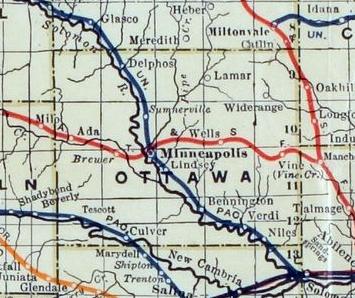
Ottawa County is a small, rural county in north-central Kansas with the county seat at Minneapolis. It is named for the Ottawa people and has an economy centered on agriculture and local services.
Overview
Ottawa County is a rural county in the U.S. state of Kansas. It is named for the Ottawa (Odawa) Native American people and has a modest population; at the 2010 United States census the county reported 6,091 residents. The county seat and largest city is Minneapolis. For official county information see county resources or state government pages at state links.
Image gallery
3 Images

History and identity
The county’s identity reflects a blend of Plains frontier settlement and Native American heritage. European-American settlement increased in the 19th century and the county developed as a collection of small towns and agricultural townships. Basic historical outlines and archival references can be found via regional archives and historical societies (regional history).
Geography and economy
Located in north-central Kansas, Ottawa County is characterized by open farmland, grasslands and small river valleys. The local economy is dominated by agriculture — crop farming and livestock — along with services that support residents and farmers. Transportation and local retail also play a role in the county’s economy; further economic profiles and data are available from demographic sources (demographic data).
Government, communities and services
The county government administers roads, land records, public safety, and local courts from the county seat in Minneapolis. Communities in the county include Minneapolis and a number of smaller towns and unincorporated places; residents rely on local schools, volunteer emergency services and county departments for routine needs. For civic information see municipal and county pages (municipal links).
Recreation and notable features
Outdoor recreation in Ottawa County typically centers on hunting, fishing, walking trails and community parks. Local festivals, county fairs and small museums preserve cultural traditions. Visitors and researchers can consult travel and local tourism guides for seasonal events and points of interest (visitor information).
- County seat: Minneapolis
- Character: predominantly agricultural, low population density
- Recommended sources: county offices, state archives, local historical societies
Questions and answers
Q: Where is Ottawa County located?
A: Ottawa County is a county located in the U.S. state of Kansas.
Q: What is the population of Ottawa County according to the 2010 census?
A: The population of Ottawa County according to the 2010 census is 6,091 people.
Q: What is the standard abbreviation used for Ottawa County?
A: The standard abbreviation used for Ottawa County is OT.
Q: What is the largest city in Ottawa County?
A: The largest city in Ottawa County is Minneapolis.
Q: Who is the state of Kansas located in?
A: The state of Kansas is located in the United States.
Q: What type of information does the text provide about Ottawa County, Kansas?
A: The text provides information about the location, population, standard abbreviation, and largest city of Ottawa County, Kansas.
Q: What is the purpose of mentioning the county seat in the text?
A: The purpose of mentioning the county seat in the text is to indicate the location of the county government and administrative center.
Related articles
Author
AlegsaOnline.com Ottawa County, Kansas Leandro Alegsa
URL: https://en.alegsaonline.com/art/73524
Sources
- quickfacts.census.gov : "State & County QuickFacts"
- naco.org : "Find a County"
- census.gov : "US Gazetteer files: 2010, 2000, and 1990"
- kdwp.state.ks.us : "Ottawa State Fishing Lake" · web.archive.org
- census.gov : "Population and Housing Unit Estimates"
- census.gov : "U.S. Decennial Census"
- mapserver.lib.virginia.edu : "Historical Census Browser"
- census.gov : "Population of Counties by Decennial Census: 1900 to 1990"
- census.gov : "Census 2000 PHC-T-4. Ranking Tables for Counties: 1990 and 2000"
- uselectionatlas.org : uselectionatlas.org/RESULTS/