
Osmoregulation: how organisms control water and salt balance
Osmoregulation is the biological control of water and dissolved solutes across membranes. This article explains mechanisms, examples in microbes, plants and animals, physiological control and ecological importance.
Overview
Osmoregulation is the set of biological processes that maintain the proper balance of water and dissolved salts (ions) inside cells and bodily fluids. Maintaining that balance keeps osmotic pressure within tolerable limits so cells and tissues function normally. All organisms—from single-celled microbes to plants and animals—face osmotic challenges and have evolved strategies either to match their surroundings or to actively regulate their internal fluid composition. For a basic reference about salts often involved in these processes see salt.
Image gallery
5 Images


Basic strategies and mechanisms
Broadly, organisms follow two strategies: osmoconformation and osmoregulation. Osmoconformers allow the composition of their body fluids to approximate the external environment; many marine invertebrates use this approach to minimize energy expenditure. Osmoregulators expend energy to keep internal concentrations distinct from surroundings and are common among vertebrates and many terrestrial animals.
Key cellular and physiological mechanisms include:
- Passive transport: water moves by osmosis across membranes in response to solute gradients.
- Active ion transport: membrane proteins pump sodium, chloride and other ions in or out of cells to adjust osmolarity.
- Specialized organs: kidneys, gills and salt glands filter and excrete excess ions and water.
- Cellular osmolytes: small organic compounds (e.g., certain amino acids and sugars) are accumulated or released to protect proteins and maintain volume.
Examples across life
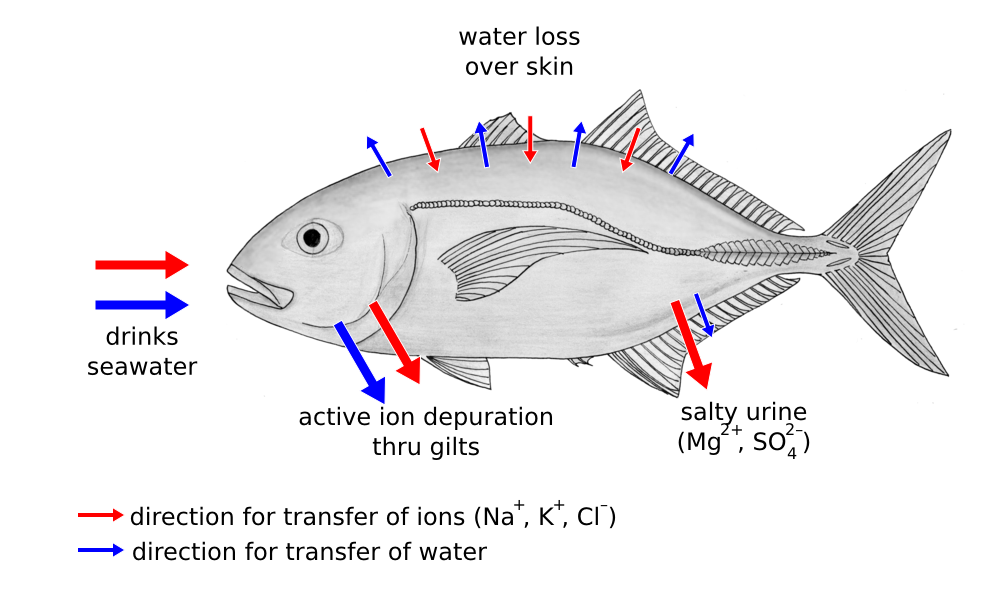
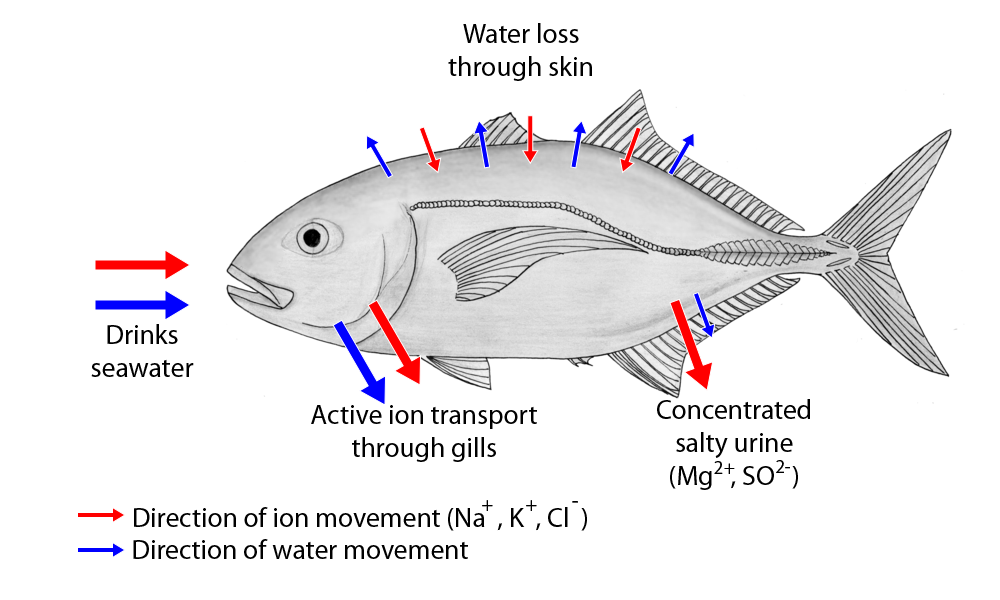
Single-celled organisms regulate internal pressure using contractile vacuoles or compatible solutes; many freshwater protists and bacteria use pumps and channels to prevent swelling. In fish, marine bony species drink seawater and excrete salts through specialized cells in their gills, while freshwater fish actively take up ions from dilute water and eliminate large volumes of dilute urine. Some species are euryhaline and tolerate a wide range of salinities—an example is the flounder, which shifts its physiology as it moves between estuaries and open sea.
Physiological control and hormonal regulation
In vertebrates, osmoregulation is integrated with endocrine signals. Hormones such as antidiuretic hormone (vasopressin) and mineralocorticoids influence kidney filtration, water reabsorption and ion transport to restore balance after dehydration or salt gain. Behavioral responses—moving between fresh and salt water, seeking shade, or altering feeding—also contribute.
Ecological and medical relevance
Osmoregulatory ability shapes habitat range and life-history strategies, and affects responses to environmental change such as salinization or drought. In medicine, disruptions of osmoregulation underlie conditions like dehydration, hyponatremia and kidney disorders, making the principles important for clinical care and public health.
Notable distinctions
Understanding whether an organism is a conformer or regulator helps predict its energy budget and tolerance to changing environments. The same basic physical laws of osmosis apply at cellular and whole-organism scales, but the solutions—molecular pumps, organs, behaviors—are diverse and closely tied to evolutionary history.
Questions and answers
Q: What is osmoregulation?
A: Osmoregulation is how living things keep the right amount of salt and water in their bodies.
Q: Who does osmoregulation?
A: All living things do this, from bacteria to humans.
Q: What are regulators and conformers?
A: Regulators actively do things which act to keep their internal water at a standard level of saltiness, while conformers match their environment.
Q: How do sea fish maintain osmotic pressure?
A: Sea fish tend to gain salt if they live in seawater, so they actively put out (excrete) salt from their gills.
Q: How do river fish maintain osmotic pressure?
A: River fish take the salt out before they excrete water.
Q: Are there any animals that can adapt to both fresh and salt water environments?
A: Yes, some fish like the flounder can live in both fresh and salt water at different stages in its life and adapt accordingly.
Related articles
Author
AlegsaOnline.com Osmoregulation: how organisms control water and salt balance Leandro Alegsa
URL: https://en.alegsaonline.com/art/73392