
Orrery: Mechanical models of the Solar System
An orrery is a geared, usually heliocentric mechanical model that illustrates the positions and motions of planets and moons for education, demonstration, and historical study.
Overview
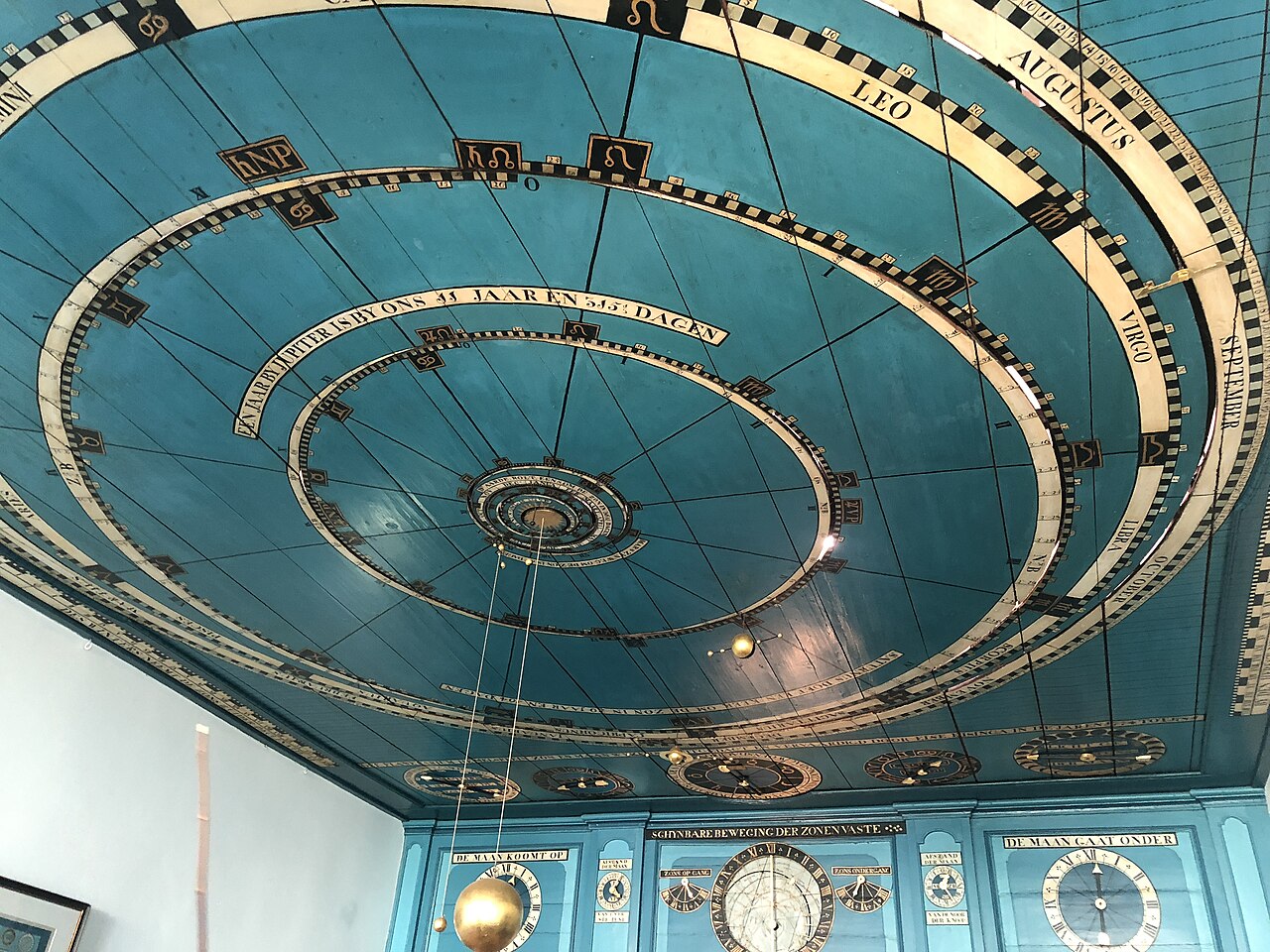
An orrery is a mechanical device that represents the Solar System and the relative motions of its bodies. Typically arranged with a bright sphere at the center to represent the Sun, an orrery uses arms, gears and spheres to show how the Solar System evolves over time. In modern usage the term describes small tabletop models as well as large, museum-scale instruments.
Image gallery
10 Images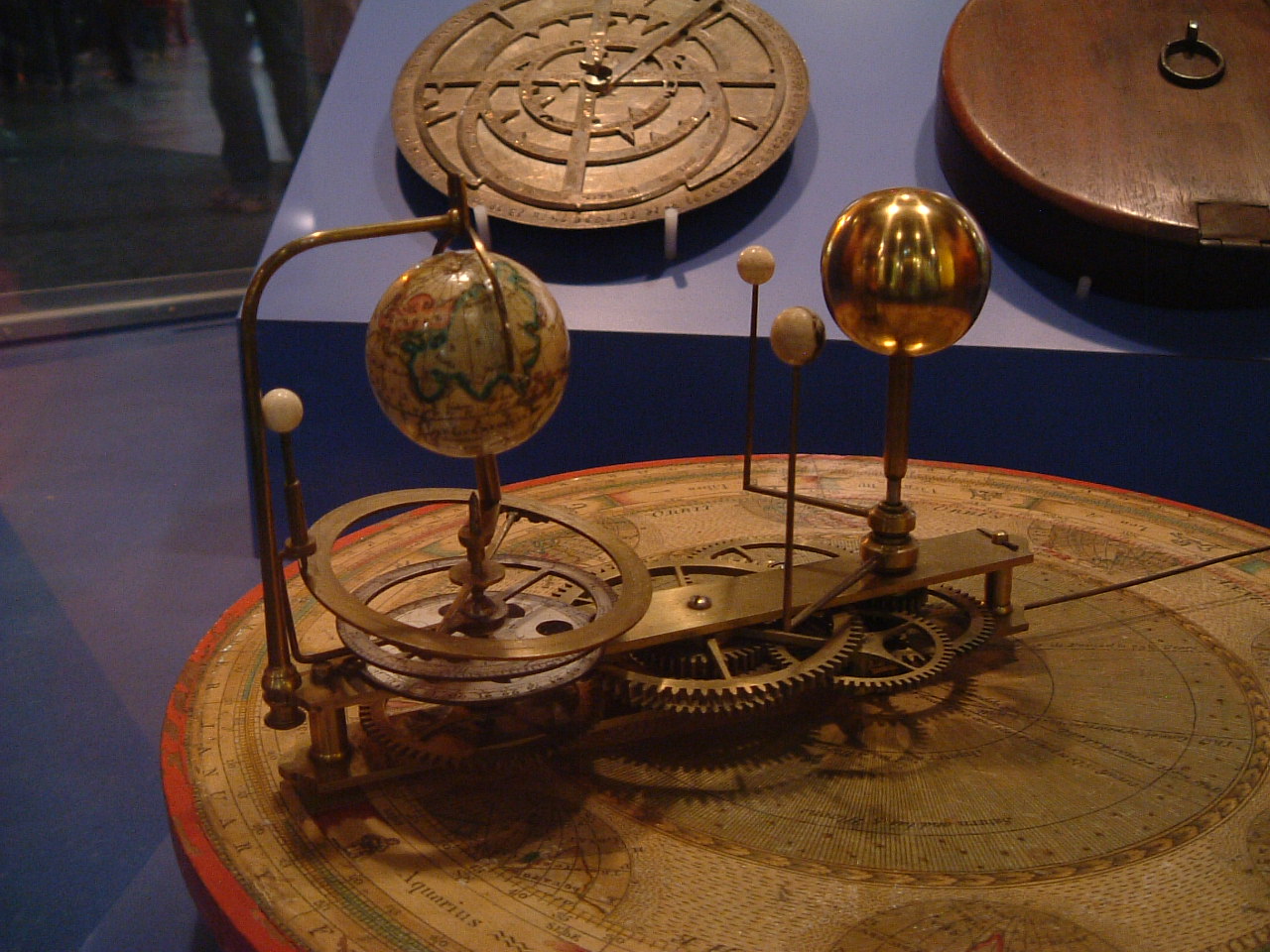






Design and components
Orreries are built from an assembly of toothed wheels and shafts that translate rotation from a single drive into differing orbital rates. Common elements include:
- Central sun — a globe or lamp that marks the system's center.
- Planet arms and spheres — radial spokes tipped with scaled representations of the planets.
- Moon carriers — smaller gears or sub-arms that show the motion of moons.
- Drive mechanism — often a wound or clock-driven gear train; historically described as clockwork.
History and development
Mechanical models of the heavens have ancient roots. The most famous early example is the Antikythera mechanism, an ancient Greek geared instrument that demonstrates how long-running cycles were computed centuries before the modern era. Early modern orreries appeared in the 17th and 18th centuries, when craftsmen combined advances in clockmaking with interest in heliocentric astronomy. One early 18th-century device was presented to Charles Boyle, 4th Earl of Orrery, and the name became associated with these planetary models.
Uses, education and legacy
Orreries have long served as educational tools, making orbital periods, conjunctions and retrograde motion tangible. They were used by teachers, by instrument makers to showcase skill, and by collectors as decorative scientific objects. While modern computer simulations now perform most predictive tasks, physical orreries remain valuable for teaching, museum displays and historical study.
Notable distinctions and facts
Orreries differ from planetaria (public projection theaters) and from mathematical tables: they are primarily physical mechanical models that emphasize relative motion rather than accurate distances. Many surviving examples are incomplete or simplified — most do not portray true scale for size or spacing, but rather scale orbital periods and alignments so observers can compare motions at a glance.
For further overviews and images of historic and modern instruments see resources on mechanical models and museum collections: selected galleries, technical descriptions at specialist sites on gearing, and historical analyses beginning with the Antikythera studies. Replicas and contemporary artisans continue to build both faithful reconstructions and decorative variations for education and display.
Questions and answers
Q: What is an orrery?
A: An orrery is a mechanical model of the Solar System.
Q: What does an orrery show?
A: An orrery shows the relative positions and motions of the planets and moons in the Solar System.
Q: Is an orrery heliocentric or geocentric?
A: An orrery is usually heliocentric.
Q: Who had working planetaria?
A: The Greeks had working planetaria.
Q: When was the first orrery of the modern era produced?
A: The first orrery of the modern era was produced in 1704.
Q: Who was presented the first orrery?
A: The first orrery was presented to Charles Boyle, 4th Earl of Orrery, hence the name.
Q: What is the globe in the centre of an orrery?
A: The globe in the centre of an orrery represents the Sun, with a planet at the end of each arm.
Q: What was the first known orrery?
A: The first known orrery was the Antikythera mechanism, which was produced between 60 and 150 BC.
Related articles
Author
AlegsaOnline.com Orrery: Mechanical models of the Solar System Leandro Alegsa
URL: https://en.alegsaonline.com/art/73247