
Ornamentation in Music: Decorative Notes, Historical Practice, and Performance
Ornamentation adds decorative notes to a melody for expression and variety. This article explains common ornaments, historical development from Renaissance to Romantic eras, notation, performance practice and modern uses.
Ornamentation in music refers to the small, often rapid notes or melodic figures added to principal tones to enrich expression, articulation and texture. These added tones—called ornaments—can be written explicitly by a composer or supplied by a performer. In many historical styles, ornamentation was an essential expressive resource rather than an optional flourish, and its correct execution is central to authentic interpretation. For a general overview of the concept see ornaments.
Image gallery
6 Images


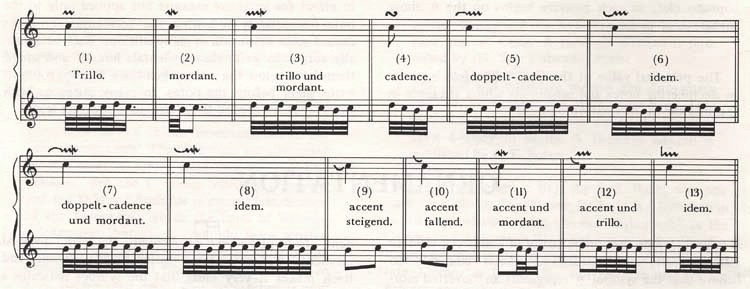
Common types and notation
Ornaments come in many forms and names. Typical examples include the trill (rapid alternation between two adjacent pitches), the mordent (a quick alternation usually involving the main note and its lower or raised neighbor), the turn (a four-note figure surrounding the principal pitch), the slide or portamento, and various grace notes. A grace note is traditionally printed smaller than regular notes to indicate it does not occupy full rhythmic value in the bar. Different editors and composers use distinct symbols or shorthand to indicate these figures, and the exact timing and emphasis may not be fully specified in the notation itself. When discussing rhythm and timing of added notes it is helpful to recall the concept of the bar or measure, as in measure.
Historical development and regional styles
Ornamentation has evolved across eras and places. During the Renaissance and early instrumental traditions, decorative figures were often improvised or written as variations called divisions or diminutions; see further reading on the Renaissance. In the Baroque era ornamentation became highly codified: composers and treatises gave names and symbols for particular agréments and prescribed their execution. French keyboard and lute music used a distinct vocabulary of small signs, often referred to as agréments, while Spanish plucked-instrument repertoire developed patterns known as "diferenzias" that appear in early published guitar books. For example, sources indicate such practices were in circulation as early as the 16th century and in regional traditions such as Spain. The Baroque period as a whole remains a primary focus of scholarship on ornament practice; see materials on the Baroque era.
Instruction, sources, and editorial issues
Because many ornaments were improvised by performers, modern interpreters rely on a mix of written instructions, composer prefaces, and theoretical treatises to reconstruct period practice. Several historical authors and teachers wrote manuals explaining how to execute common ornaments and when to add them; these writings are essential for historically informed performance and are discussed in specialist literature and pedagogical collections (treatises and instructional sources). Editors of modern editions must decide whether to realize ornaments explicitly or to leave symbols for the performer; either choice affects interpretation and authenticity.
Performance practice and interpretive choices
Deciding when and how to ornament depends on tempo, style, instrument, and cultural context. In fast movements, ornaments often emphasize agility and rhythmic bite; in slow, lyrical movements, added notes may heighten expressive nuance and tension. Singers, keyboard players, violinists and wind players each have idiomatic options and technical constraints. Historically informed performers study source markings, regional conventions and surviving examples to choose ornaments that fit the work's style while avoiding anachronistic or excessive additions.
Uses and modern relevance
Ornamentation is not confined to early music. While Classical and Romantic composers tended to specify more of the exact pitches to be played—reducing reliance on performer-supplied embellishment—ornaments remain present in scores and in contemporary practice. Jazz, folk and non-Western traditions routinely employ ornament-like devices for expression and phrasing, and modern performers often study historical ornaments to enrich interpretation. Editions, recordings and pedagogical resources continue to address technical execution and stylistic taste, including sources for plucked instruments such as early guitar literature.
- Key points: ornaments decorate principal notes, can be written or improvised, and vary by era and region.
- Research resources: consult historical treatises, composer prefaces and modern scholarship to inform practice (instructional sources).
- Practical tip: match ornament choice to tempo, instrument and taste; when in doubt, favor stylistic modesty and musical line.
For further general context and examples consult introductory materials and specialist entries on ornaments and performance practice in period styles through music dictionaries and historical overviews (general overview, Renaissance, Baroque). Practical editions and recordings often provide audible models for learning how specific ornaments were executed in different traditions; see also pedagogical collections and modern realizations (notation and rhythm, Spanish traditions, early publications, plucked-instrument sources).
Questions and answers
Q: What are ornaments in music?
A: Ornaments in music are notes which are added to the main notes of a piece of music in order to make it more interesting.
Q: What types of ornaments exist?
A: There are several types of ornaments, including trills and slides.
Q: How did composers show what ornaments were needed?
A: The composer usually showed what ornaments were needed by little signs written above the notes. In some pieces, especially in slow movements, the composers often did not show the ornaments that were needed and expected performers to put them in themselves.
Q: How did ideas about how music should be performed change over time?
A: Ideas about how music should be performed kept changing from one country to another and from one century to another.
Q: What is a grace note?
A: A “grace note” is a note written in smaller print, to show that its note value (how long it lasts) does not count as part of the total time value of the measure.
Q: When was diferenzias used for guitar music? A: Diferenzias were used as early as the 16th century when the first books with guitar music were produced.
Q: Was ornamentation still used during Classical period compositions?
A: Ornaments were still written in music from the Classical period although they gradually became less common as composers started writing precisely all the notes that had to be played.
Tags
Related articles
Author
AlegsaOnline.com Ornamentation in Music: Decorative Notes, Historical Practice, and Performance Leandro Alegsa
URL: https://en.alegsaonline.com/art/73206