
Origin of Birds: Evolutionary Transition from Theropod Dinosaurs
Summary of how birds originated from theropod dinosaurs, key fossil and anatomical evidence, historical milestones, hypotheses about the origin of flight, and the significance of avian evolution.
Overview
The origin of birds is a central question in palaeontology and evolutionary biology. Most scientists agree that birds are living descendants of certain small, bipedal theropod dinosaurs, a relationship that places modern birds within the larger group Sauropsida. This conclusion rests on anatomical similarities, fossil sequences, and developmental and molecular data.
Image gallery
10 Images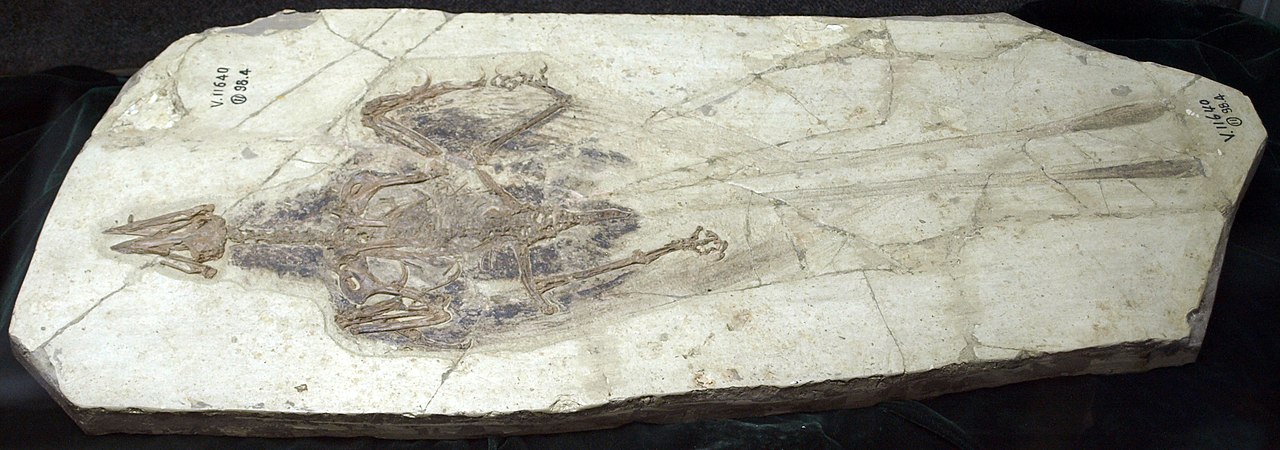


Key evidence and characteristics
Several lines of evidence link early birds with theropod dinosaurs: a furcula (wishbone), three-toed feet, hollow bones, similar lung and air sac systems, and especially feathers. Feathers appear in a range of non-avian theropods, showing that feather-like structures had functions before powered flight. Important diagnostic features are often summarized as shared derived traits of the clade Avialae.
- Skeleton: many small theropods and early birds share similar limb and wrist bones that suggest a capacity for wing folding and feather support.
- Feathers: preserved integumentary structures range from simple filaments to complex pennaceous feathers associated with flight surfaces.
- Respiration and metabolism: patterns of pneumatic (air-filled) bones and possible high metabolic rates are inferred from fossils and bone microstructure.
Historical milestones
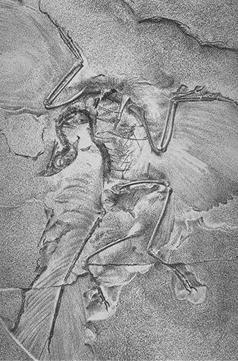
Comparative anatomist Thomas Henry Huxley recognized the similarity between the first described bird, Archaeopteryx, and small theropod dinosaurs such as Compsognathus. These fossils were found in the same Late Jurassic Solnhofen limestone of Bavaria (Solnhofen, Germany) and date to about the end of the Jurassic period. Huxley's work united reptiles and birds under Sauropsida and argued that birds evolved from small carnivorous dinosaurs, a view that gained strong support as more feathered theropods were discovered in the 20th and 21st centuries.
Notable fossils and timeline
Archaeopteryx remains an iconic specimen, but numerous Cretaceous and Jurassic theropods found in China and elsewhere show an array of feather types and wing-like limbs. These discoveries help fill the transition from ground-dwelling, feathered theropods to true, volant birds. Fossil-bearing strata and dating methods place key stages of this transformation across the Mesozoic era, especially in deposits from the Late Jurassic to the Cretaceous.
How flight may have begun
Debate continues about whether powered flight evolved from tree-climbing ancestors (the "arboreal" or "trees-down" hypothesis) or from ground-running, flapping predators (the "cursorial" or "ground-up" hypothesis). Evidence supports elements of both: some lineages show limb adaptations for climbing and gliding, while others display traits favoring rapid flapping and leaping. Functional studies of feather form, wing mechanics and muscle attachment inform these competing models.
Significance and distinctions
Recognizing birds as a branch of theropod dinosaurs reshaped classification and our understanding of traits like feathers, endothermy, and complex behaviors. Modern birds (Neornithes) are the only surviving avian lineage after the Cretaceous–Paleogene extinction, but the broader avian stem includes many extinct forms with a mosaic of reptilian and avian characteristics. For further reading on specific aspects of this transition, see resources on evolutionary context, the fossil record, and modern comparative anatomy: theropod relationships, stratigraphy, Jurassic period, geologic dating, limb anatomy, feather evolution.
Each new fossil discovery and analytical method refines our picture of how birdlike anatomy assembled over millions of years. The origin of birds thus remains a dynamic research area, bridging fossil evidence, comparative anatomy, developmental biology and biomechanics.
Questions and answers
Q: What is the origin of birds?
A: Birds evolved from theropod dinosaurs during the Mesozoic era.
Q: Who studied the origin of birds nearly 150 years ago?
A: Thomas Henry Huxley ("Darwin's bulldog") made a study of the origin of birds nearly 150 years ago.
Q: What is Archaeopteryx?
A: Archaeopteryx is the first fossil bird.
Q: What did Huxley compare Archaeopteryx with?
A: Huxley compared Archaeopteryx with a small theropod dinosaur, Compsognathus.
Q: Why were Huxley's papers on Archaeopteryx and the origin of birds of great interest then and still are?
A: Huxley's papers on Archaeopteryx and the origin of birds were of great interest then and still are because he united reptiles and birds under the title of Sauropsida, and thought that birds had evolved from small carnivorous dinosaurs.
Q: When did the Solnhofen limestone in Bavaria, Germany come from?
A: The Solnhofen limestone in Bavaria, Germany came from the end of the Jurassic period, about 144 million years ago.
Q: What were the similarities between Archaeopteryx and Compsognathus?
A: The similarities between Archaeopteryx and Compsognathus, except for the front limbs and feathers of Archaeopteryx, were almost identical.
Related articles
Author
AlegsaOnline.com Origin of Birds: Evolutionary Transition from Theropod Dinosaurs Leandro Alegsa
URL: https://en.alegsaonline.com/art/73138
Sources
- plosone.org : plosone.org/article/info:doi/10.1371/journal.pone.0007390
- doi.org : 10.1038/nature08322
- pubmed.ncbi.nlm.nih.gov : 19794491
- news.bbc.co.uk : "New feathered dinosaur discovered"
- ivpp.ac.cn : ivpp.ac.cn
- bbc.co.uk : bbc.co.uk
- news.bbc.co.uk : Fossil feathers reveal their hues. BBC Science News 2008
- news.bbc.co.uk : Gill, Victoria 2010. Dinosaur had ginger feathers.
- bbc.co.uk : bbc.co.uk/news/science-environment-14979905
- cell.com : "Early evolution of modern birds structured by global forest collapse at the end-Cretaceous mass extinction"
- doi.org : 10.1016/j.cub.2018.04.062
- pubmed.ncbi.nlm.nih.gov : 29804807
- doi.org : 10.1002/9781119020677
- dx.doi.org : 10.1126/science.1126377
- sciencemag.org : Supporting Online Material