
Order of Canada
A principal Canadian civilian honour established in 1967 to recognize outstanding lifetime achievement, service to community and contribution to the nation, with three ranks and an advisory selection process.
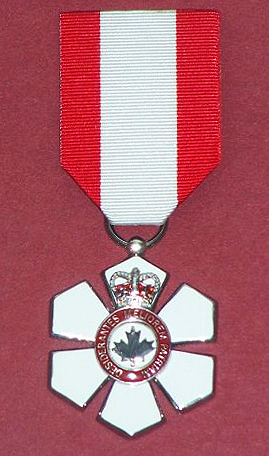
The Order of Canada is one of the country's highest civilian honours, created in 1967 to recognize people whose achievements have enriched the lives of others and made a lasting contribution to Canadian society. Its stated purpose is to celebrate a broad range of accomplishments — from the arts and sciences to public service, business, community work and philanthropy — that reflect distinction, innovation and dedication to the public good. The order’s Latin motto, DESIDERANTES MELIOREM PATRIAM, is commonly translated as "They desire a better country."
Image gallery
8 Images




Structure and insignia
The Order of Canada has three grades to acknowledge differing levels of contribution and impact: Companion (the highest rank), Officer and Member. Recipients are entitled to use post-nominal letters appropriate to their grade (C.C., O.C., C.M.). Each level has a corresponding insignia worn at formal events; the badge and ribbon incorporate Canadian emblems and the order’s motto. The Governor General of Canada acts as the Chancellor and principal patron of the order and presides over investiture ceremonies.
History and development
The order was established during Canada’s centennial year and formally created by Letters Patent from the sovereign to provide a distinctly Canadian honour distinct from British orders. Since its inauguration, the Order of Canada has evolved into a broadly respected system for recognizing lifetime achievement and service across regions and fields. Over the decades it has become a visible symbol of national appreciation for the diverse contributions that shape Canadian life.
Selection and appointment
Appointments are made by the Governor General on the recommendation of an independent advisory council that reviews nominations from the public. Canadian citizens are eligible for appointment; however, a limited number of honorary appointments are permitted annually for non-Canadians who have rendered extraordinary service to Canada or humanity (currently up to five per year). The council evaluates nominees on merit, impact, and sustained service rather than on single acts of distinction.
Uses, examples and significance
Recipients come from many walks of life: scientists whose discoveries advanced knowledge, artists whose work changed cultural life, community leaders who strengthened civic institutions, business people whose innovations benefited Canadians, and volunteers whose long-term commitment improved local communities. The honour publicly acknowledges contributions that provide inspiration and role models for others, and it helps raise awareness of exemplary civic engagement.
Distinctions and notable facts
- The order recognizes lifetime achievement more than one-time accomplishments and can be awarded across a broad spectrum of professions and activities.
- Appointments may be revoked in exceptional circumstances if a recipient’s conduct is later judged to bring the order into disrepute.
- While civilian in character, the Order of Canada exists alongside other national awards that recognize military valour or specific service areas; it remains a central component of Canada’s honours system.
Questions and answers
Q: Who created the Order of Canada?
A: The Order of Canada was set up by Queen Elizabeth II.
Q: What is the purpose of the Order of Canada?
A: The purpose of the Order of Canada is to reward service to Canada.
Q: How many classes or ranks does the Order of Canada have?
A: The Order of Canada has three classes or ranks.
Q: What types of achievements do the three classes or ranks of the Order of Canada recognize?
A: The three classes or ranks of the Order of Canada recognize a lifetime of outstanding achievement, dedication to the community, and service to the nation.
Q: Can non-Canadian citizens receive the Order of Canada?
A: Non-Canadian citizens cannot receive the Order of Canada, but up to five foreigners can be given an honorary award each year.
Q: What is the motto of the Order of Canada?
A: The motto of the Order of Canada is DESIDERANTES MELIOREM PATRIAM, which translates to "They desire a better country" in English.
Q: Is the Order of Canada a high honour in Canada?
A: Yes, the Order of Canada is at the top of Canada's honours system and is considered a high honour in Canada.
Related articles
Author
AlegsaOnline.com Order of Canada Leandro Alegsa
URL: https://en.alegsaonline.com/art/73004
Sources
- commons.wikimedia.org : Order of Canada