
Optical fiber
A slender strand of glass or plastic that guides light for communication, sensing, medical imaging and illumination using total internal reflection and specialized designs.
Overview
An optical fiber is a thin, flexible strand made of glass or plastic that transmits light from one end to the other with low loss. The field that studies these fibers and their applications is known as fiber optics, a branch of applied science and engineering. Optical fibers form the backbone of modern high-capacity communication systems and are used wherever guided light has advantages over electrical conductors.
Image gallery
10 Images






Structure and principles
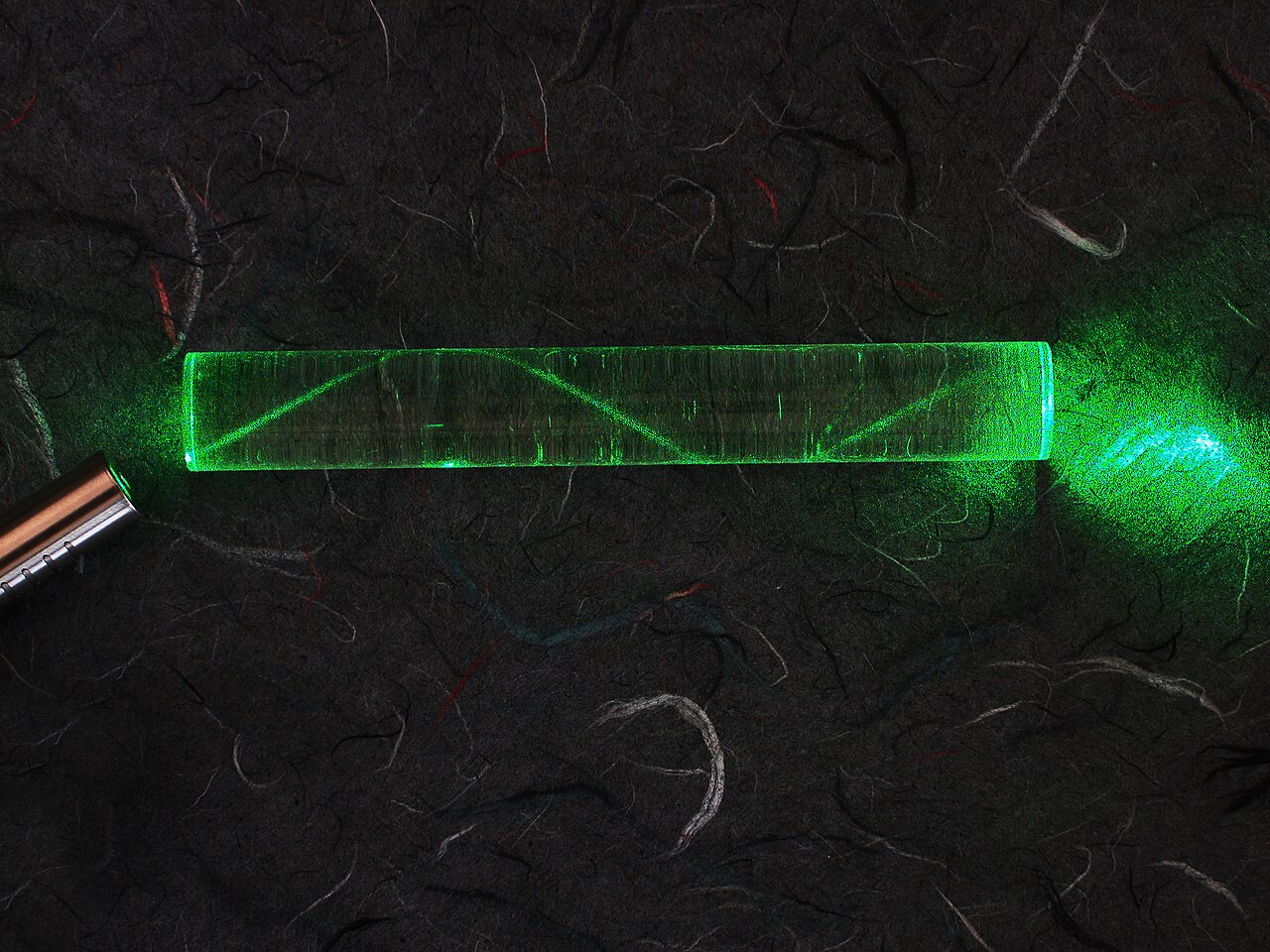
Most fibers consist of a central core surrounded by a cladding layer with a slightly lower refractive index. Light launched into the core is kept inside by total internal reflection, allowing signals to travel long distances. Key performance factors include attenuation (loss of signal), dispersion (pulse spreading), numerical aperture (light acceptance angle), and bandwidth. Fibers are commonly classified as single-mode, which carries one light path over long distances, or multimode, which supports multiple paths and is often used for shorter links.
History and development
The idea of guiding light in a thin medium goes back to nineteenth-century experiments, but practical low-loss glass fibers emerged in the late twentieth century after advances in glass purity and fabrication. Pioneering theoretical and experimental work showed that carefully manufactured glass could carry signals with acceptably low attenuation, enabling their rapid adoption in telecommunications and other fields.
Uses and importance
Optical fibers are notable for their high capacity, immunity to electromagnetic interference, and suitability for long-distance transmission. Common uses include:
- Telecommunications and internet backbone networks that carry voice, data and video worldwide.
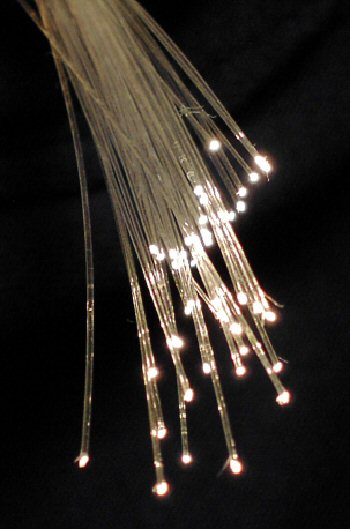
- Lighting and decorative illumination, where flexible, cool light is needed.
- Sensing applications that measure temperature, strain, or chemical composition by monitoring light changes.
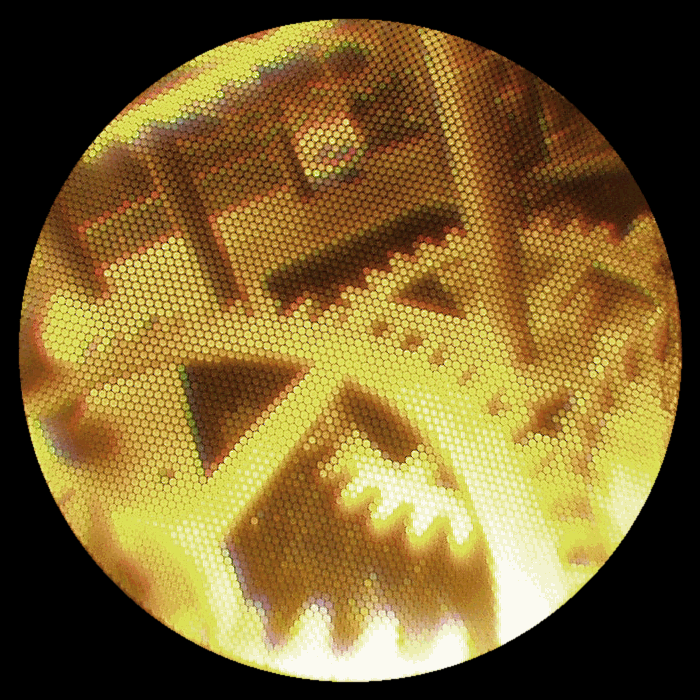
- Endoscopic and inspection cameras used in medicine and industry to view confined or internal spaces.
Characteristics, variants and notable facts
Fibers vary by core size, material and coating. Plastic optical fiber is cheaper and simpler for short-range or consumer uses, while silica glass fibers dominate long-haul and high-speed links. Specialized fibers exist for high-power delivery, dispersion management, or sensing. Connectors and splices join fibers with low loss; installation practices and testing ensure system reliability. Because fibers carry light rather than electricity, they are ideal where electrical isolation, low weight, or high bandwidth density are required.
In summary, optical fiber technology is a mature and continually evolving platform that underpins modern communications, enables advanced imaging and sensing, and provides practical Lighting and industrial solutions across many sectors.
Questions and answers
Q: What is an optical fiber?
A: An optical fiber is a thin fiber of glass or plastic that can carry light from one end to the other.
Q: What is the study of optical fibers called?
A: The study of optical fibers is called fiber optics, which is part of applied science and engineering.
Q: What are optical fibers mainly used for?
A: Optical fibers are mainly used in telecommunications, but they are also used for lighting, sensors, toys, and special cameras for seeing inside small spaces.
Q: How are optical fibers sometimes used in medicine?
A: They are sometimes used in medicine to see inside people, like down their throat.
Q: Are there any other uses for optical fibers besides telecommunications?
A: Yes, they are also used for lighting, sensors, toys, and special cameras for seeing inside small spaces.
Q: Is it possible to use an optical fiber to look inside a person's body?
A: Yes, they can be used in medicine to see inside people like down their throat.
Q: Is the study of optical fibers part of applied science or engineering?
A: The study of optical fibers is part of applied science and engineering.
Related articles
Author
AlegsaOnline.com Optical fiber Leandro Alegsa
URL: https://en.alegsaonline.com/art/72888
Sources
- commons.wikimedia.org : optic fiber
- books.google.com : City of light, the story of fiber optics
- nobelprize.org : "Press release — Nobel Prize in Physics 2009"