
Open Shortest Path First (OSPF) — Link-State Interior Routing Protocol
OSPF is a link-state interior routing protocol used inside organizations. It builds a map of the network, runs a shortest-path algorithm, and divides networks into areas for scalability and fast convergence.
Overview
Open Shortest Path First (OSPF) is a widely used routing protocol for computer networks and for routing within the broader internet when operated inside an administrative domain. It is an interior gateway protocol (IGP) designed to distribute topology information so each router can calculate the best paths through a network.
Image gallery
10 Images





How OSPF works
OSPF is a link-state protocol: routers flood descriptions of their directly connected links to all other routers in the same area. Each router stores those advertisements in a link-state database and runs a shortest-path-first computation—derived from Dijkstra's algorithm—to build a routing table. Neighbors learn of each other by exchanging hello messages and form adjacencies to ensure reliable distribution of link-state information.
Key features
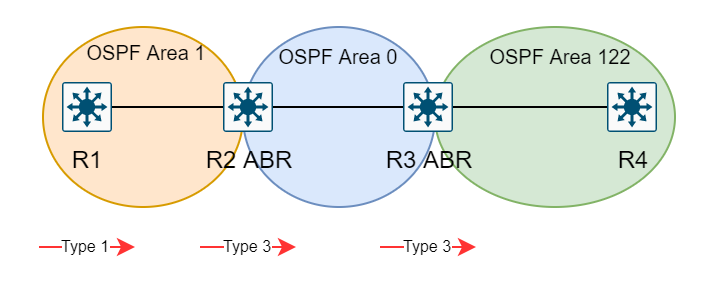
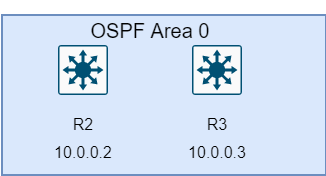
- Hierarchical design: networks are grouped into areas with a backbone area (commonly called area 0) to limit flooding and improve scalability.
- Cost metric: links are assigned costs that the algorithm uses to prefer routes based on policy or bandwidth.
- Multiple network types: supports point-to-point, broadcast, and non-broadcast multi-access links, with specific neighbor and election behavior per type.
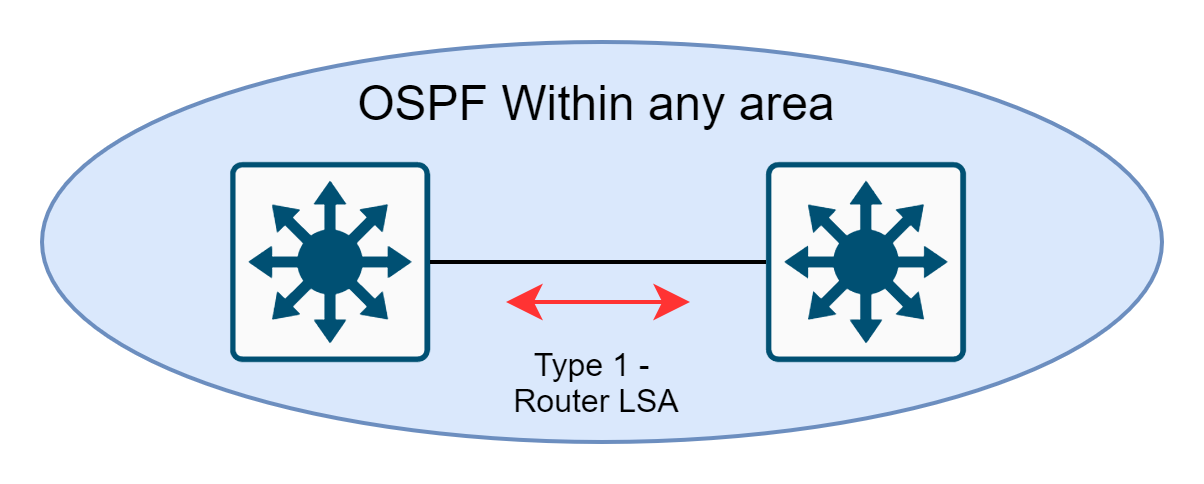
- Types of LSAs: different Link State Advertisements convey router, network, summary and external reachability information and are processed according to area boundaries.
- Authentication and extensions: supports authentication of protocol exchanges and has been extended to support IPv6 (OSPFv3) and various operational enhancements.
OSPF routers exchange link-state information reliably by flooding LSAs and using sequence numbers and acknowledgements. The protocol organizes topology into areas to limit the scope of changes and accelerate recomputation after a topology event.
When and where it is used
OSPF is commonly deployed in enterprise and campus networks where rapid convergence and predictable route selection are important. It is preferred over simple distance-vector protocols for larger, more complex networks because it minimizes route count oscillation and provides greater control over traffic engineering. While exterior gateways rely on other protocols to exchange inter-domain routes, OSPF handles the exchange of route information for routing packets inside a single administrative domain.
Standards and history
Developed and maintained through the IETF, OSPF evolved to address needs for scalable, robust interior routing; its specifications and subsequent updates are managed via standards-track documents and vendor implementations. Modern deployments may run OSPFv2 for IPv4 routing or OSPFv3 for IPv6, and operational practice emphasizes careful area design, stable link metrics, and appropriate filtering to maintain predictable behavior. For further technical references consult protocol documents and implementation guides published by standards bodies and vendors (IETF).
Questions and answers
Q: What is OSPF?
A: OSPF stands for Open Shortest Path First, which is a routing protocol used for computer networks and the internet.
Q: What is the basis of OSPF?
A: OSPF is based on Dijkstra's algorithm.
Q: Who standardized OSPF?
A: OSPF was standardized by the IETF.
Q: What kind of gateway protocol is OSPF?
A: OSPF is an interior gateway protocol.
Q: What is the purpose of OSPF?
A: The purpose of OSPF is to route packets inside the network of one organization.
Q: What benefits does OSPF offer for routing?
A: OSPF offers faster convergence, better scalability, and more efficient use of bandwidth for routing.
Q: How is OSPF different from other routing protocols?
A: OSPF is unique in that it supports multiple paths between nodes, which allows for load balancing and redundancy in the network.
Related articles
Author
AlegsaOnline.com Open Shortest Path First (OSPF) — Link-State Interior Routing Protocol Leandro Alegsa
URL: https://en.alegsaonline.com/art/72767