
Oomycete (water mold): biology, life cycle, and impact
Oomycetes are fungus-like microorganisms in the heterokont lineage. This article explains their biology, differences from true fungi, life cycle, historical classification, and ecological and economic importance.
Overview
Oomycetes, often called water molds, are a group of microscopic eukaryotic organisms that resemble fungi but belong to the heterokont lineage. They include familiar genera such as Phytophthora, Pythium and Saprolegnia. Many species live in moist or aquatic environments and obtain nutrients by breaking down organic matter or by infecting plants and animals. A number of oomycetes are important pathogens that have caused widespread disease in agriculture and natural ecosystems.
Image gallery
10 Images





Distinctive characteristics
Although they look similar to filamentous fungi, oomycetes differ in several fundamental ways. Their cell walls are composed mainly of cellulose rather than chitin. Their vegetative bodies are typically coenocytic (multinucleate and lacking frequent cross-walls), and many species produce motile asexual spores called zoospores that bear two unequal flagella — a hallmark of heterokonts. In sexual reproduction they form thick-walled oospores. Genetically and evolutionarily, oomycetes are more closely related to algae and other stramenopiles than to true fungi.
Life cycle and reproduction
Oomycetes may reproduce both asexually and sexually. Asexual reproduction commonly involves the release of zoospores that swim in water films to find new hosts or substrates. Sexual reproduction results in oospores formed by fusion of gametangia; oospores can survive unfavorable conditions and act as long-term propagules. Many species show a diploid-dominant lifecycle, in contrast to the haploid-dominant life cycles of true fungi.
History and classification
Historically oomycetes were treated as fungi because of their filamentous growth and ecological roles. Advances in microscopy and molecular phylogenetics revealed their distinct lineage within the heterokonts (also called stramenopiles), placing them alongside diatoms and brown algae rather than in the fungal kingdom. This reclassification clarified features such as flagellated spores and cellulose-rich cell walls that separate them from true fungi.
Ecological and economic importance
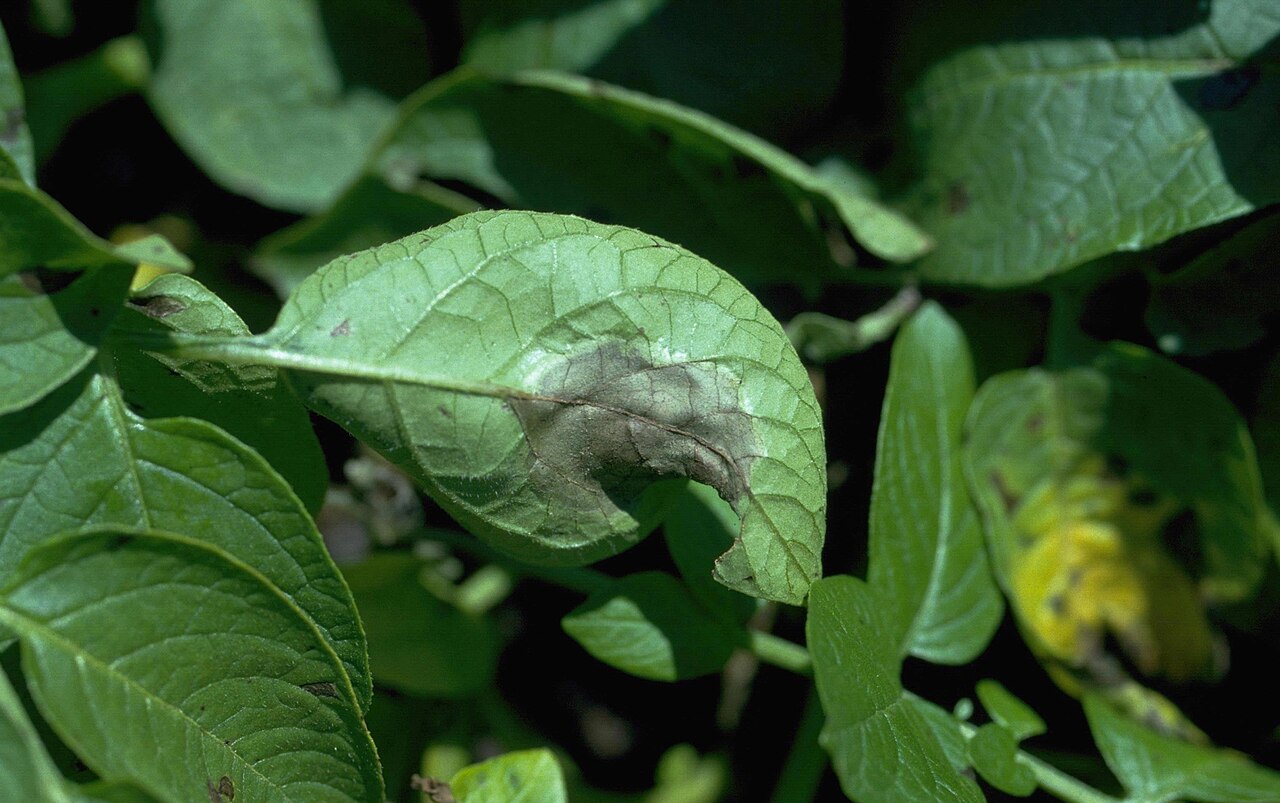
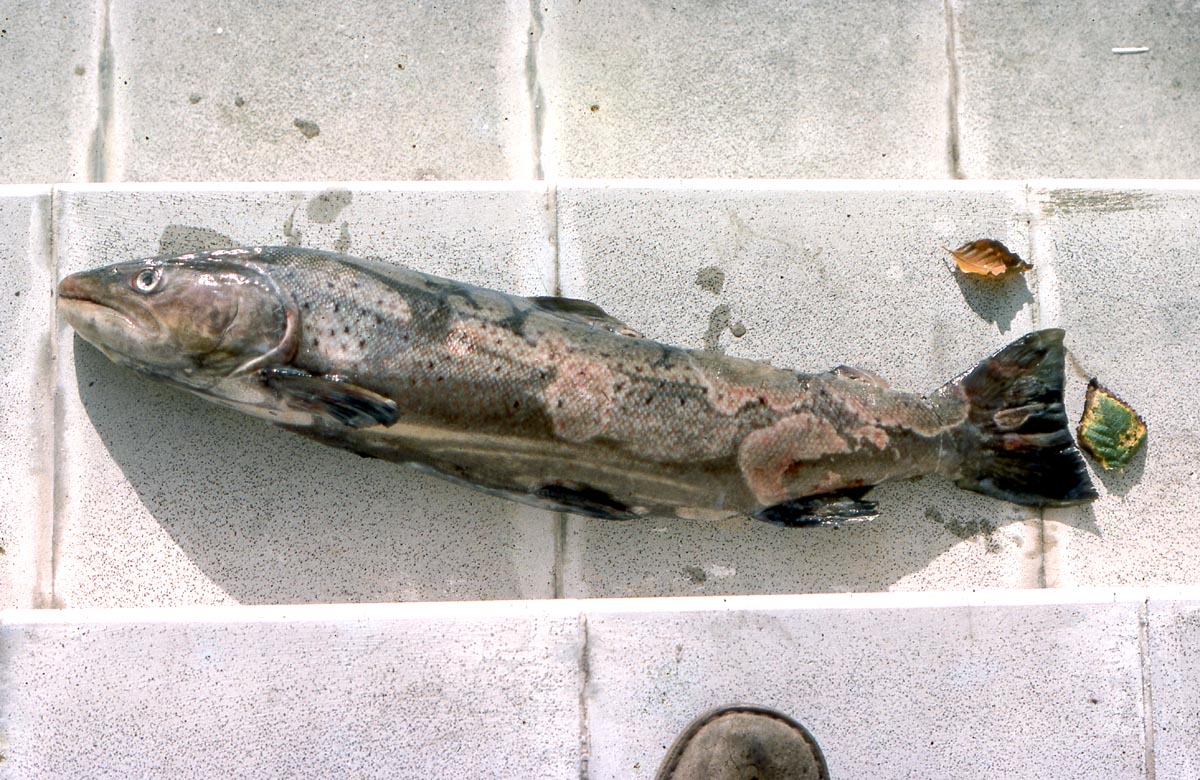
Oomycetes have significant ecological roles as decomposers in aquatic and terrestrial habitats and as pathogens. Agricultural history records major losses from oomycete diseases: Phytophthora infestans caused the 19th-century potato late blight and famines, and more recent species have contributed to sudden oak death and root rots. Aquatic oomycetes, such as members of Saprolegnia, can infect fish and amphibians, affecting aquaculture and wild populations. Management combines cultural, chemical and biological strategies, and understanding their biology is essential for disease control.
Identification and notable distinctions
Identification relies on a mix of morphological traits (zoospore form, oospore structure, growth on selective media) and molecular tests. Key distinctions from fungi include cellulose cell walls, diploid dominant hyphae, and heterokont flagella in spores. While the common name "water mold" reflects the aquatic habit of many species, many oomycetes are terrestrial and are adapted to moist soils or the plant surface rather than free water.
- Further reading on oomycete classification
- Overview of heterokont diversity
- Comparisons between oomycetes and other heterokonts
- Phylogenetic studies of oomycetes
- Fungal versus oomycete features
- General information on fungus-like organisms
- Saprophytic lifestyles among microbes
- Oomycetes as pathogens
- Plant disease caused by oomycetes
- Historic outbreaks such as potato blight
- Notes on the common name "water mold"
(This article provides a concise introduction. For practical identification, control measures, and region-specific information consult specialist literature and diagnostic resources.)
Questions and answers
Q: What are the Oomycota?
A: The Oomycota are a class of eukaryotic microorganisms in the phylum heterokonts.
Q: Are Oomycetes fungi?
A: No, Oomycetes are a distinct phylogenetic line of fungus-like microorganisms, but not fungi.
Q: What are some similarities between fungi and Oomycetes?
A: Both fungi and Oomycetes are saprophytic and pathogenic and rarely have septa.
Q: How do Oomycetes reproduce?
A: Oomycetes reproduce both sexually and asexually.
Q: What types of diseases do Oomycetes cause?
A: Oomycetes are some of the most prolific pathogens of plants, causing devastating diseases such as potato blight and sudden oak death.
Q: Why are Oomycetes often referred to as water moulds?
A: Oomycetes are often referred to as water moulds because of their water-loving nature, but this is not true of most species, which are actually terrestrial pathogens.
Q: Do all species of Oomycetes live in water?
A: No, although Oomycetes are often referred to as water moulds, most species are actually terrestrial pathogens and do not require water to survive.
Related articles
Author
AlegsaOnline.com Oomycete (water mold): biology, life cycle, and impact Leandro Alegsa
URL: https://en.alegsaonline.com/art/72714
Sources
- sciencedirect.com : sciencedirect.com/science/article/pii/S0953756208614628