
Audit: Purpose, Types, Process, and Role in Business and Public Trust
An audit is an independent examination of records, systems, or performance. This article describes audit types, typical procedures, history, uses, and limitations in business and public oversight.
Overview
An audit is a structured evaluation conducted by one or more people to determine whether a subject meets defined criteria. Audits may focus on financial records, regulatory compliance, operational processes, physical assets or information systems. The term covers a wide range of activities from a personal tax review to a formal examination of a multinational company's accounts; for a general definition see audit assessment.
Image gallery
2 Images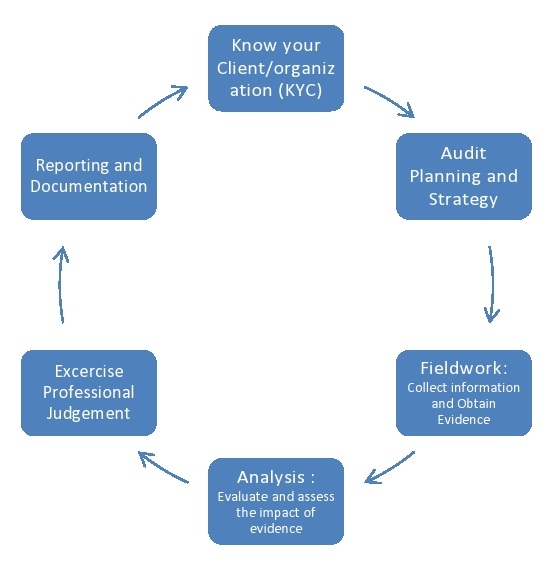

Common subjects and types
Audits are applied to many kinds of subjects. Typical categories include:
- Corporate and public-sector entities such as companies and institutions.
- Physical infrastructure like buildings and facilities.
- Technical environments including systems and networks.
- Written material such as contracts or documents.
- Financial reporting, in particular financial statements, which are among the most widely known audits.
Why audits are performed
The goals of an audit vary by context but usually include validation, transparency and improvement. In business settings audits provide assurance that figures for money and income are accurate, that internal controls work, and that legal or contractual requirements are met. Public-sector audits can verify efficient use of resources and compliance with laws, while technical audits check security, reliability and performance.
Typical audit process
Although procedures differ, a common sequence is:
- Planning: define objectives, scope and criteria.
- Information gathering: review records, interview personnel and observe operations.
- Testing and verification: sample transactions or inspect controls to form evidence.
- Evaluation: compare findings against standards and risk tolerance.
- Reporting: produce a formal report with conclusions and recommendations.
Stakeholders such as banks, investors or governments rely on audit reports when making decisions about lending, regulation or oversight. Audits also support confidence for potential investments.
History, standards and distinctions
Modern auditing evolved alongside the rise of corporate enterprise and accounting practices in the 19th and 20th centuries. Professional standards and ethical rules now shape how external auditors operate, emphasizing independence and objectivity. Distinctions to note include internal versus external audits (internal reviews are conducted by an organization's staff, while external audits are independent), and audits versus other assurance activities: an audit aims to provide a formal opinion, whereas reviews or compilations offer lower levels of assurance.
Limitations and practical considerations
Audits provide reasonable, not absolute, assurance. They rely on sampling and available evidence, so errors or fraud can remain undetected if carefully concealed. Quality of an audit depends on scope, auditor competence, access to information and the integrity of those audited. For these reasons, auditors include qualifications, recommendations and follow-up suggestions in their reports to help stakeholders interpret results and manage risk.
Importance and examples
Audits play a central role in financial markets, regulatory compliance and organizational improvement. Examples include annual financial audits of corporations, tax audits of individuals, safety audits of construction sites, IT security audits, and performance audits of government programs. Each type supports decision-making by creating an independent record of facts and independent judgment about how well established criteria have been met.
Further reading: For practical guides, industry best practices and professional standards, consult auditors' professional bodies and regulatory authorities via links to introductory resources such as definition and sector-specific sources referenced above.
Questions and answers
Q: What is an audit?
A: An audit is an evaluation or examination of something by a person or group of people.
Q: What kind of things can be audited?
A: Audits can be made to a person, to a company, to buildings, to systems, to documents and many other things that are used by people.
Q: Why are audits made?
A: Audits are made to check something, like a person is paying their taxes correctly or that a document is correct.
Q: What is the most common type of audit?
A: The most common type of audit are the audits performed on companies and their financial statements, a type of document.
Q: Why do companies report their financial statements to many people?
A: Companies report their operations, their money, and their income in financial statements to many people for many reasons like getting a loan, paying taxes, getting investments, and improving their public image.
Q: Who do companies inform and report their financial statements to?
A: Companies inform people like banks, governments, investors, and the public.
Q: What are the reasons for companies to report their financial statements?
A: The reasons for companies to report their financial statements are getting a loan, paying taxes, getting investments, and improving their public image.
Related articles
Author
AlegsaOnline.com Audit: Purpose, Types, Process, and Role in Business and Public Trust Leandro Alegsa
URL: https://en.alegsaonline.com/art/7254