
Oleander (Nerium oleander) — ornamental, toxic Mediterranean shrub
Oleander is an evergreen ornamental shrub (Nerium oleander) valued for showy flowers and drought tolerance. Native to the Mediterranean region, it is highly toxic and has been studied for cardiac glycosides such as oleandrin.
Oleander (Nerium oleander) is an evergreen shrub in the dogbane family (Apocynaceae), widely grown for its abundant clusters of flowers and for use as hedging and windbreaks. Native to the Mediterranean region, parts of northern Africa and western Asia, it is tolerant of heat, drought and saline soils and readily adapts to warm temperate and subtropical gardens. The genus Nerium is often treated as monotypic, with N. oleander the familiar species cultivated worldwide. See a general plant profile: species overview.
Image gallery
10 Images





Description and key characteristics
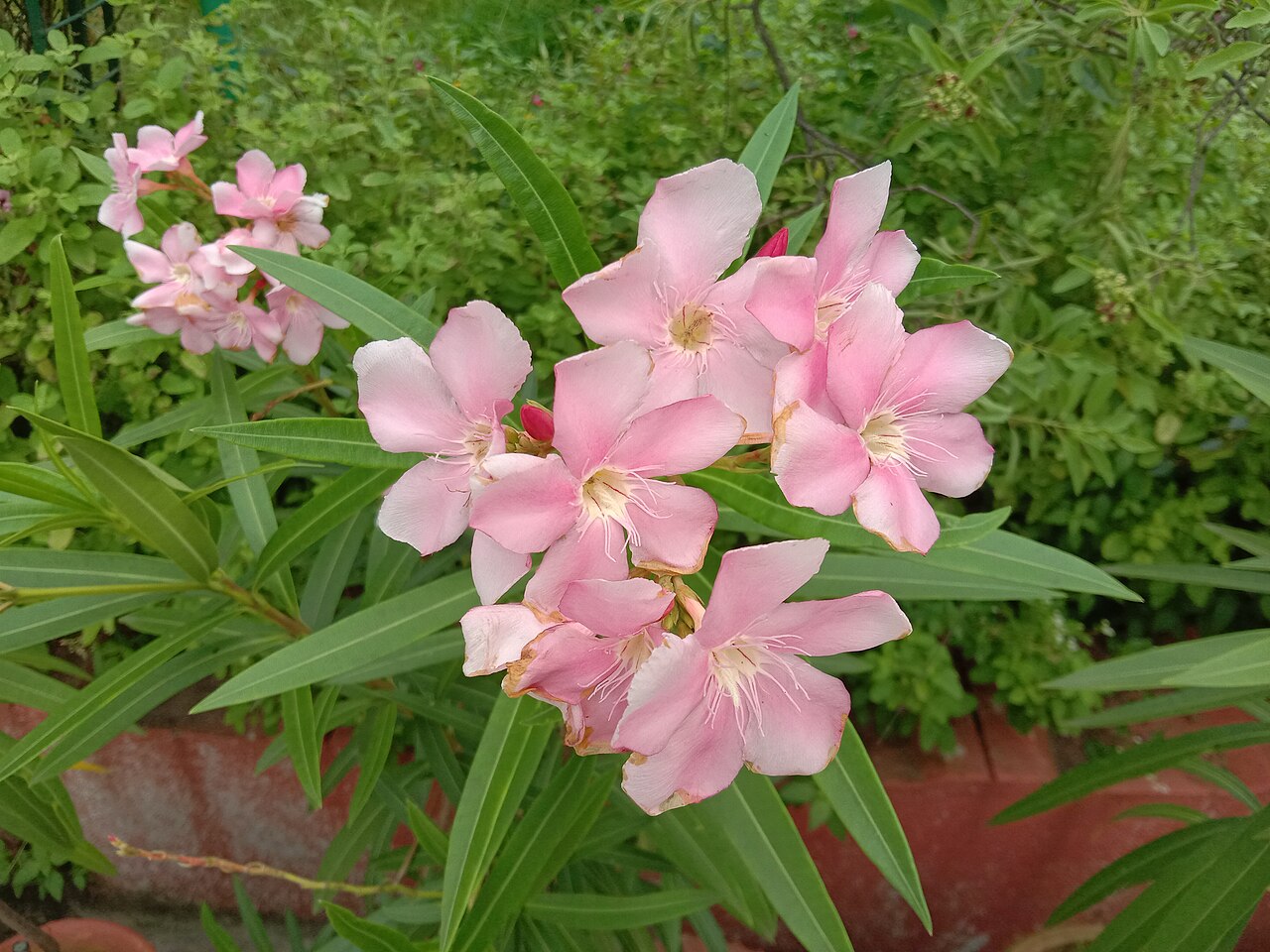
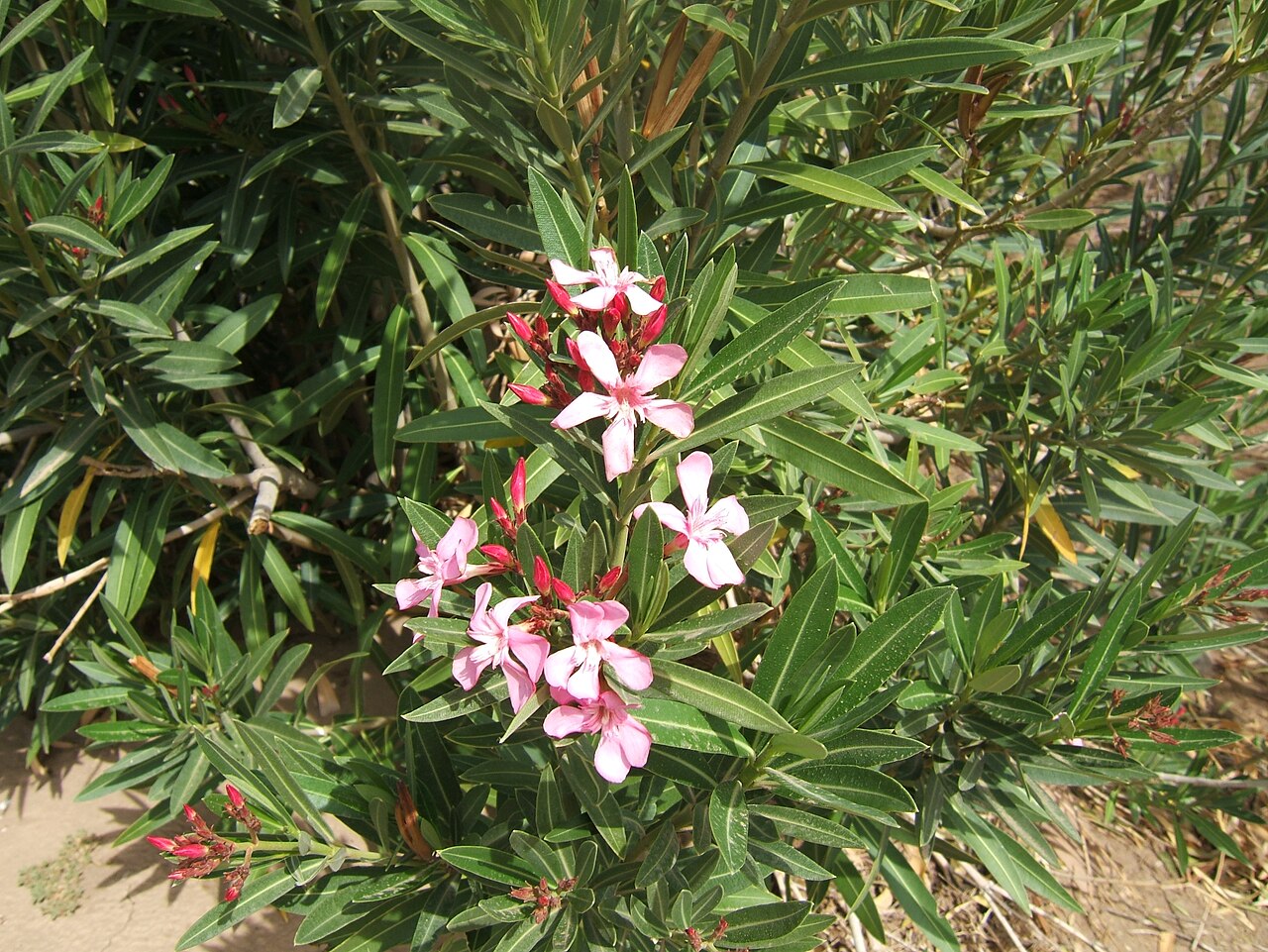
Oleander is typically a multi-stemmed shrub that can reach several metres in height. Leaves are lance-shaped, leathery and evergreen, arranged in pairs or whorls. Flowers occur in terminal clusters and vary from white through shades of pink to red and yellow, often with fragrance. The plant exudes a milky sap when cut. Botanical features and identification tips are summarized here: identification guide.
Habitat, cultivation and uses
Valued for low-maintenance landscaping, oleander tolerates poor soils, drought and coastal exposure. It is propagated easily from semi-ripe cuttings and responds well to pruning, making it a common choice for formal hedges, screens and roadside plantings. In suitable climates it can naturalize; local cultivation advice and horticultural notes are available at garden resources and pruning guides: care and propagation.
Toxicity and chemistry
All parts of oleander are poisonous. The plant contains cardiac glycosides (cardenolides) such as oleandrin and neriine, which affect heart function if ingested. Symptoms of poisoning in humans and animals can include nausea, vomiting, abdominal pain, irregular heartbeat and, in severe cases, fatal cardiac effects. Avoid ingestion, and handle cuttings with gloves to prevent sap contact. For medical and veterinary information see toxicology overview and emergency guidance: safety advice.
Research and medicinal interest
Cardenolides from oleander—especially oleandrin—have attracted laboratory research into potential antiviral, anticancer and other biological effects. Such studies are preliminary and do not establish safe or effective medical uses; the therapeutic window is narrow and the compounds are toxic. Any research summaries or regulatory notes should be consulted carefully: research summaries and regulatory comments.
History, cultural notes and precautions
Oleander has a long history in Mediterranean gardening and appears in literature and garden design traditions across its native range. While ornamental, it requires respectful handling: never ingest any part, keep cuttings away from children and pets, and dispose of trimmings safely. Practical safety tips and comparisons with similar species are provided here: safety tips and species comparisons.
- Common uses: ornamental hedge, roadside planting, drought-tolerant landscape.
- Hazard: all plant parts poisonous; seek immediate help if ingestion is suspected.
- Note: research into oleandrin is ongoing but does not replace established medical treatments.
Questions and answers
Q: What is oleander?
A: Oleander is a poisonous shrub with pink colored flowers, commonly found in gardens.
Q: Where is Nerium oleander native to?
A: Nerium oleander is native to northern Africa, the eastern Mediterranean basin and southeast Asia.
Q: What type of climates does oleander prefer?
A: Oleander prefers dry, warm climates.
Q: What is the potential use of cardenolide oleandrin in scientific studies?
A: Cardenolide oleandrin may be used to prevent mutagenesis based on recent scientific studies.
Q: Why is oleander commonly found in gardens?
A: Oleander is commonly found in gardens because of its attractive pink colored flowers.
Q: Is oleander safe to have in gardens?
A: Oleander is poisonous, so precautions need to be taken, and is not safe to ingest.
Q: Does oleander grow naturally in dry, warm climates?
A: Yes, oleander prefers dry, warm climates and may naturalize in such areas.
Related articles
Author
AlegsaOnline.com Oleander (Nerium oleander) — ornamental, toxic Mediterranean shrub Leandro Alegsa
URL: https://en.alegsaonline.com/art/72345
Sources
- efloras.org : Flora of China
- floridata.com : culture conditions
- cancerres.aacrjournals.org : Oleandrin Suppresses Activation of Nuclear Transcription Factor- B, Activator Protein-1, and c-Jun NH2-Terminal Kinase Cancer Research 60, 3838-3847