
Okroshka: Cold Russian Soup of Kvass, Vegetables and Eggs
Okroshka is a chilled Eastern European soup of diced vegetables, eggs and meat traditionally diluted with kvass. Served in Russia, Ukraine and Belarus, it has many regional and modern variations.
Okroshka is a cold, refreshing soup associated primarily with Russia and also common in Ukraine and Belarus. Often described simply as a chilled vegetable soup, it combines finely chopped raw and cooked ingredients with a tart, light liquid shortly before serving. Because it is eaten cold and has a thirst-quenching, lightly fermented tang in many versions, okroshka is a familiar summer dish and a staple of Eastern European home cooking and casual restaurants. For a general category reference see cold soup.
Image gallery
8 Images
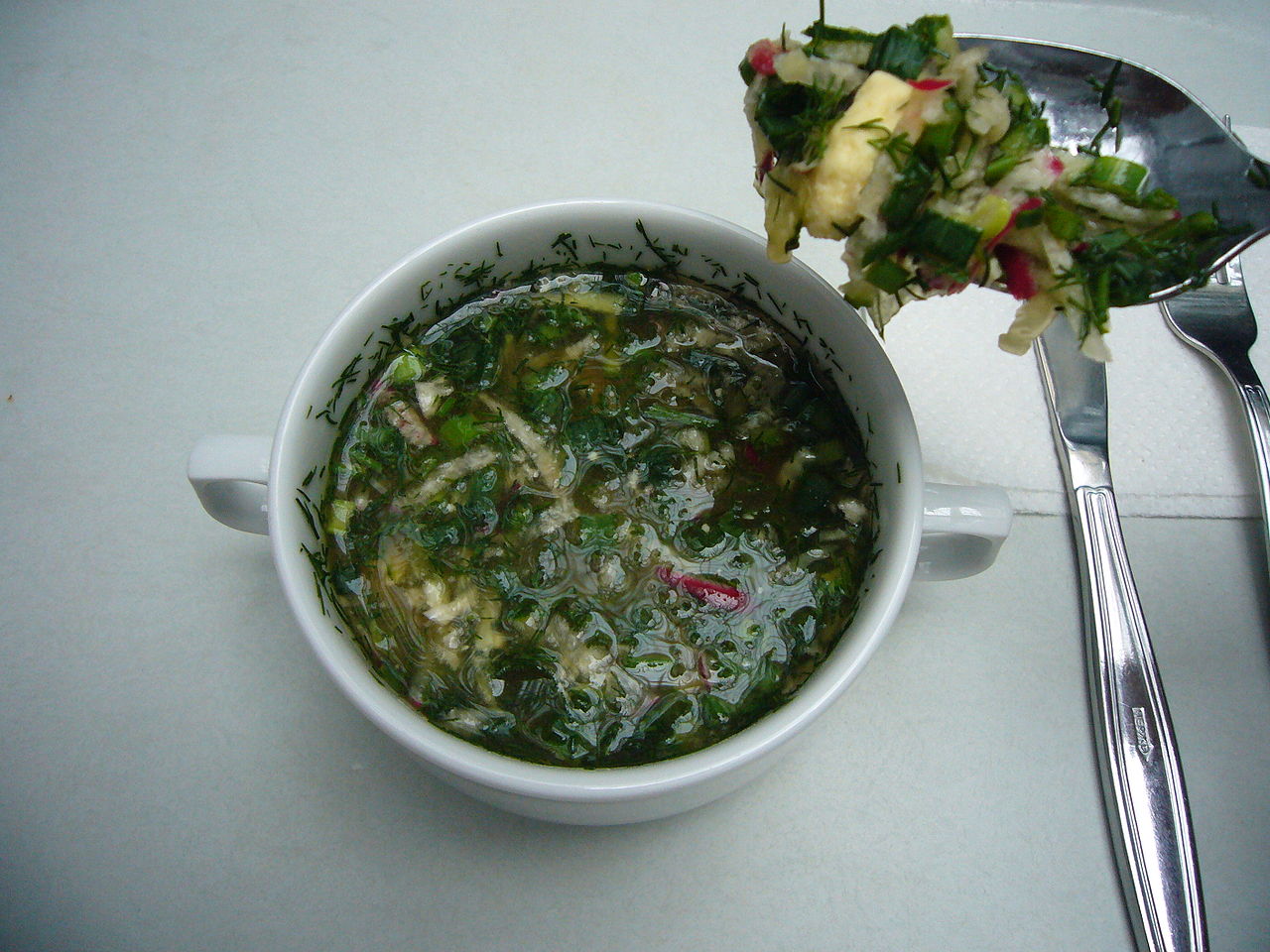


Typical ingredients and composition
The core of okroshka is a mix of diced vegetables and protein. Common components include cucumbers, spring onions or scallions, boiled potatoes, hard‑boiled eggs and a cooked meat such as beef, veal, ham or various sausages. Fresh herbs (dill, parsley) are often added for aroma. The distinctive element is the liquid used to bind the chopped solids: traditionally this is kvass, a mildly fermented bread-based drink, but many households use diluted kefir, watery yogurt, light beer, mineral water with lemon or a vinegar-and-water mixture. A spoonful of sour cream is frequently served with the dish or stirred into a bowl just before eating to add richness and tang (sour cream is a common accompaniment).
Preparation and serving
Okroshka is prepared by cutting all solid ingredients into small, uniform pieces so they can be easily scooped with a spoon. The chopped mixture is placed into each serving bowl or into a large bowl, then the chosen liquid is poured over only immediately before eating. The ratio of solids to liquid is often compared to cereal and milk: enough liquid to moisten and float the pieces, but not so much that they become soggy. Salt, pepper and sometimes a pinch of sugar are adjusted to taste. It is served cold — sometimes with ice cubes in very hot weather — and frequently garnished with herbs and a dollop of sour cream.
History and etymology
The name okroshka is likely derived from the Russian verb kroshit' (крошить), meaning "to crumble" or "to chop into small pieces," reflecting the preparation method. Its origins lie in peasant and farmhouse cooking in Eastern Europe, where fermented beverages like kvass and dairy products were widely used to preserve and flavor food. Over time, okroshka became popular beyond the countryside and entered urban menus; different regions and families adapted the liquid base and mix-ins according to local tastes and seasonal availability.
Variations and cultural notes
- Kvass‑based okroshka: the traditional, slightly tangy, mildly fermented taste.
- Kefir or yogurt version: tangier and thicker, popular where dairy is preferred.
- Mineral water or diluted soda: a lighter, fizzy take sometimes used in very hot climates.
- Meatless or vegetarian: omits cooked meat and relies on eggs, potatoes and herbs.
- Regional additions: olives, radishes, or different herbs depending on local preference.
Although many of its ingredients overlap with a composed salad such as Olivier (Russian salad), okroshka differs in being a spoonable, liquid dish; the liquid transforms the texture and flavor profile and makes it more like a soup than a salad. It is commonly eaten as a light lunch or first course during warm months and appears both in family kitchens and on restaurant menus across former Soviet countries.
Notable features of okroshka include its emphasis on small, crisp pieces, immediate assembly with the liquid to preserve texture, and wide scope for substitution of liquids and proteins. These qualities have allowed the dish to remain popular and adaptable—from traditional kvass preparations to modern, dairy‑based and vegetarian interpretations—while retaining its character as a cold, restorative summer soup.
Further reading and practical recipes can be found via general sources on Eastern European cuisine and cold soups: cold soup overview, Russian culinary traditions, Ukrainian food, Belarusian dishes, kvass information and sour cream uses.
Questions and answers
Q: What is Okroshka?
A: Okroshka is a type of cold soup from Russia that is also found in Ukraine and Belarus.
Q: What is the origin of the name Okroshka?
A: The name Okroshka is probably from the Russian word "kroshit'" (крошить), which means to crumble into small pieces.
Q: What are the main ingredients of Okroshka?
A: The main ingredients of Okroshka are mostly raw vegetables (like cucumbers and spring onions), boiled potatoes, eggs, and a cooked meat such as beef, veal, sausages, or ham with kvass.
Q: What is kvass?
A: Kvass is a mildly alcoholic beverage made from fermented black or rye bread.
Q: What other liquids can be used instead of kvass in Okroshka?
A: Other liquids that can be used instead of kvass in Okroshka include light or diluted kefir, vinegar, mineral water, or even beer.
Q: When is Okroshka mostly served?
A: Okroshka is mostly served in summer because the soup adds the taste of kvass and the lightness of a salad.
Q: Is Okroshka served hot or cold?
A: Okroshka is always served cold and sometimes ice cubes are added to keep the soup cold in hot weather.
Related articles
Author
AlegsaOnline.com Okroshka: Cold Russian Soup of Kvass, Vegetables and Eggs Leandro Alegsa
URL: https://en.alegsaonline.com/art/72236
Sources
- vkus.narod.ru : about okroshka