
Aude (river in southern France)
The Aude is a river rising in the Pyrenees and flowing to the Mediterranean in southern France; it gives its name to the Aude department and has a long natural and cultural history.
Overview
The Aude is a river in southern France that begins in the high Pyrenees and flows eastward to reach the Mediterranean Sea. It crosses a mix of mountain valleys, foothills and coastal plains before discharging into the sea near the region of Narbonne. The river has long shaped local landscape, transport routes and settlement patterns.
Image gallery
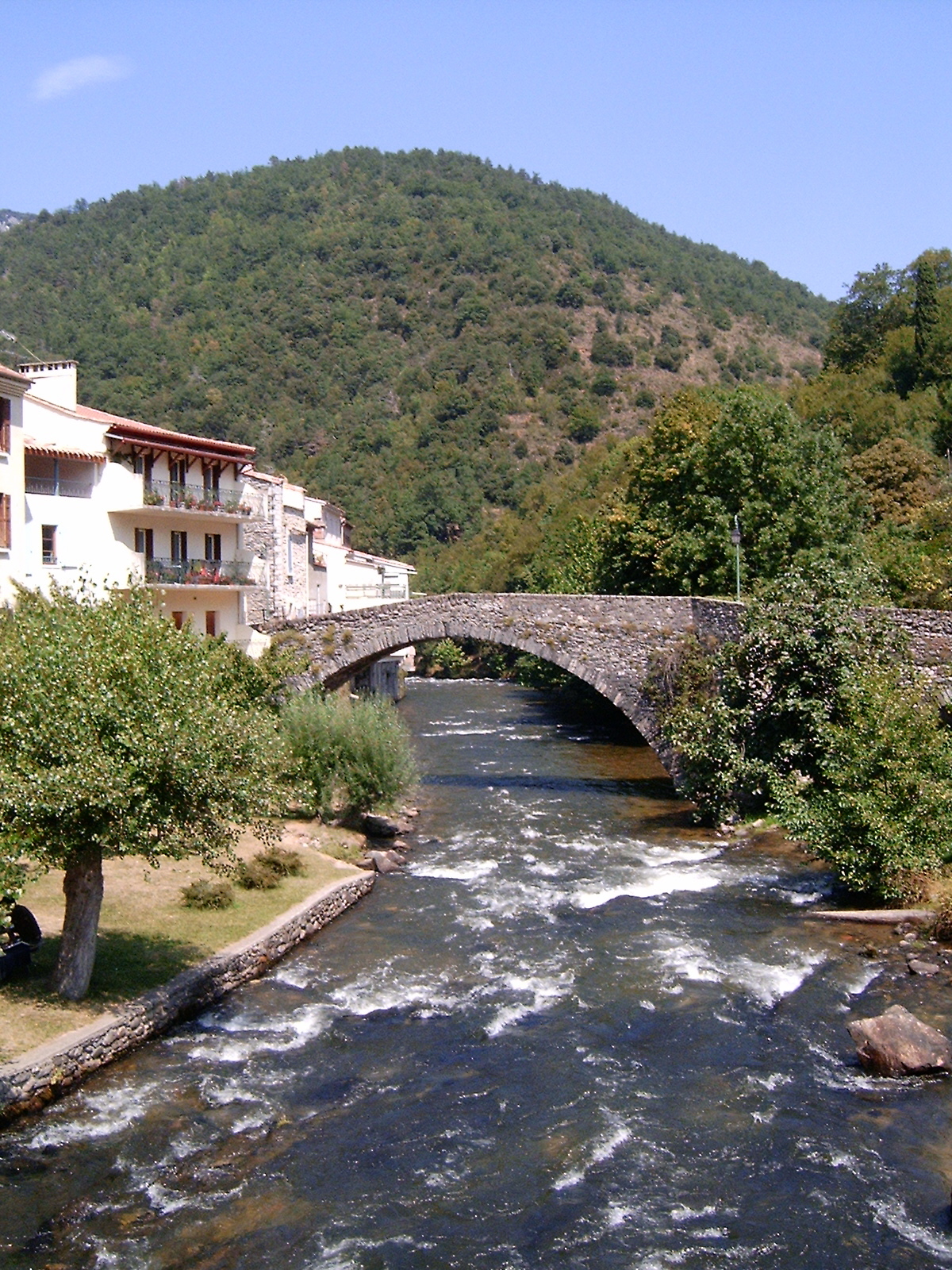
9 Images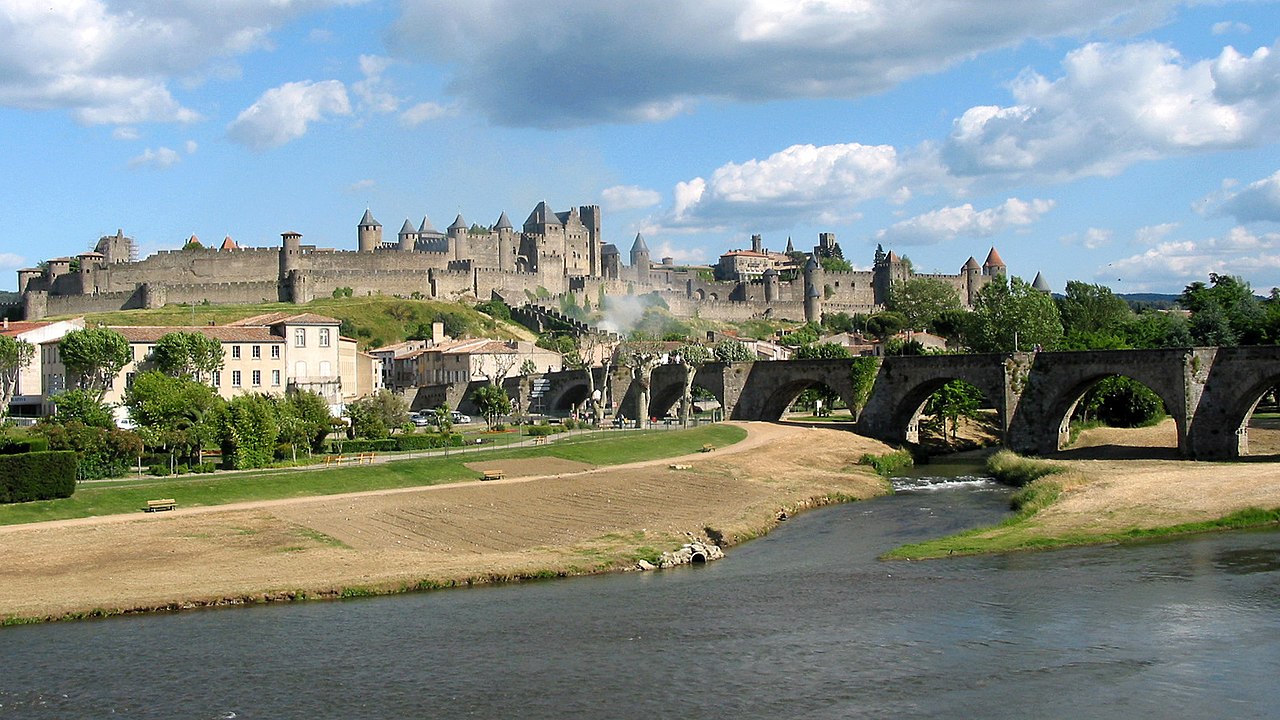




Physical characteristics
The Aude drains a basin that collects runoff from Pyrenean slopes and lower hills. Its flow varies with seasonal precipitation and snowmelt, so the river can alternate between calm low water and strong surges after heavy rain. Along its course it passes through narrow gorges in the mountains and broader floodplains on the plain, and supports a range of riparian vegetation and habitats.
Course and human geography
From its source in the Pyrenees the river flows across departments and towns of southern France. It has long been important to nearby communities for water, irrigation and local transport. The modern French department that bears the river's name, Aude, takes its identity from this waterway. The lower reaches approach the Mediterranean coast where the river meets the sea at a coastal area often associated with the Narbonne plain; see Mediterranean Sea for broader context.
History and name
The river was known to the Romans by the name Atax. Classical sources used that name while later vernacular forms evolved into the modern French name. Scholars link the older form to a Celtic root meaning energetic or swift; ancient linguistic study and Roman records discuss the name and its transformation over time—see material on Roman geography and linguistic origins for further detail via Roman sources and Celtic etymology references such as atacos.
Uses, environment and notable facts
The Aude is used locally for irrigation, recreation and supports fisheries and wetlands in its lower reaches. Its hydrology makes flood management an important concern; communities along the river have adapted settlement patterns and infrastructure to seasonal variation. The river corridor is also valued for scenic and historical sites that lie along its banks.
Further reading and resources
- Geographical overviews and maps
- Classical descriptions
- Linguistic background on the name
- Mediterranean coastal context
- Administrative and local information on the Aude department
Each of these topics—physical geography, historical naming, environmental importance and human use—helps explain why the Aude remains a notable river in southern France today.
Questions and answers
Q: Where is the Aude river located?
A: The Aude river is located in southern France.
Q: Where does the Aude river begin and end?
A: The Aude river begins in the Pyrénées mountains and ends in the Mediterranean Sea.
Q: What is the Aude department named after?
A: The Aude department is named after the Aude river.
Q: What was the name of the Aude during Roman times?
A: During Roman times, the Aude was called Atax.
Q: What is the likely origin of the current name of the Aude river?
A: The current name of the Aude river is likely from gradual changes of Atax, a word borrowed from the Celtic atacos meaning "spirited" or "very fast."
Q: What kind of meaning does the word "atacos" have?
A: The word "atacos" means "spirited" or "very fast" in Celtic.
Q: What is the meaning of the word Aude?
A: The meaning of Aude is not explicitly stated in the text.
Related articles
Author
AlegsaOnline.com Aude (river in southern France) Leandro Alegsa
URL: https://en.alegsaonline.com/art/7214
Sources
- services.sandre.eaufrance.fr : The Aude
- hydro.eaufrance.fr : Hydro Bank - The Aude at Moussan (1965-2009)
- hydro.eaufrance.fr : Hydro Bank - The Aude at Coursan
- arbre-celtique.com : "Atacos / Atax / Attagus (Aude)"
- geoportail.gouv.fr : "Source de l'Aude"
- geoportail.gouv.fr : "Confluence de l'Aude"
- services.sandre.eaufrance.fr : "Le Rebenty (Y1100500)"
- services.sandre.eaufrance.fr : "Le Sou (Y1200500)"
- services.sandre.eaufrance.fr : "Le Fresquel (Y13-0400)"
- services.sandre.eaufrance.fr : "L'Orbiel (Y1410500)"
- services.sandre.eaufrance.fr : "L'Argent-Double (Y1430540)"
- services.sandre.eaufrance.fr : "La Cesse (Y1600500)"
- services.sandre.eaufrance.fr : "Le Lauquet (Y1220500)"