
Ohio State Senate
Upper chamber of the Ohio General Assembly: 33 senators serving staggered four-year terms, representing districts of roughly 330,000 people, with responsibilities in lawmaking, oversight, and confirmation.
Overview
The Ohio State Senate is the upper chamber of the Ohio General Assembly. It is composed of 33 members elected from single-member districts across the state. The legislature meets in the Ohio Statehouse in Columbus, and the Senate is organized under a leadership team that includes a presiding officer (the President of the Senate), majority and minority leaders, and committee chairs. The chamber functions alongside the lower house (the Ohio House of Representatives) to draft, amend, and pass state law.
Image gallery
2 Images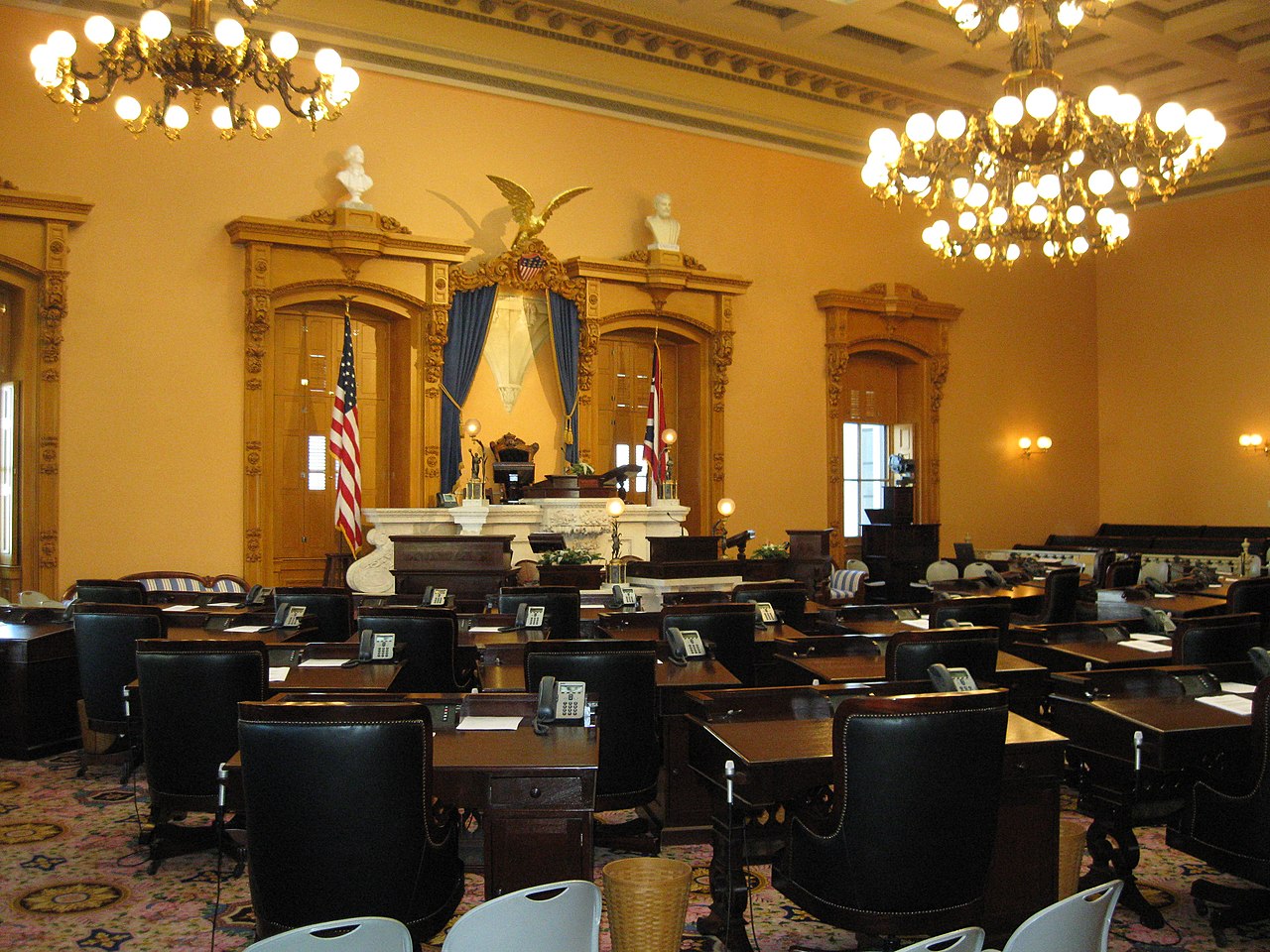

Structure and representation
Each State Senator represents roughly 330,000 Ohio residents, and each Senate district is made up of three Ohio House districts. Senators serve four-year terms, with terms staggered so approximately half the body is elected every two years. Typically, senators from even-numbered districts are elected in years divisible by four, while those from odd-numbered districts are elected in the other even-numbered years. The state imposes term limits on its legislators: senators are limited to two consecutive four-year terms.
Functions and powers
The Senate shares responsibility for creating and enacting state law and has several distinctive authorities. Its common duties include:
- Considering and voting on bills passed by either chamber and originating legislation in the Senate;
- Reviewing and approving appointments the governor makes to certain executive and judicial positions;
- Conducting committee hearings, investigations, and oversight of state agencies and programs;
- Participating in the state budget process and the enactment of appropriations;
- Trying impeachment cases brought by the lower house, where applicable under the state constitution.
Organization and procedures
The Senate operates through standing committees that specialize in policy areas such as finance, judiciary, education, health, and transportation. Committees review bills in detail, hold public testimony, and report measures to the full chamber. Legislative days include debate on the floor, committee votes, and procedural actions managed by the chamber's presiding officer. The majority party sets much of the agenda and committee assignments, while the minority party uses its resources to propose amendments, offer alternative legislation, and influence deliberations.
History and political context
The Ohio General Assembly has met since statehood, and the Senate has long served as the upper body of the bicameral legislature. Over time, its composition and rules have evolved in response to population changes, redistricting, and constitutional amendments such as term limits and campaign finance reforms. The chamber's partisan control can change with elections; in recent sessions the Republican Party has held the majority in the Senate. Leadership positions and the balance of power affect committee chairmanships, the legislative calendar, and priorities addressed by lawmakers. For information on the chamber's role within the larger government, see the description of the upper house of the Ohio General Assembly.
Where it meets and how to follow its work
The Senate meets at the historic Ohio Statehouse in Columbus, the seat of state government. Citizens can follow legislative activity through official channels, committee schedules, and public proceedings. For details about the building and visiting hours, consult resources related to the Ohio Statehouse in Columbus. To review the chamber's current partisan composition and leaders, refer to published materials from the major parties and the official Senate pages; recent majorities have been held by the Republican Party.
Understanding the Ohio State Senate involves recognizing its role in shaping statewide policy, its district-based representation, and the procedural mechanisms—committees, leadership, and elections—that determine how legislation moves from proposal to law.
Questions and answers
Q: What is the Ohio State Senate?
A: The Ohio State Senate is the upper house of the Ohio General Assembly.
Q: How many State Senators are there in Ohio?
A: There are 33 State Senators in Ohio.
Q: Where does the state legislature meet in Ohio?
A: The state legislature meets in the Ohio Statehouse in Columbus, Ohio.
Q: Who presides over the body when the Senate is in session?
A: The President of the Senate presides over the body when in session, and the current President of the Senate is Matt Huffman.
Q: Which political party currently controls the Senate in Ohio?
A: The Republican Party currently controls the Senate in Ohio.
Q: How long do Senators serve in Ohio?
A: Senators in Ohio serve four-year terms.
Q: Are the terms of Senators staggered in Ohio?
A: Yes, the terms of Senators in Ohio are staggered so that about half the membership is elected every two years. Senators representing even-numbered districts are elected in years evenly divisible by four, and Senators from odd-numbered districts are elected in even-numbered years not divisible by four. Senators are limited to two terms.
Related articles
Author
AlegsaOnline.com Ohio State Senate Leandro Alegsa
URL: https://en.alegsaonline.com/art/72123