
Oganesson (Og): the synthetic element with atomic number 118
Oganesson (Og) is the heaviest known element, a short-lived synthetic member of group 18 (atomic number 118). It has no practical uses and is studied for its extraordinary, relativistic-influenced properties.
Overview
Oganesson is a man-made chemical element identified by the symbol Og and placed at the far right of the periodic table. As a member of period 7 and group 18, it nominally completes the noble-gas column, but its behavior is dominated by extreme relativistic effects. The substance is produced only atom-by-atom in laboratory nuclear reactions and exists for fractions of a second before decaying. In publications and summaries it is often described as a synthetic element with unusual predicted characteristics compared with lighter noble gases.
Image gallery
4 Images

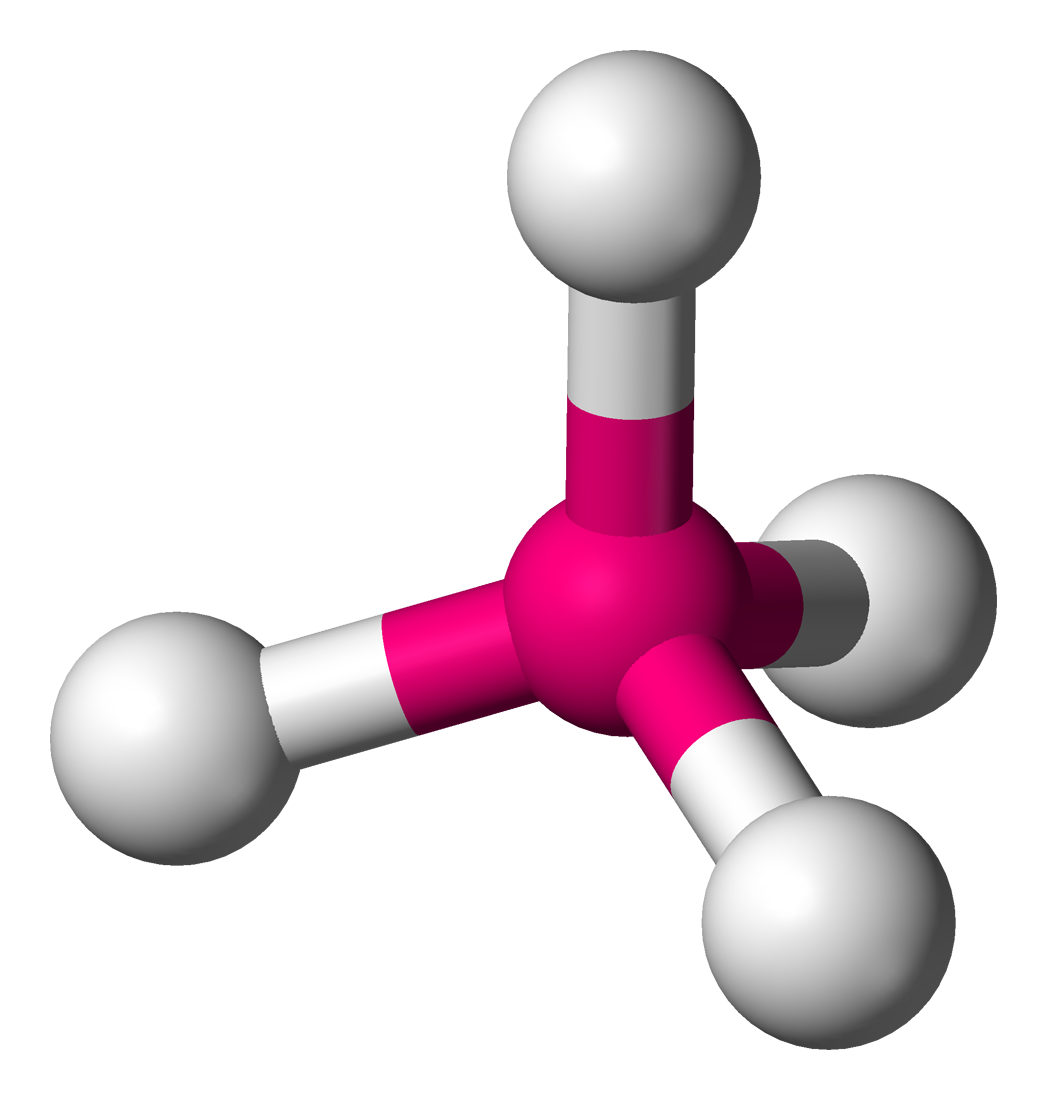

Discovery and name
Oganesson was first reported from collaborative heavy-ion experiments in the early 21st century. Work at the Joint Institute for Nuclear Research in Dubna (Russia), with partner laboratories, led to the identification of the first atoms. The element has the distinctive label atomic number 118, making it the highest-numbered element confirmed so far. The name honors nuclear physicist Yuri Oganessian and was accepted by the international chemistry community after review.
Predicted physical and chemical properties
Because only a handful of atoms have been produced, most knowledge about oganesson comes from theoretical calculations. It is expected to complete the 7p electron shell, placing it in group 18, but very strong relativistic effects alter orbital energies and electron distribution. As a result, many predictions indicate oganesson may be much more polarizable and chemically reactive than lighter noble gases, perhaps behaving unlike a conventional inert gas. Its physical state at ambient conditions is uncertain; some calculations suggest it might be a dense solid rather than a monoatomic gas.
Isotopes, radioactivity and synthesis
All known oganesson nuclides are extremely unstable and decay rapidly, so the element is radioactive by necessity. The most commonly reported isotope in experiments is one with a mass number near 294. Atoms are produced in fusion reactions that join a heavy target nucleus with a lighter projectile; only a few atoms have been confirmed in repeated runs. Their lifetimes are measured in milliseconds or less and they decay by alpha emission and other short-range processes, making direct chemical study difficult.
Uses and scientific importance
There are no practical or commercial applications for oganesson because of its fleeting existence. Its value lies in fundamental science: synthesizing and characterizing the heaviest elements tests models of nuclear stability, shell effects, and relativistic quantum chemistry. Experiments and calculations involving oganesson inform periodic table limits and guide searches for longer-lived superheavy nuclides.
Notable facts and distinctions
- Oganesson is currently the highest-numbered element confirmed on the periodic table.
- Its placement in the noble-gas column contrasts with many theoretical predictions of atypical reactivity and electronic structure.
- Only a very small number of atoms have been synthesized, and research continues to refine the data on decay chains, lifetimes, and possible chemical behavior.
Researchers refer to ongoing theoretical work and scarce experimental data to better understand how extreme nuclear charge and relativistic effects shape the properties of the heaviest elements. For more general context about element synthesis and periodic trends, see related resources and reviews in nuclear and atomic physics.
Questions and answers
Q: What is oganesson?
A: Oganesson is a synthetic chemical element with symbol Og and atomic number 118.
Q: What is the atomic number of oganesson?
A: Oganesson has an atomic number of 118.
Q: Is oganesson radioactive?
A: Yes, oganesson is radioactive.
Q: How many atoms of the isotope Oganesson-294 have been created since 2005?
A: Since 2005, only five (possibly six) atoms of the isotope Oganesson-294 have been created.
Q: What is the highest atomic mass of all known elements?
A: The highest atomic mass of all known elements belongs to oganesson.
Q: Does oganesson have any stable forms?
A: No, the radioactive oganeson atom is very unstable and does not have any stable forms.
Related articles
Author
AlegsaOnline.com Oganesson (Og): the synthetic element with atomic number 118 Leandro Alegsa
URL: https://en.alegsaonline.com/art/72072
Sources
- apnews.com : "Periodic table elements named for Moscow, Japan, Tennessee"
- ui.adsabs.harvard.edu : 2005JPCA..109.3493N
- doi.org : 10.1021/jp050736o
- pubmed.ncbi.nlm.nih.gov : 16833687
- researchgate.net : "Predicting the Properties of the 113–120 Transactinide Elements"
- doi.org : 10.1021/j150609a021
- lch.web.psi.ch : Thermochemical Properties of the Elements Rn, 112, 114, and 118
- ui.adsabs.harvard.edu : 2000JChPh.112.2684H
- doi.org : 10.1063/1.480842
- books.google.com : Theoretical Chemistry and Physics of Heavy and Superheavy Elements
- researchgate.net : "Superheavy elements: a prediction of their chemical and physical properties"
- doi.org : 10.1007/BFb0116498
- rsc.org : Chemical Data. Ununoctium - Uuo
- doi.org : 10.1016/0022-1902(65)80255-X
- link.aps.org : "Synthesis of the isotopes of elements 118 and 116 in the 249Cf and 245Cm+48Ca fusion reactions"