
Odilon Redon: French Symbolist painter and master of imaginative media
Odilon Redon (1840–1916) was a French Symbolist artist known for his dreamlike 'noirs', lithographs, pastels and later color paintings that explored imagination, spirituality and inner vision.
Overview
Odilon Redon is remembered as a central figure of Symbolist art, an artist whose visual language emphasized inner vision and poetic suggestion over literal representation. He was born on April 22, 1840, and died on July 6, 1916. Redon’s career moved from brooding black‑and‑white works made in charcoal and printmaking to richly coloured pastels and oils that retained an emblematic, often mystical quality.
Image gallery
10 Images





Early life and education
Redon was born in Bordeaux, in the historical region of Aquitaine, France. He showed an early aptitude for drawing and received encouragement at school. Initially steered toward architecture by his family, he attempted formal entrance exams for Parisian study and later trained under academic teachers. He returned to Bordeaux for a period and began to experiment with sculpture and reproductive print processes.
Printmaking and the 'noirs'
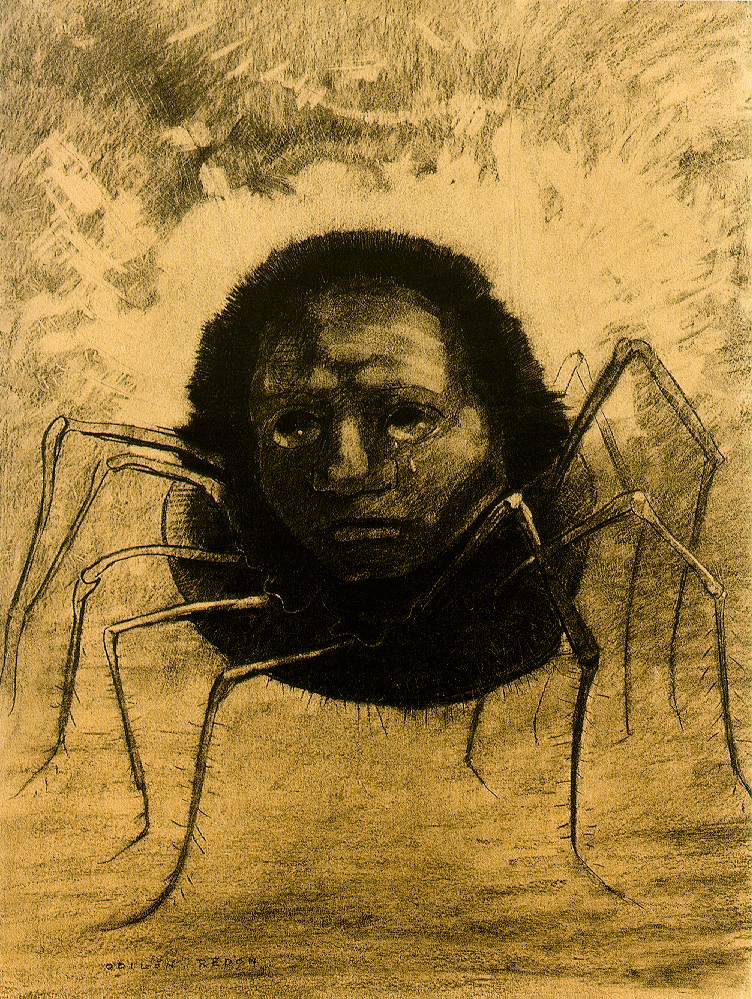
Under the guidance of established practitioners he learned technical processes such as etching and lithography. Redon’s early reputation rests on his dark, tonal drawings and prints—works collectors and critics long called his 'noirs'—which depict dream visions, hybrid creatures, and ambiguous landscapes. His practice of working nearly exclusively in black and white in the 1870s and 1880s created a personal iconography of suggestion and introspection.
Interruption and return
Like many men of his generation, Redon’s artistic activity was interrupted when he joined the army to serve in the Franco‑Prussian War. After the conflict he settled in Paris, where he continued to develop his printmaking and to publish small albums of lithographs that circulated among artists and sympathetic writers.
Shift to colour and later work
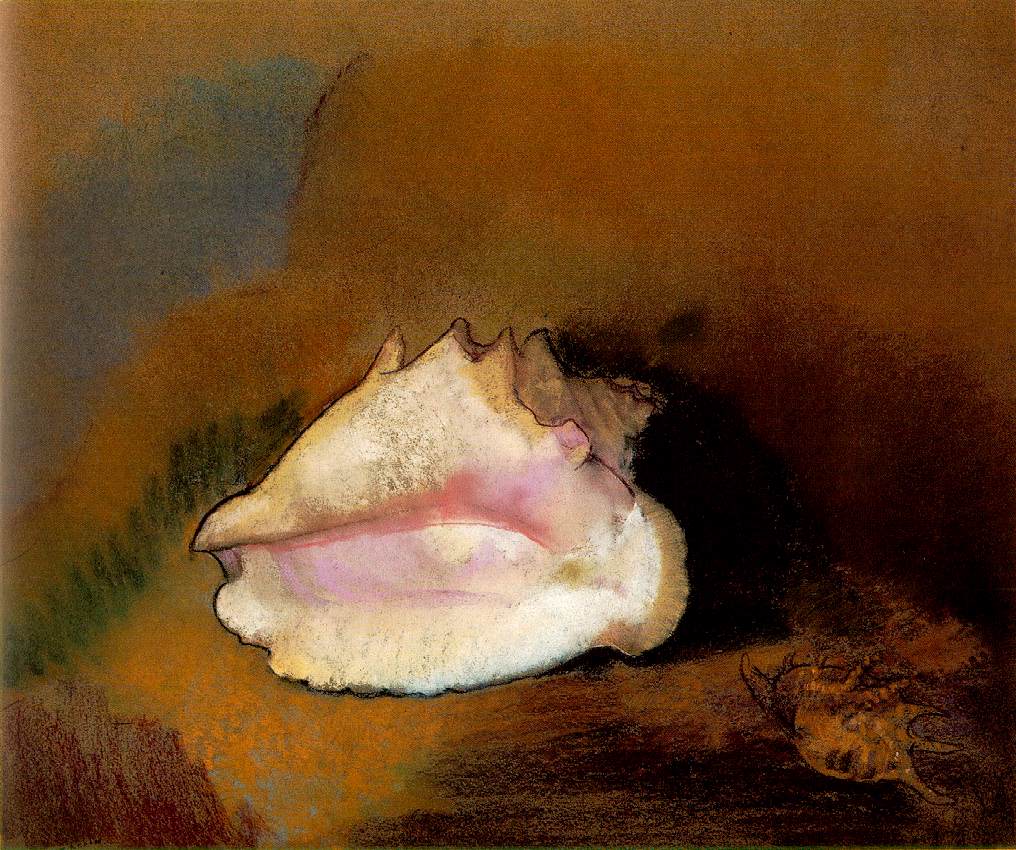
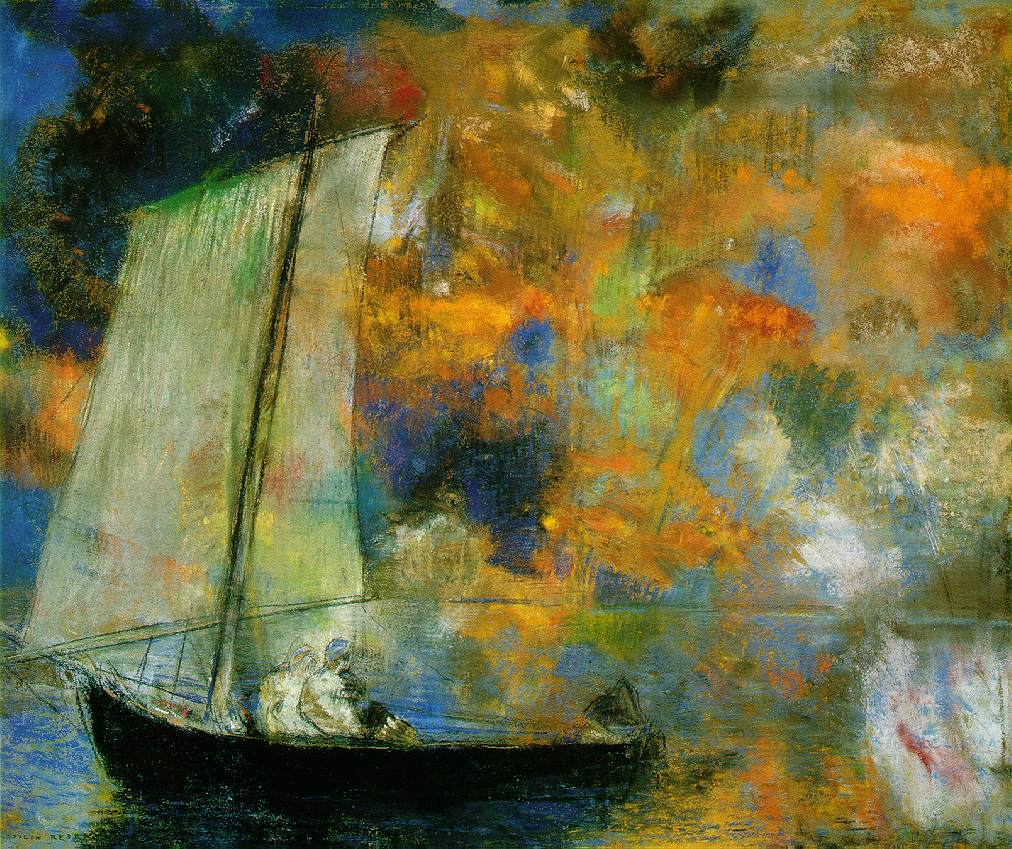
Beginning in the 1890s Redon increasingly embraced colour through pastels and oils, producing jewel‑toned works that preserved the introspective, allegorical spirit of his earlier pieces while suggesting new tonal and poetic possibilities. He exhibited with younger avant‑garde groups and joined shows that associated him with evolving modernist tendencies.
The role of literature and exhibitions
Redon’s visibility grew through literary advocacy and important exhibitions. The novelist Joris‑Karl Huysmans notably featured the artist’s drawings in the 1884 novel À rebours, which helped introduce Redon to Symbolist circles. In the early 20th century his prints and paintings were included in significant displays, including a notable presence in New York and later museum retrospectives. A major presentation of his work was mounted at the Museum of Modern Art beginning on October 30, 2005, and running until January 23, 2006, which reintroduced his paintings and graphic work to contemporary audiences.
Themes, methods and materials
- Mediums: charcoal and black crayon, ink, lithography, etching, pastel and oil paint.
- Subjects: mythic and religious figures, solitary portraits, botanical studies, hybrid beings and imagined landscapes.
- Approach: emphasis on mood, suggestion and symbolic resonance rather than narrative realism; an attempt to render inner states and the unconscious.
Influence and legacy
Redon helped shape Symbolist aesthetics and influenced later modern artists who valued subjective vision and expressive colour. Collectors, writers and curators have long studied his transition from the austerity of the noirs to the luminous colour of his later pastels and oils. Scholarly catalogues and retrospective exhibitions have clarified his role in the turn from 19th‑century Romantic imagination toward the concerns of 20th‑century modernism, and his works remain part of major museum collections and specialist studies today.
Questions and answers
Q: Who was Odilon Redon?
A: Odilon Redon was a Symbolist painter and printmaker, born in Bordeaux, Aquitaine, France.
Q: What did he do as a young child?
A: As a young child, Redon started drawing and at the age of 10 he was given a drawing prize at school.
Q: What did his father want him to do?
A: His father wanted him to pursue architecture instead of art so he switched from studying drawing to architecture.
Q: How did his artistic career start?
A: His artistic career began when he returned home after serving in the Franco-Prussian War and started working with charcoal and lithography.
Q: When did his work gain recognition?
A: His work gained recognition in 1884 when Joris-Karl Huysmans wrote a novel featuring an aristocrat who collected Redon's drawings.
Q: What mediums did he use later on in his career? A: Later on in his career, Redon used pastel and oils for most of his works.
Q: When was there an exhibition showcasing Redon's work? A: In 2005 the Museum of Modern Art launched an exhibition called "Beyond The Visible" which showcased more than 100 paintings, drawings, prints and books from The Ian Woodner Family Collection.
Related articles
Author
AlegsaOnline.com Odilon Redon: French Symbolist painter and master of imaginative media Leandro Alegsa
URL: https://en.alegsaonline.com/art/71970