
Odenwald: low mountain range in Hesse, Bavaria and Baden-Württemberg
The Odenwald is a forested low mountain range in southwestern Germany spanning Hesse, northern Bavaria and northern Baden-Württemberg, noted for rounded peaks, sandstone geology, medieval towns and hiking.
The Odenwald is a compact, largely wooded low mountain range in south-central Germany that stretches across parts of Hesse, northern Bavaria and the north of Baden-Württemberg. It forms a transitional landscape between the Rhine valley to the west and the Neckar and Main river valleys to the south and east. The region is characterised by gently rounded summits, long forested ridges and broad valleys rather than alpine peaks.
Image gallery
10 Images

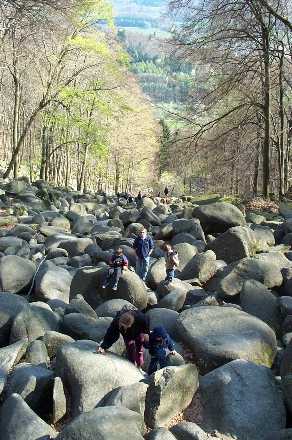



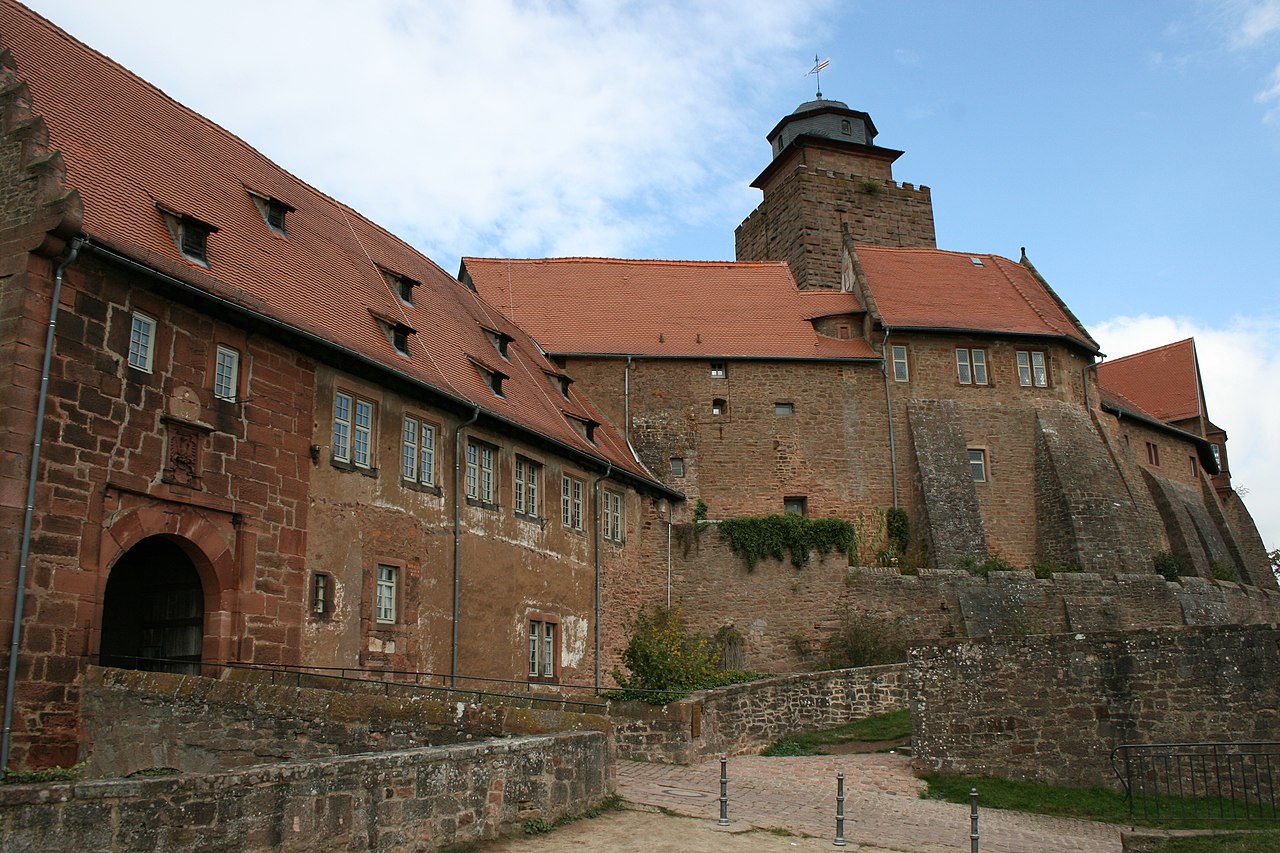


Geology and landscape
The Odenwald belongs to the Central Uplands of Germany and shows a mix of rock types: large areas of hard crystalline rock such as granite and gneiss are interspersed with sandstone (notably Buntsandstein) and smaller volcanic features. The highest point is the Katzenbuckel, a former volcanic cone that rises above surrounding hills. Soils are often thin and acidic on the uplands, supporting extensive mixed and coniferous forests, while valleys hold farms and orchards.
History and cultural development
Human presence in the Odenwald dates back to prehistoric times. Over the centuries the area hosted Celtic and later Roman activity, and during the Middle Ages many castles, fortified towns and monasteries were established on hilltops and river crossings. Local building traditions produced distinctive timber-framed towns and craft industries, including the historic centrepieces still visible in places like Michelstadt and Miltenberg.
Towns, nature and recreation
The Odenwald is dotted with market towns and villages that serve as bases for rural tourism. Popular activities include hiking along long-distance trails, cycling, forest walks and visiting historic sites. Examples of notable settlements and attractions:
- Michelstadt and Erbach: traditional town centres with timber-framed houses and regional museums.
- Miltenberg: a riverside market town on the Main with well-preserved medieval streets.
- Katzenbuckel: the region's highest hill and a point of geological interest.
- Numerous hiking routes and nature reserves that protect native flora and fauna.
Local economies combine forestry, small-scale agriculture, crafts and a significant tourism sector that focuses on outdoor recreation, culinary specialities and heritage sites. The landscape's accessibility from nearby cities makes it a popular weekend destination for urban residents.
Notable features and distinctions
What distinguishes the Odenwald is the combination of compact size, dense woodland and a rich cultural landscape of castles and timber-framed towns. Its geology tells a varied story of deep crystalline foundations overlain by sedimentary layers and punctuated by volcanic relics. Conservation areas in the Odenwald safeguard habitats for woodland birds, deer and other Central European species while also preserving a network of marked trails and cultural monuments.
For regional information and administrative details consult the state pages for Hesse, Bavaria and Baden-Württemberg, which cover the portions of the range within their borders.
Questions and answers
Q: Where is the Odenwald located?
A: The Odenwald is located in the south of Hesse, in the north of Bavaria and the north of Baden-Württemberg.
Q: What type of geographical feature is the Odenwald?
A: The Odenwald is a mountain chain.
Q: Is the Odenwald only located in one state?
A: No, it is located in three states - Hesse, Bavaria and Baden-Württemberg.
Q: Does the Odenwald span all three states equally?
A: Yes, it spans across all three states.
Q: What countries are included in this region?
A: This region includes Germany and parts of Austria and Switzerland.
Q: How long has the Odenwald been around?
A: It has been around for thousands of years since prehistoric times.
Q: Is there any wildlife living in this area? A: Yes, there are many species of birds, mammals and reptiles that inhabit this area.
Related articles
Author
AlegsaOnline.com Odenwald: low mountain range in Hesse, Bavaria and Baden-Württemberg Leandro Alegsa
URL: https://en.alegsaonline.com/art/71957