
Octopus's Garden (song by The Beatles)
A concise overview of The Beatles' song 'Octopus's Garden': origins, composition, recording for Abbey Road, reception, and its place in Ringo Starr's songwriting.
Overview
The Beatles released "Octopus's Garden" on their 1969 album Abbey Road. Credited to Ringo Starr, the track stands out among the band's catalogue for its childlike imagery, gentle melody, and singalong quality. It is widely remembered as one of Starr's rare songwriting contributions to the group.
Image gallery
2 Images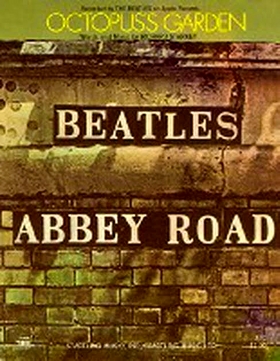

Background and composition
The song grew from a simple idea and a personal anecdote: while on holiday Ringo heard a story about an octopus's safe, shady place beneath the sea, and he developed that image into a short, upbeat tune. George Harrison assisted with the arrangement and the recording process, helping shape the instrumental parts and solo. The lyrics describe an undersea refuge and express a desire for carefree escape, using straightforward language and repetitive hooks typical of a children's song.
Recording and musical features
Recorded during sessions for Abbey Road, the song features Ringo on lead vocal and a light, buoyant accompaniment. Instrumentation includes layered guitars, steady percussion, and close harmonies that support the simple chord progression. Production emphasizes clarity and a relaxed tempo, giving the piece a lullaby-like atmosphere rather than the studio experimentation found elsewhere on the album.
Context and reception
The arrival of this playful number in the later stages of the band's career offered contrast to more complex or introspective tracks by John Lennon and Paul McCartney. Some contemporaries and later commentators regarded it as a charming, if modest, contribution; others saw it as deliberately whimsical. The song helped highlight Starr's friendly stage persona and his occasional turn as a songwriter within the group dynamic involving John Lennon and Paul McCartney.
Legacy and notable facts
"Octopus's Garden" is often included in Beatles compilations and family-oriented selections, and Ringo has featured it in solo performances. Notable points include:
- It is one of the few Beatles songs primarily penned by their drummer, illustrating the band's collaborative environment.
- George Harrison contributed guitar work and production help during the track's development.
- The song's tone and subject matter have made it a persistent favorite for children's playlists and lighthearted retrospectives of the band's work.
While not among the Beatles' most revolutionary recordings, "Octopus's Garden" endures as a warm, accessible song that reflects the varied personalities within the group and the variety of styles present on Abbey Road. For further artist histories and discography information, see pages on Ringo Starr, George Harrison, John Lennon, and Paul McCartney.
Questions and answers
Q: Who wrote "Octopus's Garden"?
A: Ringo Starr wrote "Octopus's Garden".
Q: When was "Octopus's Garden" released?
A: It was released in 1969 as part of The Beatles' album Abbey Road.
Q: Did George Harrison collaborate on the song?
A: Yes, George Harrison worked on "Octopus's Garden" with Ringo Starr.
Q: Why did George Harrison work on the song?
A: George Harrison worked on the song perhaps because his own songs were not seen as good enough by John Lennon and Paul McCartney.
Q: What did George Harrison say about "Octopus's Garden"?
A: George Harrison said that "'Octopus's Garden' is Ringo's song. It's only the second song Ringo has ever written, mind you, and it's lovely."
Q: Why does the song "Octopus's Garden" get very deep into your mind?
A: According to George Harrison, the song gets very deep into your mind "because it's so peaceful. I suppose Ringo is writing cosmic songs these days without even realising it."
Q: How many songs had Ringo Starr written before "Octopus's Garden"?
A: "Octopus's Garden" was only the second song Ringo Starr had ever written.
Related articles
Author
AlegsaOnline.com Octopus's Garden (song by The Beatles) Leandro Alegsa
URL: https://en.alegsaonline.com/art/71935