
Ocean surface wave
Overview of ocean surface waves: how they form, main physical properties and propagation, coastal effects, types (wind waves, swell, tsunamis), measurement, hazards and practical uses.
Overview
Ocean surface waves are disturbances that travel along the interface between the atmosphere and the upper layer of the sea. Most familiar waves are generated by wind acting over a region of open water, but some originate from sudden geologic events such as earthquakes or submarine landslides. These waves range from small ripples to long-traveling destructive events like tsunamis. Although waves transmit significant energy and momentum across the surface, individual water particles typically follow roughly circular orbits and do not travel with the wave crest for long distances. A clear definition and basic concepts are discussed in general surface wave summaries and oceanographic overviews of the upper ocean.
Image gallery
10 Images




Physical characteristics
Key parameters include wavelength (distance between successive crests), period (time between crests passing a fixed point), amplitude (half the vertical difference between crest and trough), frequency and propagation speed. In deep water, waves of different wavelengths separate by dispersion: longer waves travel faster. In shallow water, wave speed depends mainly on depth. When depth decreases relative to wavelength, waves slow, shorten, and increase in height.
Generation and propagation
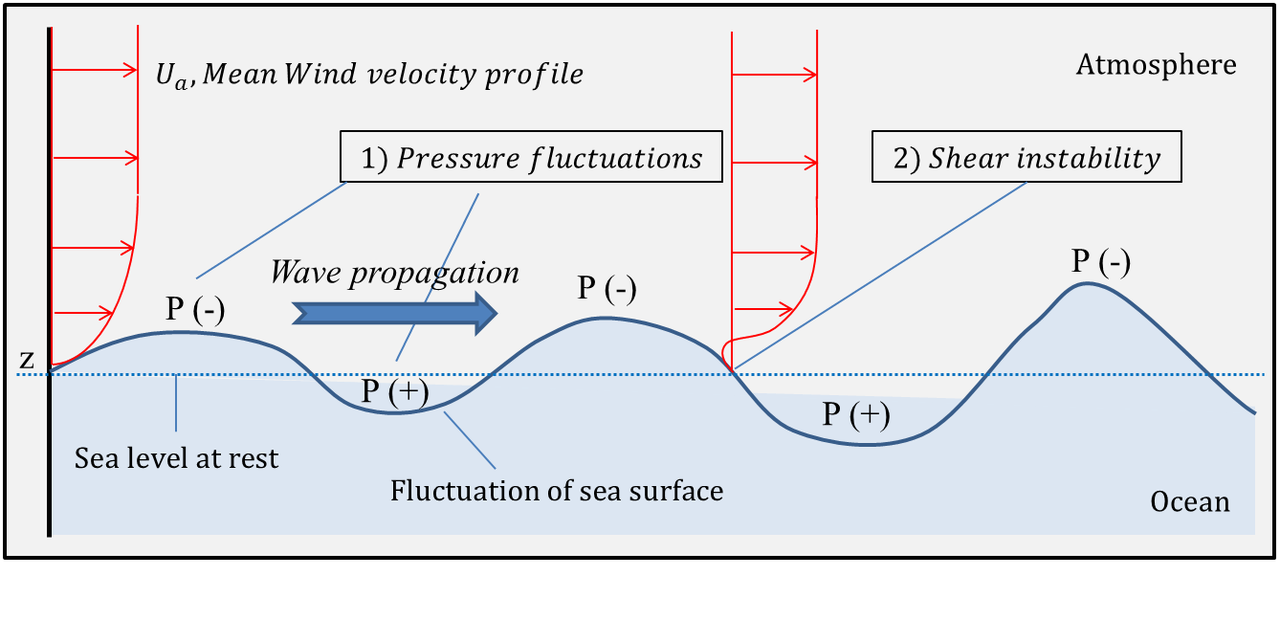
Wind transfers momentum to the sea through pressure fluctuations and surface shear across a fetch. Storm systems create complex seas that can evolve into swell — organized groups of waves that radiate away and travel thousands of kilometers. Geologic sources produce very long-wavelength waves (tsunamis) that can cross ocean basins with comparatively little loss of energy until they approach shallow coasts.
Measurement and observation
Waves are observed by in situ instruments such as buoys and pressure sensors, by coastal tide gauges, and by remote sensing from radar and satellites. Time series of sea surface elevation and spectral analysis reveal dominant periods and energy distribution. Operational services and monitoring networks provide forecasts and warnings based on wind fields and seismic data.
Coastal interaction and breaking
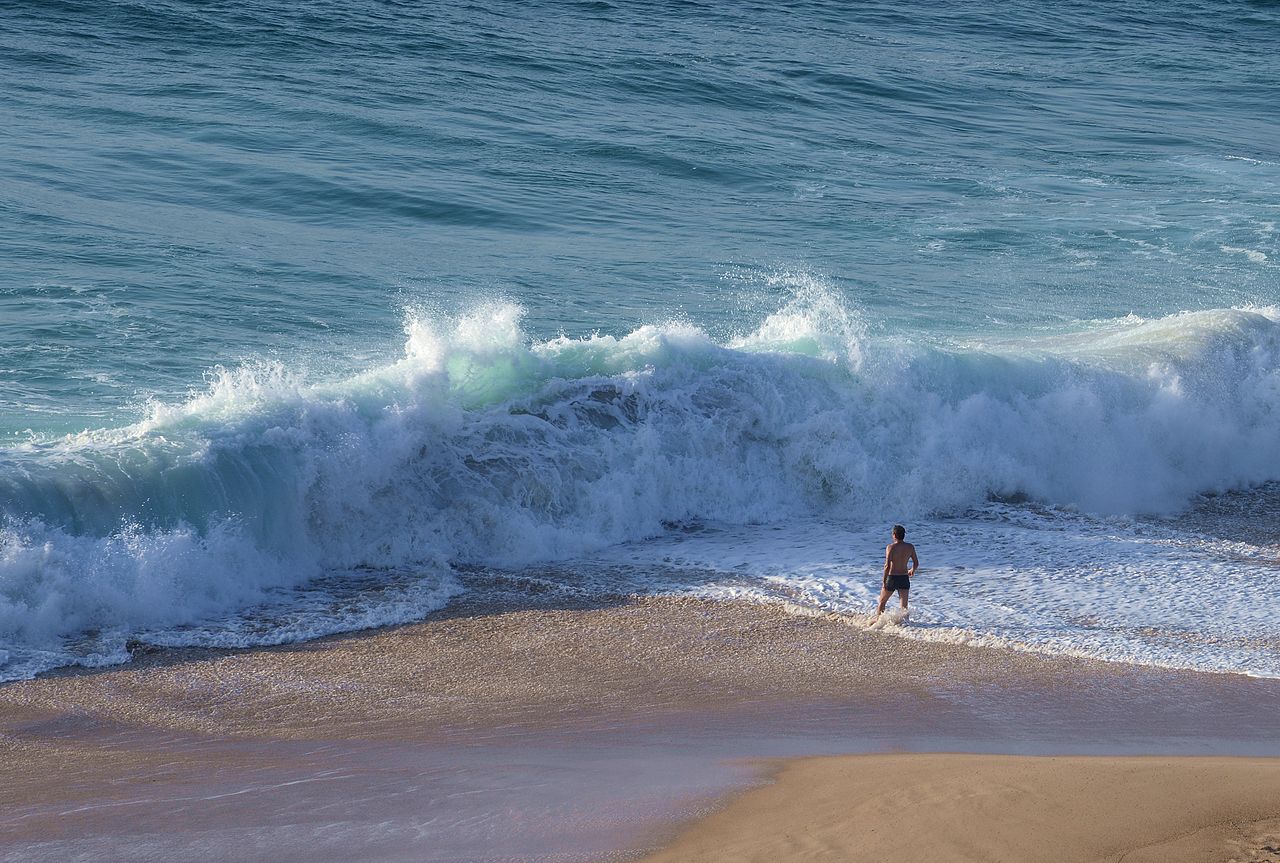
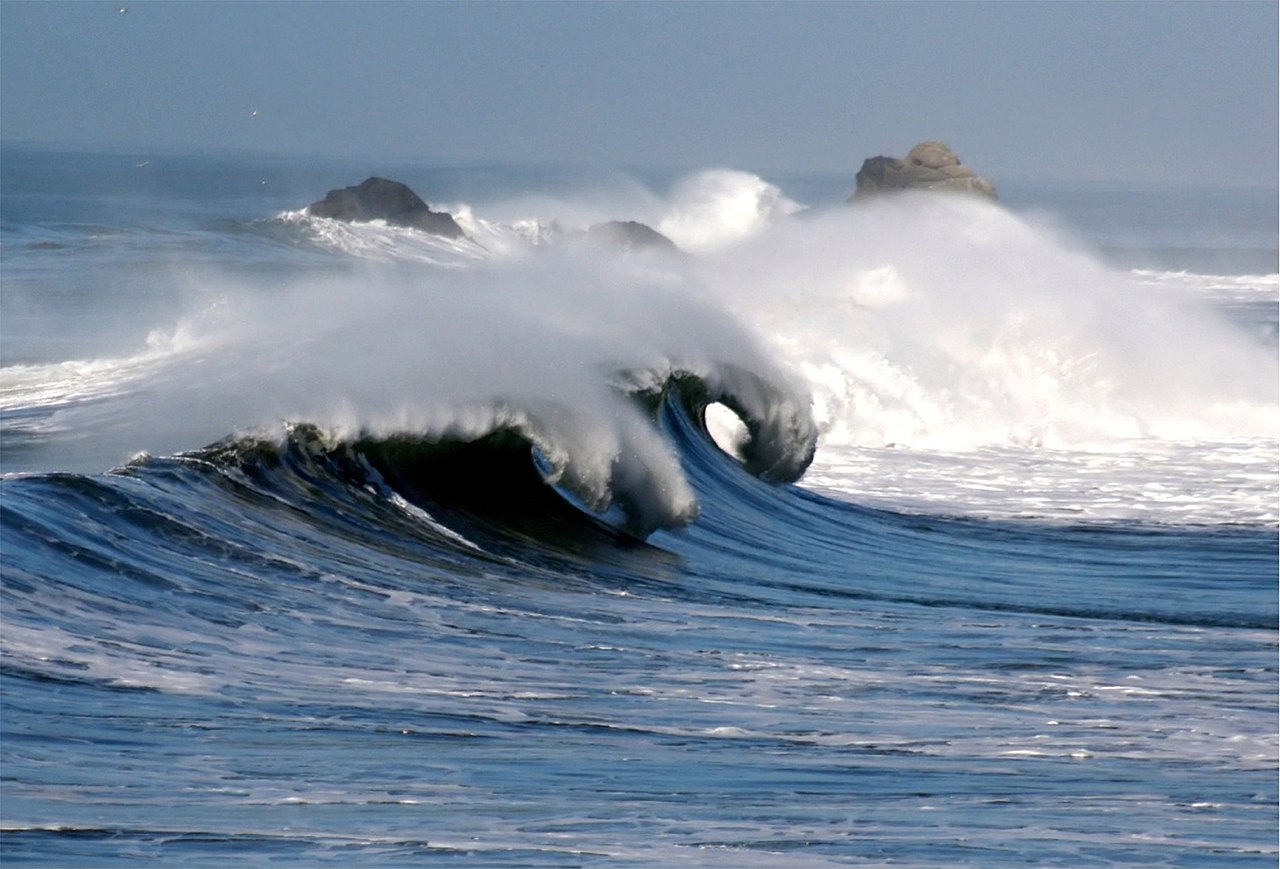
As waves approach shore they undergo shoaling, refraction, diffraction and sometimes reflection. Shoaling increases wave height because the lower part of the orbit is slowed by the seabed while the upper part continues, producing instability and eventual breaking. Breaking dissipates energy, redistributes sediment, shapes beaches and can cause coastal erosion or accretion depending on local conditions.
Types, hazards and uses
- Wind waves: locally generated, typically shorter period and choppier.
- Swell: longer-period, better organized waves that travel away from storms.
- Tsunamis: long-wavelength waves from geologic events that can cause severe coastal damage.
- Rogue waves: occasionally occurring, unusually large single waves from complex interactions.
Understanding surface waves is important for navigation, coastal engineering, hazard mitigation, recreational activities such as surfing, and for technologies that capture wave energy. For general introductions and technical references consult introductory portals and monitoring programs at regional centres: see weather and wind analyses at meteorological sources, seismic and tsunami information via seismic networks, long-travel behavior in ocean portals at related portals, and basic educational material on surface wave basics and the upper ocean. Practical guidance on wave energy and coastal design is available from specialist literature and engineering standards (wave energy) and operational forecasts and advisories (momentum and transport).
Questions and answers
Q: What are ocean surface waves?
A: Ocean surface waves are waves that occur in the upper layer of the ocean, usually resulting from wind.
Q: How are some ocean surface waves made?
A: Some ocean surface waves are made by geologic effects like earthquakes or vulcanicity.
Q: What is the range in size of ocean surface waves?
A: Ocean surface waves range in size from small ripples to huge tsunamis.
Q: Is there actual forward motion of individual water particles in an unbroken wave?
A: Despite the large amount of energy and momentum it may carry forward, there is little actual forward motion of individual water particles in an unbroken wave.
Q: What happens to a wave when it hits shallow water?
A: When a wave hits shallow water, it "breaks" because the bottom moves more slowly than the top.
Q: What causes a wave to break when it hits shallow water?
A: A wave breaks when it hits shallow water because the bottom moves more slowly than the top.
Q: How far can some ocean surface waves travel before striking land?
A: Some ocean surface waves can travel thousands of miles before striking land.
Related articles
Author
AlegsaOnline.com Ocean surface wave Leandro Alegsa
URL: https://en.alegsaonline.com/art/71846
Sources
- commons.wikimedia.org : Ocean surface waves
- boatsafe.com : "Anatomy of a Wave" Holben, Jay boatsafe.com captured 5/23/06
- nws.noaa.gov : National Weather Service