
Ocarina: the vessel flute — design, history and uses
A compact wind instrument with a closed resonating chamber. This article explains the ocarina’s design, sound production, cultural history, playing technique and musical uses.
The ocarina is a small wind instrument classified as a vessel flute rather than a tubular flute. Unlike recorders or transverse flutes, its tones arise from the air vibrating inside a closed cavity, a principle similar to the Helmholtz resonator. The instrument typically has a mouthpiece, a windway, and a group of finger holes; changing which holes are open alters pitch. For a comparison with other wind instruments see related flutes.
Image gallery
10 Images


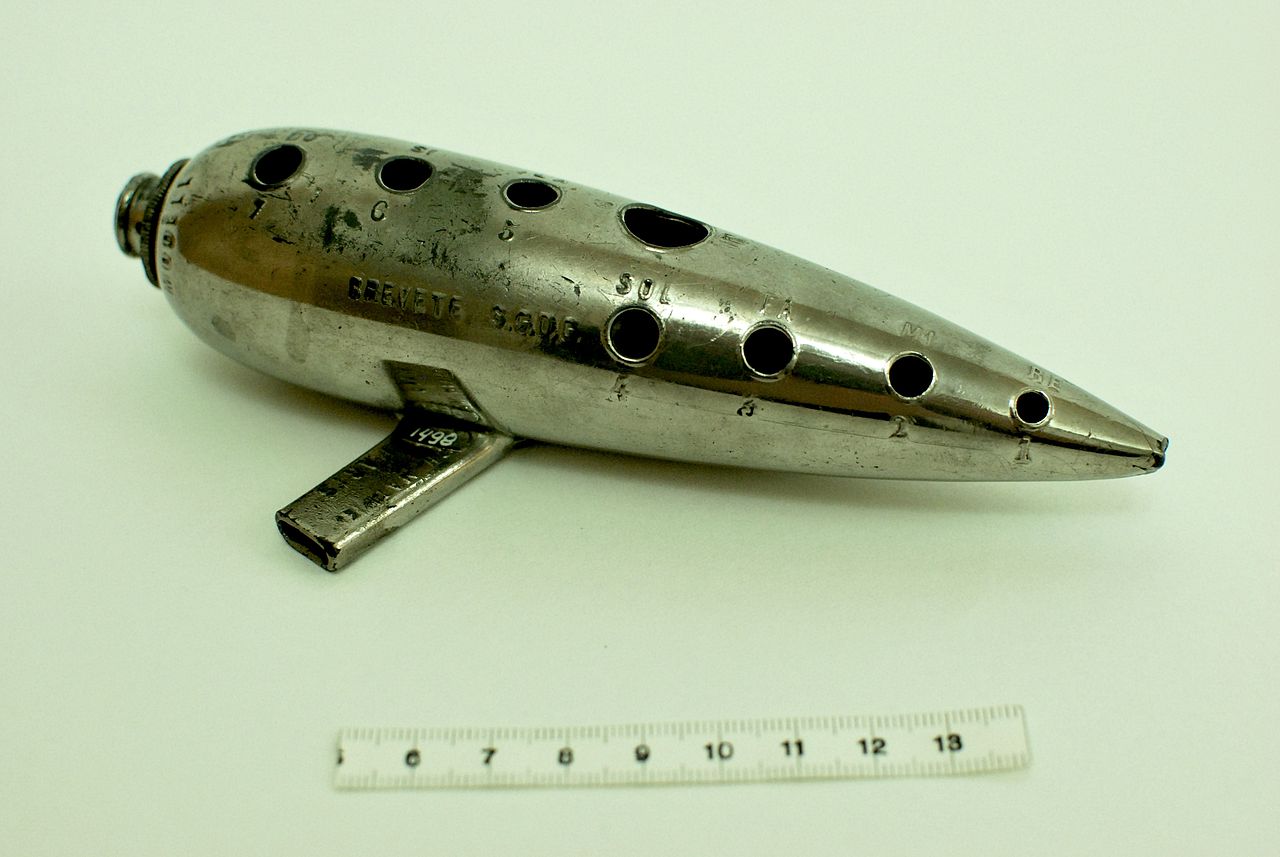


Characteristics and construction
Ocarinas are made from clay, ceramic, wood, plastic or metal. Shapes vary — rounded, egg-shaped, elongated “sweet potato” styles, or multi-chambered designs — but all enclose a resonant volume. Tone is determined largely by cavity volume and the total area of open holes rather than by air column length, which produces a pure, mellow timbre and a relatively even dynamic response.
- Parts: mouthpiece, windway, labium edge, resonant chamber, finger holes.
- Materials: earthenware, glazed ceramics, wood, modern plastics.
- Range: commonly one to two octaves; multi-chamber instruments extend range.
History and development
Vessel flutes appear in many ancient cultures. Archaeological finds include Mesoamerican clay ocarinas shaped like animals and ritual objects, and East Asian vessel flutes related to the Chinese xun. The European modern ocarina was standardized in the 19th century by Italian makers who developed fingering systems and factory production. For more on historical makers and chronology see historical notes.
Playing technique uses breath control, fingerings and cross-fingering or half-holing to produce semitones. Because pitch depends on cavity volume and hole geometry, makers tune instruments by adjusting internal volume or hole size rather than lengthening a tube. Ensembles of ocarinas and contemporary repertoire exploit its clear, rounded sound.
Uses and cultural impact
Ocarinas are used in folk music, classroom settings, hobbyist performance and contemporary recordings. Their accessibility makes them popular for beginners while skilled players perform complex arrangements. A surge in public interest followed appearances in modern media and games, which renewed global curiosity about the instrument and encouraged new makers and designs. See also cultural references and modern revival in popular culture.
Distinguishing an ocarina from other flutes helps clarify its musical role: it is a closed-chamber, vessel-based aerophone rather than an open cylindrical or conical air column. That difference explains its characteristic tone, tuning behavior and the kinds of repertoire for which it is best suited. Additional resources on construction and playing methods are available at introductory and specialist sources such as maker and technique guides.
Questions and answers
Q: What is an ocarina?
A: An ocarina is a type of flute.
Q: How is an ocarina different from other flutes?
A: It is different from other flutes because it has a round or box-like shape.
Q: What is the sound of an ocarina like?
A: The sound of an ocarina is a little different from other flutes.
Q: Is an ocarina made out of a tube?
A: No, an ocarina is not made out of a tube.
Q: What makes the sound of an ocarina unique?
A: The round or box-like shape of the ocarina gives it a unique sound.
Q: Can an ocarina produce different notes?
A: Yes, an ocarina can produce different notes.
Q: Is playing an ocarina difficult?
A: It depends on the skill level of the player, but generally, playing an ocarina is not considered difficult.
Related articles
Author
AlegsaOnline.com Ocarina: the vessel flute — design, history and uses Leandro Alegsa
URL: https://en.alegsaonline.com/art/71814
Sources
- ocarinaforest.com : "History of the Ocarina"