
Oarfish (Regalecidae): ribbonlike deep‑sea fishes and their history
Oarfish are long, ribbonlike marine fishes in the family Regalecidae. Four species exist; the giant oarfish can reach about 17 m. Pelagic and rarely seen, they are linked to sea‑serpent lore and beach strandings.
The oarfish are a small family of unusual, very elongated fishes known collectively as Regalecidae. These animals have slender, ribbonlike bodies and a striking dorsal fin that runs much of the length of the fish. There are four recognized species in the family; the best known is the giant oarfish (Regalecus glesne), which is the longest bony fish on record and can reach lengths up to about 17 metres. For a general introduction to the group see oarfish family.
Image gallery
5 Images



Physical characteristics
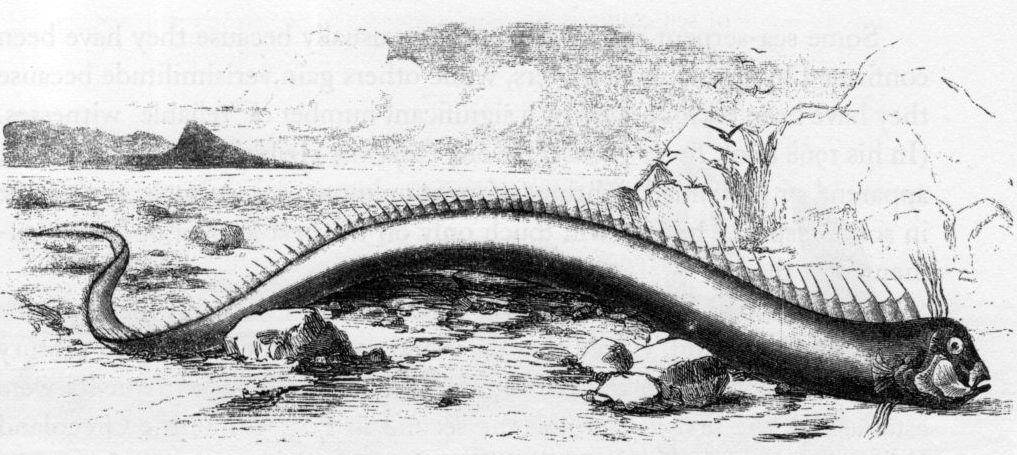
Oarfish are laterally compressed and very narrow in cross section, giving them a flat, ribbonlike appearance. A continuous dorsal fin of long flexible rays begins near the head and extends toward the tail, often forming an elongated crest or mane near the front. Pelvic fins are small and situated beneath or in front of the pectoral region; many species lack a prominent caudal (tail) fin as seen in typical fishes. Coloration is usually silvery with red or orange highlights on the dorsal crest. These features produce the distinctive, undulating silhouette that has long captured observers' attention.
Habitat and behaviour
Oarfish are primarily open‑water, midwater inhabitants. Most species live in the pelagic zone of the ocean, occupying midwater depths rather than coastal shallows or the seabed; they are most often associated with temperate and tropical seas worldwide. Because they inhabit deep or midwater layers, live sightings are rare and most knowledge comes from specimens that wash ashore or are retrieved from nets. When an oarfish is injured or dying it may swim toward the surface or shallow water, a behaviour that increases the chance of strandings and human encounters (pelagic zone, near shore and away from the bottom are useful habitat terms).
Feeding is believed to focus on small, planktonic animals and tiny nekton: krill, small crustaceans, squid and small fishes are typical prey items. Their mouth structure and slender body are suited to picking or suctioning small organisms from the water column. Reproduction and life history remain poorly documented; available evidence suggests pelagic eggs and planktonic larvae, but many details of their breeding and early life stages are still under study.
Human interest and cultural significance
Because oarfish are seldom seen alive, strandings and museum specimens have long influenced folklore. Their great length, sinuous form and occasional surface appearances have been suggested as explanations for historical sea‑serpent reports and maritime legends (sea‑serpent legends). The common name "oarfish" may derive from the resemblance of their long, flat bodies to an oar, or from an older idea that they propelled themselves by a rowing motion using their fins; the latter notion is now considered inaccurate, though it persists in some older accounts (name origin). The family name Regalecidae comes from Latin regalis, meaning "royal," referring to the striking crest and overall appearance of these fishes.
Scientific interest remains high because oarfish occupy a little‑explored niche and can grow to exceptional sizes. Observations from submersibles, occasional live video captures and careful study of stranded specimens are gradually filling gaps in knowledge about their ecology and role in ocean ecosystems. For accessible introductions and specimen reports consult resources identified as studies or collections (surface observations).
Quick facts
- Family: Regalecidae; about four recognized species.
- Notable species: giant oarfish (Regalecus glesne), the longest bony fish, up to ~17 m.
- Habitat: pelagic, midwater zones in temperate and tropical oceans.
- Visibility: rarely seen alive; often known from strandings or deep‑water captures.
- Cultural note: linked to sea serpent reports and maritime folklore.
Questions and answers
Q: What is an oarfish?
A: An oarfish is a kind of very long, flat fish in the Regalecidae family.
Q: How many species of oarfish are there?
A: There are four species of oarfish in the world.
Q: What is the giant oarfish, and how long can it grow?
A: The giant oarfish (Regalecus glesne) is the longest bony fish alive in the world today, and it can grow up to 17 metres (56 ft) long.
Q: Where do oarfish live?
A: Oarfish live in the pelagic zone, which means that they live in water that is not near the shore and not near the bottom of the ocean. They live in all temperate and tropical oceans.
Q: Why are oarfish very rare?
A: Oarfish are very rare because they are usually only seen when a dead one washes onto the shore. They are also sick or dying when they swim up near the surface of the water, which means that they are difficult to observe in their natural habitat.
Q: Why are oarfish probably the "sea serpents" in legends?
A: Oarfish are probably the "sea serpents" in legends because when they are sick or dying, they swim up near the surface of the water, which can make them appear like serpents or sea monsters.
Q: Why are oarfish called "oarfish"?
A: There are two ideas about why oarfish are called "oarfish." One idea is that their bodies look like oars because they are very long and flat. The other idea is that some people used to think that oarfish swam by moving their fins like the oars of a row boat. We now know that this "rowing" idea is wrong.
Related articles
Author
AlegsaOnline.com Oarfish (Regalecidae): ribbonlike deep‑sea fishes and their history Leandro Alegsa
URL: https://en.alegsaonline.com/art/71643
Sources
- fishbase.org : Regalecidae
- news.bbc.co.uk : Bourton, Jody. Giant bizarre deep sea fish filmed in Gulf of Mexico. BBC Earth News