
O Canada
O Canada is the national anthem of Canada, composed in 1880 by Calixa Lavallée with French words by Adolphe-Basile Routhier; English lyrics by Robert Stanley Weir followed in 1908. It was made official on 1 July 1980.
Overview
"Ô Canada" is the official national anthem of Canada. The melody was composed in the late 19th century and the song has since become a central symbol of Canadian identity, commonly performed at public ceremonies, sporting events and civic occasions. Its bilingual presence reflects the country’s English and French heritage.
Image gallery
5 Images



Origins and authorship
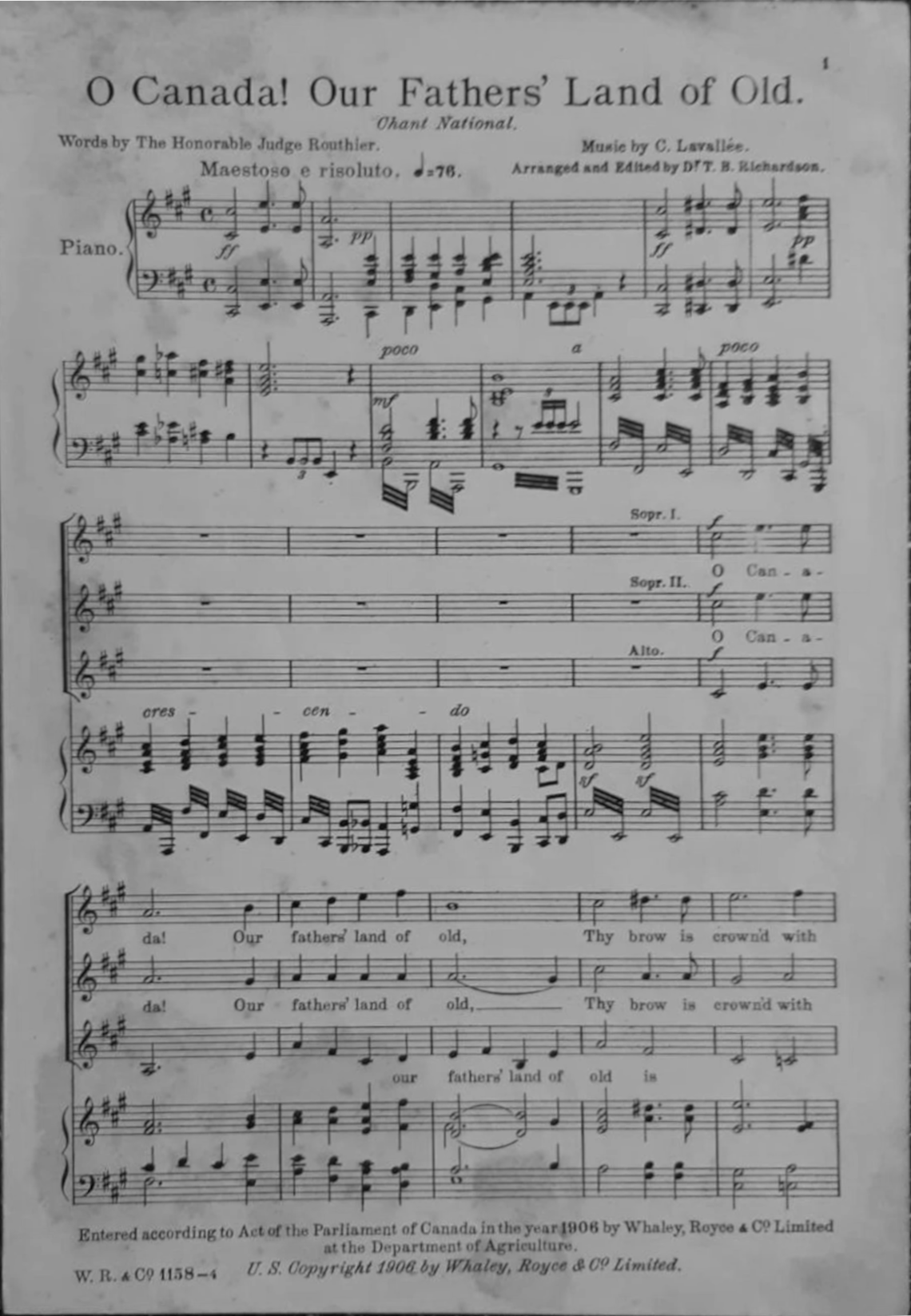
The music was written by Calixa Lavallée, a composer from Quebec, while the original French text was penned by Adolphe-Basile Routhier. The piece was first performed in 1880 at a public celebration in Quebec. English-language words based on the French original were composed by Robert Stanley Weir in 1908; over time those English lyrics were adapted and debated to reflect changing social values.
Adoption and official status
Although "O Canada" had been widely used as a de facto anthem for many decades, it was formally proclaimed the national anthem by federal statute on 1 July, 1980, the country's Canada Day. That act gave legal recognition to the anthem while acknowledging both English and French versions as part of the nation’s bilingual heritage.
Lyrics, versions and language
There are multiple English renderings and translations of the original French text. The commonly sung English form traces back to Weir’s adaptation, though variations have circulated and some lines have been revised in modern times to address gender-neutral language. In addition to English and French, the anthem has been translated into Indigenous and immigrant community languages for local performances and ceremonies.
Usage and customs
- Played or sung at national celebrations, sporting events and governmental ceremonies.
- Often performed by military bands, choirs or recorded orchestral arrangements.
- Customs include standing, removing headwear, and men placing a hand over the heart in many contexts; protocols vary by event.
Notable facts and discussions
"O Canada" is notable for its strong association with Canadian federal identity and for reflecting the country’s bilingual character. Debates over particular words and inclusivity have arisen from time to time, prompting revisions and public discussion. Despite differing opinions about wording or performance style, the anthem remains a widely recognized emblem of national life.
For more detailed information on musical analysis, historical performances and official text, consult governmental and musical reference sources or visit archival collections maintained by Canadian institutions.
Ô Canada | national anthem | Canada | Calixa Lavallée | Canada Day
Questions and answers
Q: Who wrote the music for "O Canada"?
A: Calixa Lavallée wrote the music for "O Canada".
Q: Who wrote the original French lyrics for "O Canada"?
A: Adolphe-Basile Routhier wrote the original French lyrics for "O Canada".
Q: When was "O Canada" first sung in French?
A: "O Canada" was first sung in French in 1880.
Q: Who wrote English words for the song?
A: Robert Stanley Weir wrote English words for the song.
Q: When did the government make it official as the national anthem of Canada?
A: The government made it official as the national anthem of Canada on 1 July (Canada Day) in 1980.
Q: What is another name for “O Canada”?
A: Another name for “O Canada” is Ô Canada, which is its title in French.
Related articles
Author
AlegsaOnline.com O Canada Leandro Alegsa
URL: https://en.alegsaonline.com/art/71579