
Nyala: the spiral-horned antelope of southern Africa
Overview of the nyala (Tragelaphus angasii), its appearance, behaviour, habitat, distribution, predators and conservation status in southern Africa.
The nyala is a medium-sized African antelope native to southern Africa. Scientific names include Nyala angasii and Tragelaphus angasii. It is notable for extreme sexual dimorphism: males are larger, darker and bear twisted horns, while females are smaller, hornless and retain a rufous coat with vertical white stripes. The nyala's striking contrast between sexes makes it one of the most visually distinctive spiral-horned antelopes.
Image gallery
10 Images



Appearance and biology
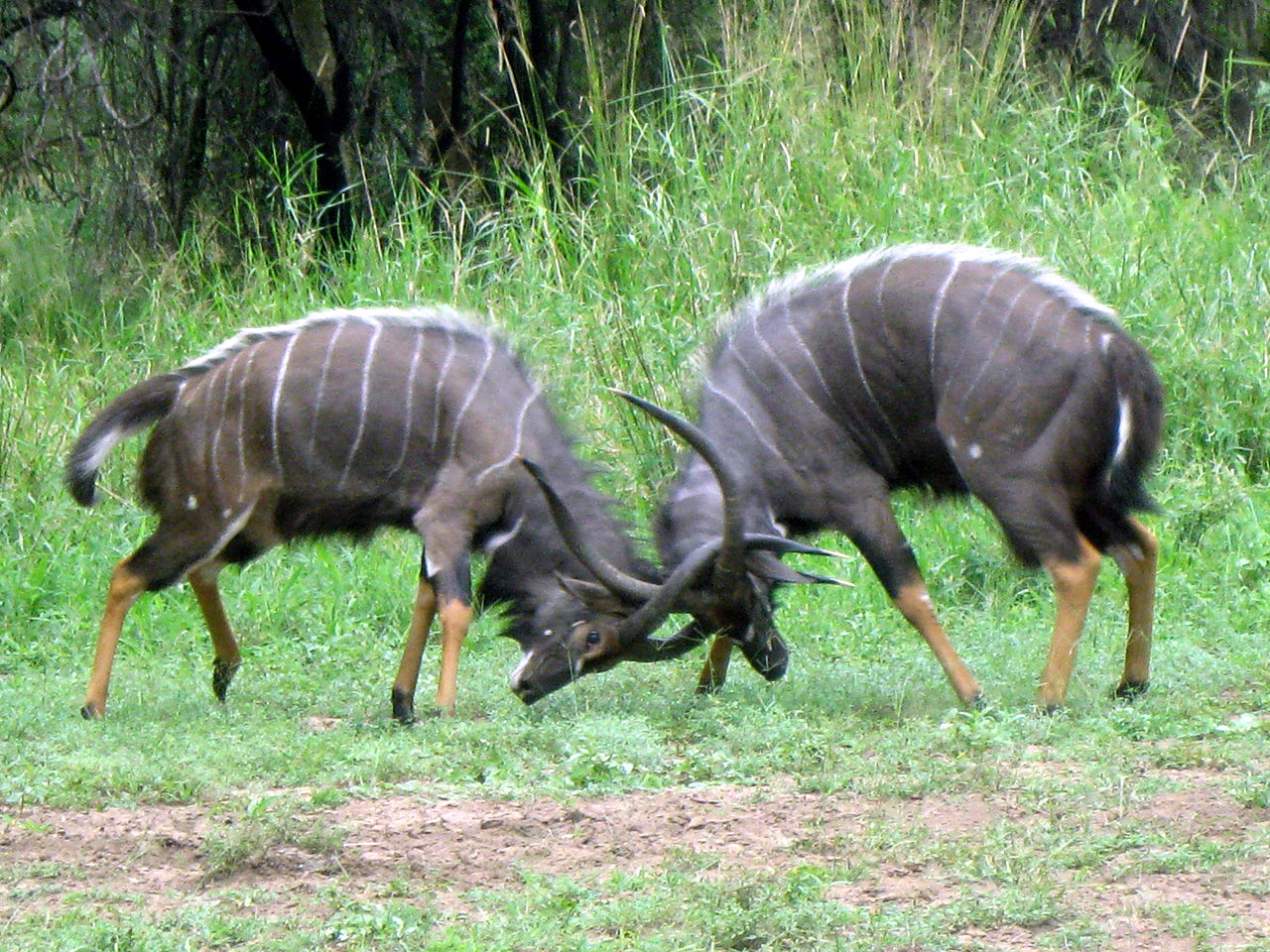
Coat, markings and horns differ markedly by sex and age. Females and young animals usually show a reddish-brown coat with a pattern of pale vertical stripes and spots that provide camouflage in dense vegetation. Males develop a thicker, darker coat with long hair along the throat and flanks; mature males carry elegant spiral horns used for sparring. As a primarily herbivore, the nyala feeds on a variety of plant materials including leaves, shoots, fruits and grasses, adjusting diet with seasonal availability.
Behavior and habitat
Nyalas prefer dense thickets, riverine woodlands and dry savanna habitats with nearby water. They are crepuscular, most active in the cool hours of early morning and late afternoon. Social structure is flexible: small family groups of females with young are common, while older males tend to be solitary or form loose bachelor assemblages. The species is non-territorial and uses cover to avoid predators rather than open-range flight.
Predators, reproduction and life cycle
Natural predators include large carnivores such as lion, leopard and the Cape hunting dog. Opportunistic hunters like baboons and various raptors may threaten calves. Breeding can peak at certain times of year with courtship and occasional displays by males; females typically give birth to a single calf after a gestation of several months and raise it hidden in thick cover until it can keep up with the group.
Distribution and conservation
Wild populations of nyala occur across parts of southern Africa, including Malawi, Mozambique, South Africa, Eswatini (formerly Swaziland) and Zimbabwe. The species has been introduced into Botswana and Namibia, and was reintroduced into Eswatini following local extinction in the mid-20th century (local extinction). The International Union for Conservation of Nature lists the nyala as Least Concern in many parts of its range because populations are generally stable, though regional declines have occurred.
Threats and human interactions
The chief threats to nyala are poaching and habitat loss driven by expanding human settlement and agricultural conversion. Males are particularly valued as trophy and game animals, which can drive local hunting pressure. Conservation measures include protected areas, managed reserves and regulated hunting in some countries, together with habitat protection and anti-poaching efforts.
- Typical habitat: riverine thicket and dense woodland.
- Diet: browsers and occasional grazers, shifting with seasons.
- Social system: female groups and solitary males.
The nyala remains an important component of southern African wildlife, valued both ecologically as a browser in woodland systems and culturally in local game economies. Continued monitoring, habitat conservation and law enforcement are central to ensuring its persistence across its native range.
Questions and answers
Q: What is the nyala?
A: The nyala (Nyala angasii or Tragelaphus angasii) is an antelope that lives in southern Africa.
Q: What is the highest sexual dimorphism among other spiral-horned antelopes?
A: The nyala has the highest sexual dimorphism among other spiral-horned antelopes.
Q: When are nyalas mainly active?
A: Nyalas are mainly active early in the morning and late in the afternoon.
Q: What does a nyala eat?
A: As a herbivore, the nyala eats leaves, fruits and grasses. They prefer water holes rather than open spaces.
Q: Are nyalas territorial animals?
A: No, the nyala is not a territorial animal. Family groups of up to 10 individuals can be found living in thickets within dense and dry savanna woodlands.
Q: What are some of their predators?
A: The main predators of the nyala are lion, leopard and Cape hunting dog, while baboons and raptors hunt for young ones.
Q: Where do they live and what threats do they face?
A: Nyalas live in Malawi, Mozambique, South Africa, Swaziland and Zimbabwe as well as Botswana and Namibia where they have been introduced or reintroduced respectively. Populations are stable but there are threats from poaching and habitat loss due to human settlement with males being highly demanded as game animals in Africa
Related articles
Author
AlegsaOnline.com Nyala: the spiral-horned antelope of southern Africa Leandro Alegsa
URL: https://en.alegsaonline.com/art/71532
Sources
- iucnredlist.org : IUCN redlist
- ultimateungulate.com : Tragelaphus angasii