
North China Plain
A broad, low-lying alluvial plain in eastern China formed largely by the Yellow River; a historical cradle of Chinese civilization and the country’s major agricultural and population center.
Overview
The North China Plain is a vast lowland region on the eastern edge of the Chinese mainland. In Chinese it is known as 华北平原 (simplified) and 華北平原 (traditional), pronounced Huáběi Píngyuán. The plain occupies a wide corridor of flat, fertile ground that stretches toward the Bohai Sea and forms one of the largest alluvial plains in eastern Asia (eastern Asia). Much of the surface was built up over millennia by sediment carried by the Yellow River (Huang He), which crosses and drains the plain into the Bohai Sea (Bo Hai).
Image gallery
4 Images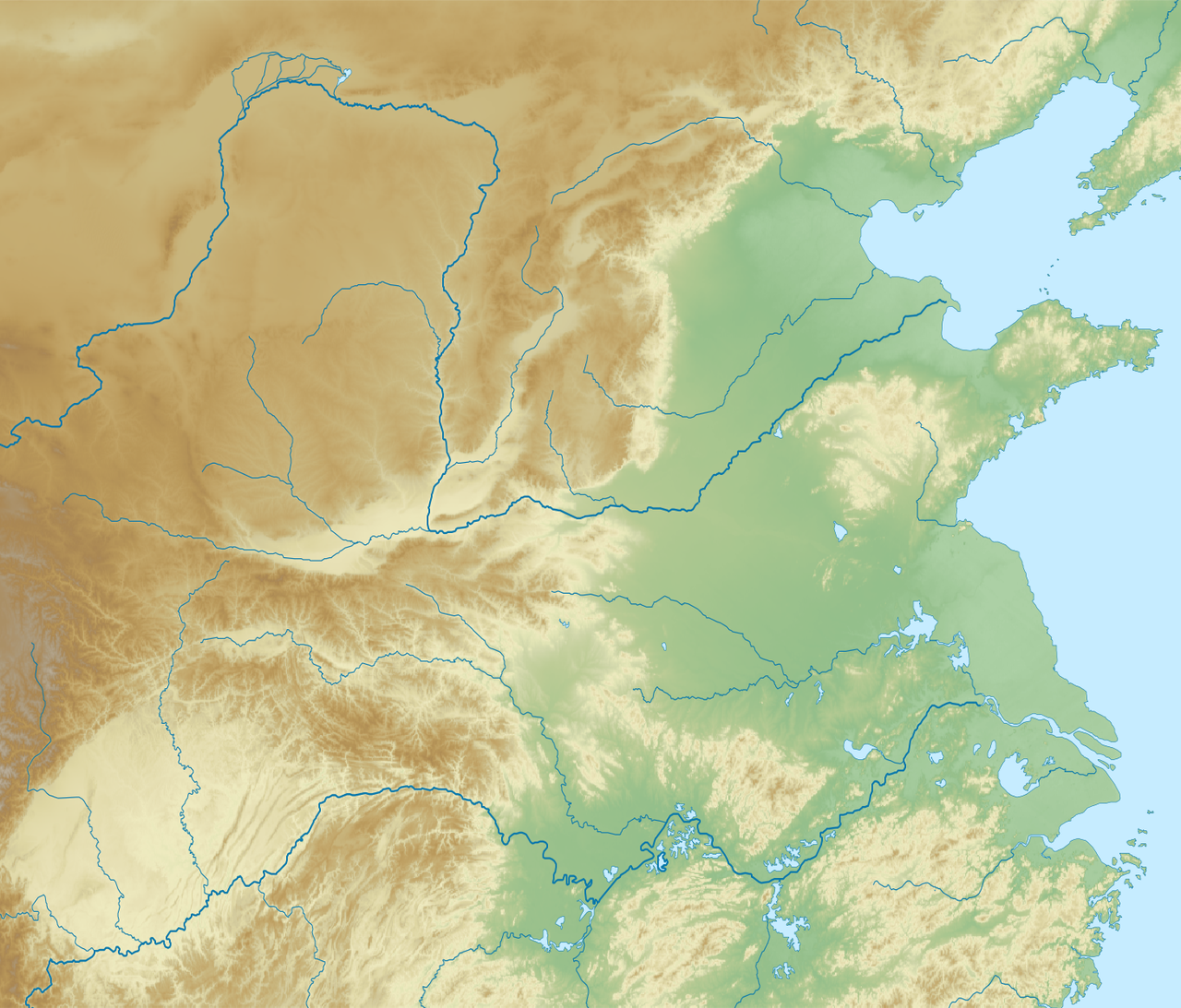


Physical characteristics
Geologically the plain is an accumulation of silt and sand deposited by rivers, making its soils deep and generally fertile. Elevations are low and gradual, which historically encouraged large-scale farming and dense settlement. The area contains extensive groundwater and alluvial aquifers but faces environmental pressures from over-extraction and soil salinization. The Yellow River remains a dominant influence on landscape, hydrology and risk of flooding; management of its channels and levees has shaped the plain’s development for centuries.
History and cultural significance
The southern portion of the plain is often referred to as the Central Plains or Zhongyuan, an area closely linked with the early formation of Chinese states and culture. As a heartland of ancient agriculture and political power, the plain supported population growth and the emergence of early Chinese dynasties. Over time its cities and market towns became centers for administration, trade and cultural exchange; Beijing (China’s capital) lies on the northern edge of this broad flatland.
Agriculture, settlement and economy
The plain is one of China’s principal agricultural zones, producing staple grains and a variety of crops (crops) that have supported large rural and urban populations. Irrigation, seasonal floods, and a long tradition of mixed farming have made the plain a highly productive landscape. Densely populated provinces and major cities within and near the plain concentrate industry, transport and administrative functions, creating a strong link between rural production and urban demand.
Contemporary challenges and management
Modern issues include periodic flooding, loss of wetlands, contamination of surface and groundwater, and the pressure of urban expansion on farmland. Large-scale engineering projects, river diversions, water-saving irrigation and land-use planning are ongoing responses to these problems. Parts of the plain are also the focus of coastal reclamation and industrial development, which have altered natural drainage and increased the need for coordinated environmental management.
Notable features and practical information
- Major river: Yellow River.
- Coastal outlet: Bohai Sea.
- Key urban areas and political centers: Beijing and other provincial cities.
- Local names and terms: simplified, traditional, pinyin.
- Regional importance: a major agricultural base (crops) and cultural hearth of Zhongyuan.
- Geographic context: one of the largest plains in eastern Asia and part of broader national landforms in China.
- Data and elevation notes: extensive low-lying terrain and alluvial deposits are characteristic (elevation).
For planning, conservation and historical study the North China Plain remains a subject of active research and policy attention, balancing the needs of agriculture, urban growth and environmental protection while preserving its role in China’s long cultural story. Further reading and maps are available through general geographic and historical resources (plain) and regional studies (华北平原).

See also
- Northeast China Plain
- List of Chinese levels
Footnotes
- ↑ "Huanghuaihai" here refers to the Yellow River, Huai He and Hai He rivers.
- ↑ In the south of the Huai He and the lower reaches of the Yangtze River.
- ↑ Cihai, p. 694
- ↑ a b China - Plains (Memento of the original on 21 February 2016 in the Internet Archive) Info:
 The archive link was inserted automatically and has not yet been checked. Please check original and archive link according to instructions and then remove this note. @1@2Template:Webachiv/IABot/www.china-reisefuehrer.com
 - ↑ e.g. the Dagang oil field (大港油田) in Tianjin as well as in Hebei: Cangzhou and Tangshan on the Gulf of Bohai as well as the Shengli oil field (胜利油田) in the delta of the Yellow River in Shandong province in Dongying 东营市.
36.58117.16Coordinates: 36° 35′ N, 117° 10′ E
Related articles
Author
AlegsaOnline.com North China Plain Leandro Alegsa
URL: https://en.alegsaonline.com/art/70853