
Nonverbal communication: signals beyond words
Overview of nonverbal communication: channels, functions, research history, practical uses and cross-cultural issues. Covers gestures, facial expression, proxemics, paralanguage and written nonverbal cues.
Nonverbal communication describes the transmission of information without spoken words. It includes conscious signals—like a deliberate gesture—and largely unconscious cues such as posture, microexpressions, or the timing of a response. These signals often operate alongside language to reinforce, contradict, or add nuance to what is said and are essential for everyday social interaction. For discussion of the largely automatic side of nonverbal behavior see unconscious signals.
Image gallery
10 Images
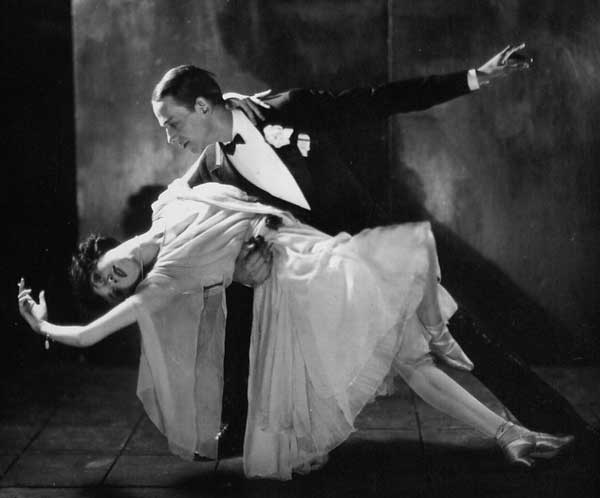





Common channels of nonverbal communication
Different forms of nonverbal signals are sometimes grouped into channels or systems. Typical channels include:
- Gestures: hand and arm movements used to emphasize, illustrate or substitute for words; see gesture studies.
- Touch (haptics): physical contact that conveys support, control, or intimacy; see research on touch.
- Body language and posture: overall stance and movement patterns that communicate attitudes and social roles; related research at body language.
- Facial expression: the face as a window to emotion and intent; overview at facial expression.
- Eye behavior (oculesics): gaze, eye contact and pupil responses that regulate conversation and signal attention; see eye contact.
- Appearance and artifacts: clothing, hairstyles and objects that communicate status, group membership or personal style; see appearance cues.
- Movement arts: structured movement forms such as dance, which convey narrative and emotion without words; see dance as communication.
- Paralanguage: vocal qualities that accompany speech—tone, pitch, loudness and tempo; see paralanguage and voice quality.
- Prosodic features: rhythm and intonation that shape meaning and emphasis; see rhythm and intonation.
- Written nonverbal cues: layout, handwriting and symbols such as emoticons that provide extra meaning in text; see emoticons and typography.
How nonverbal signals function
Nonverbal cues serve several broad purposes: they can regulate turn-taking in conversation, express emotion, accent or contradict verbal messages, and signal social distance or power. Emotional states are frequently expressed nonverbally—smiles, frowns and vocal changes reveal affective information even when words do not; see emotion and nonverbal cues. Some signals are intentionally controlled while others leak out involuntarily, which is why observers sometimes detect discomfort or deception despite explicit denials.
History and research traditions
Scholars from Darwin onward have examined nonverbal behavior. Charles Darwin argued that some facial expressions have evolutionary roots; later researchers such as Ray Birdwhistell, Edward T. Hall and Paul Ekman developed frameworks for studying movement, spatial norms (proxemics) and basic emotional expressions. Modern work combines observational studies, experimental methods and technology—video analysis, physiological measures and cross-cultural surveys—to map which signals are universal and which are culturally specific.
Applications, cultural differences and practical tips
Understanding nonverbal communication is valuable in fields such as counseling, education, negotiation, leadership and law enforcement. Because norms vary widely by culture, gestures or distances that are polite in one context can be rude in another; sensitivity to proxemics and eye-contact expectations reduces misunderstanding. Practical guidance includes aligning verbal and nonverbal messages (congruence), attending to context, and using observation before interpreting cause.
Key distinctions and final notes
Important distinctions include intentional vs. unintentional signals, universal vs. culture-specific expressions, and static cues (appearance) vs. dynamic cues (movement, voice). Nonverbal behavior is a continuous, multimodal flow that enriches human communication and often reveals information not contained in words alone. For concise overviews and further reading, consult the linked topics above: gesture (see), touch (see), paralanguage (see) and emotion studies (see).
Questions and answers
Q: What is nonverbal communication?
A: Nonverbal communication (NVC) refers to the use of signals without words.
Q: Is language the only way to communicate?
A: No, there are other means of communication.
Q: Is nonverbal communication always conscious?
A: No, much nonverbal communication is unconscious and happens without people thinking about it.
Q: What are the different ways NVC may be communicated?
A: NVC may use gestures and touch, body language or posture, facial expression and eye contact. It may also be communicated through objects such as clothing and hairstyles. Dance is also a type of nonverbal communication.
Q: What are the nonverbal elements of speech?
A: The nonverbal elements of speech, known as paralanguage, include voice quality, emotion and speaking style, rhythm, intonation and stress.
Q: Do written texts have nonverbal elements?
A: Yes, written texts have nonverbal elements such as handwriting style, spatial arrangement of words, or the use of emoticons, such as :).
Q: What are the three main aspects of nonverbal communication?
A: The three main aspects of nonverbal communication are the situation where it takes place, the communicators, and their behavior during the interaction.
Related articles
Author
AlegsaOnline.com Nonverbal communication: signals beyond words Leandro Alegsa
URL: https://en.alegsaonline.com/art/70631