
Atomic Energy Commission (United States)
The U.S. Atomic Energy Commission (AEC) was a federal agency created after WWII to control nuclear weapons development, promote peaceful uses of atomic energy, and manage national laboratories; it was reorganized in 1974.
The Atomic Energy Commission (AEC) was a United States federal agency established in the aftermath of World War II to provide civilian control of atomic energy. Created by legislation in 1946, the AEC took responsibility for managing nuclear technology that had been developed under the wartime Manhattan Project. Its mandate combined stewardship of nuclear weapons programs with promotion of peaceful applications of atomic energy, scientific research, and oversight of government-owned nuclear facilities.
Image gallery
10 Images


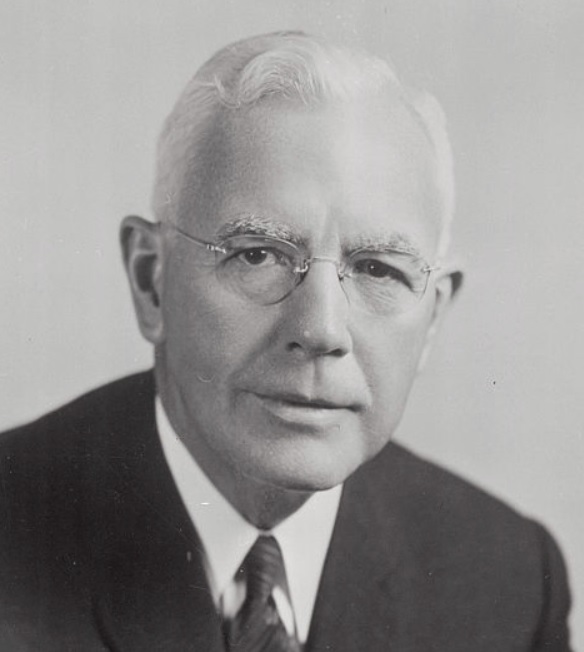


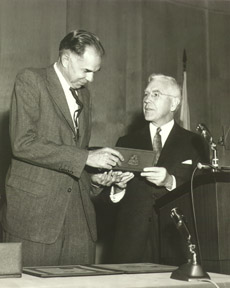

History and development
The AEC was formed by the Atomic Energy Act of 1946 to transfer authority over atomic matters from military to civilian hands. This transition reflected both strategic and political decisions about how nuclear knowledge should be governed in peacetime. In the decades that followed, the commission oversaw nuclear testing, supported research into reactors and isotopes, and played a central part in the expansion of national laboratories and research centers that had origins in wartime programs.
Functions and organization
During its existence the AEC combined several distinct roles that shaped U.S. nuclear policy and technology:
- Weapons stewardship: management and development of the U.S. nuclear arsenal and coordination of testing programs.
- Research and development: funding and operation of national laboratories and reactor research, including facilities at Los Alamos, Oak Ridge and Argonne.
- Civilian promotion: encouragement of nuclear power and medical, industrial, and agricultural uses of radioisotopes.
- Regulatory activities: early licensing and safety oversight of nuclear facilities, although regulation and promotion were often handled by the same agency.
Legacy and controversies
The AEC made major contributions to science, industry, and defense by supporting large-scale research programs and helping to establish the civilian nuclear power sector. However, its combined mission of promoting and regulating atomic energy drew criticism for conflicts of interest. Concerns about secrecy, environmental effects of testing, human radiation experiments, and nuclear safety prompted calls for institutional reform. In response to these and related issues, the federal government reorganized atomic energy oversight in the 1970s.
End of the AEC and successors
In 1974 the agency was abolished and its responsibilities were divided between two new bodies: a regulatory commission charged with licensing and safety oversight, and an organization to carry forward research and development. Those successor entities evolved into the Nuclear Regulatory Commission and the Department of Energy's predecessors, which continue to shape U.S. nuclear policy and research. For more information on the legislative origins and role of the AEC, see the Atomic Energy Act and related records.
Questions and answers
Q: What is Atomic Energy Commission?
A: Atomic Energy Commission is an agency in the United States government that was established soon after World War II by the United States Congress.
Q: What is the purpose of the Atomic Energy Commission?
A: The purpose of the Atomic Energy Commission was to encourage development and to maintain control over the development of atomic sciences and technology during peacetime.
Q: When was the Atomic Energy Commission established?
A: The Atomic Energy Commission was established soon after World War II by the United States Congress.
Q: What was the role of the Atomic Energy Commission?
A: The role of the Atomic Energy Commission was to encourage development and to maintain control over the development of atomic sciences and technology during peacetime.
Q: Who established the Atomic Energy Commission?
A: The Atomic Energy Commission was established by the United States Congress.
Q: What was the aim of the Atomic Energy Commission?
A: The aim of the Atomic Energy Commission was to encourage development and to maintain control over the development of atomic sciences and technology during peacetime.
Q: What was the other name for Atomic Energy Commission?
A: The United States Atomic Energy Commission or (AEC) was the other name for the Atomic Energy Commission.
Related articles
Author
AlegsaOnline.com Atomic Energy Commission (United States) Leandro Alegsa
URL: https://en.alegsaonline.com/art/7046