
Niger River
Major West African river about 4,180 km long that arcs from the Guinea Highlands through Mali, Niger and Nigeria to the Gulf of Guinea; vital for transport, agriculture, ecosystems and regional history.
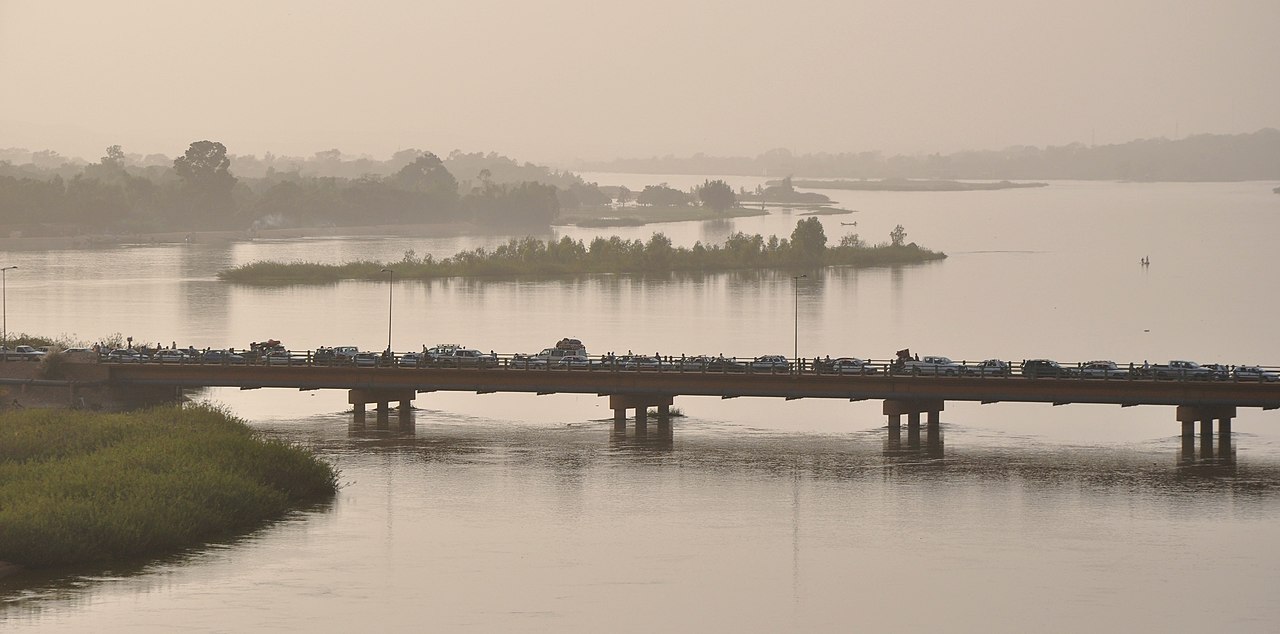
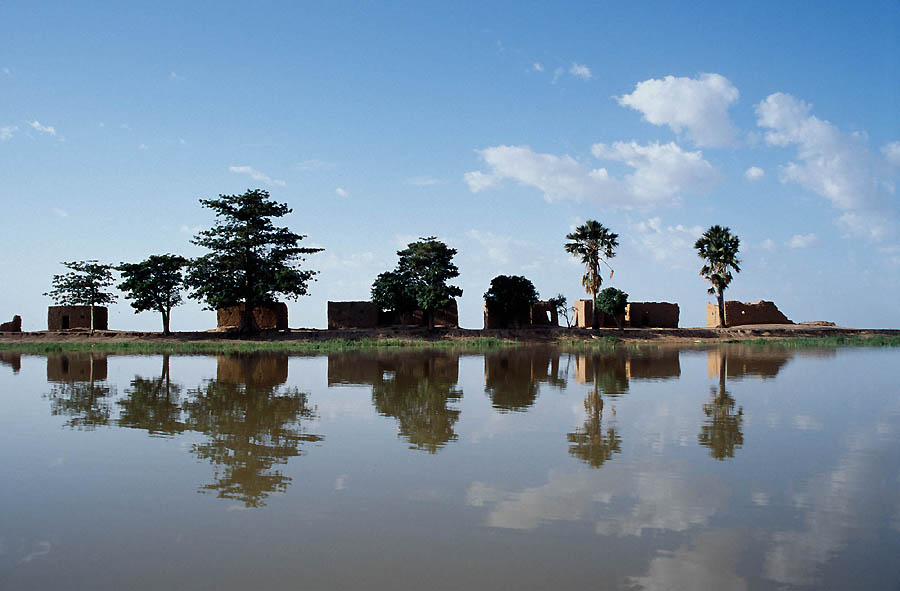
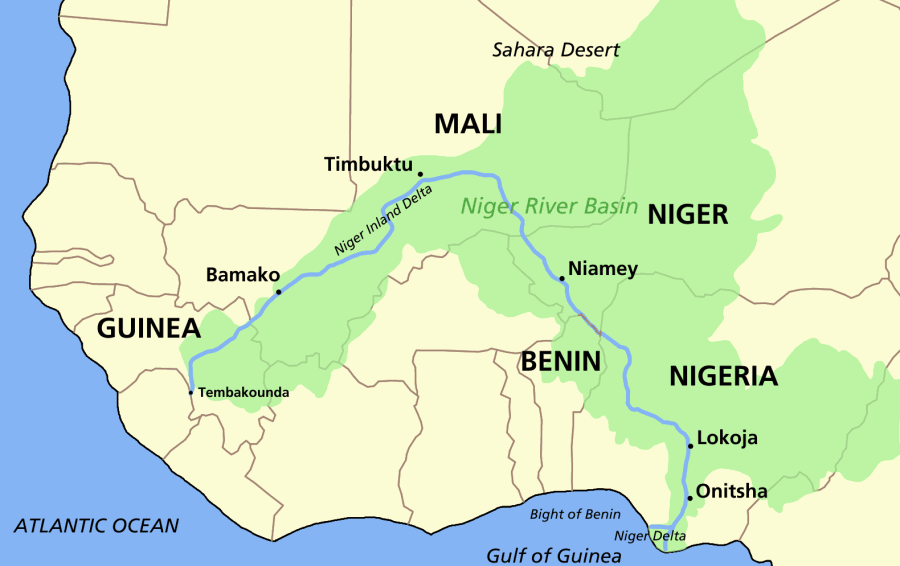
The Niger River is the principal river of West Africa, rising in the highlands of Guinea and following a broad crescent-shaped course before reaching the Atlantic Ocean. At roughly 4,180 km in length it is the third-longest river on the African continent, after the Nile and the Congo. Its basin supports millions of people and a wide range of ecosystems, from the seasonal floodplains of the Inner Niger Delta to mangrove-fringed estuaries in the coast.
Image gallery
10 Images




Course and main features
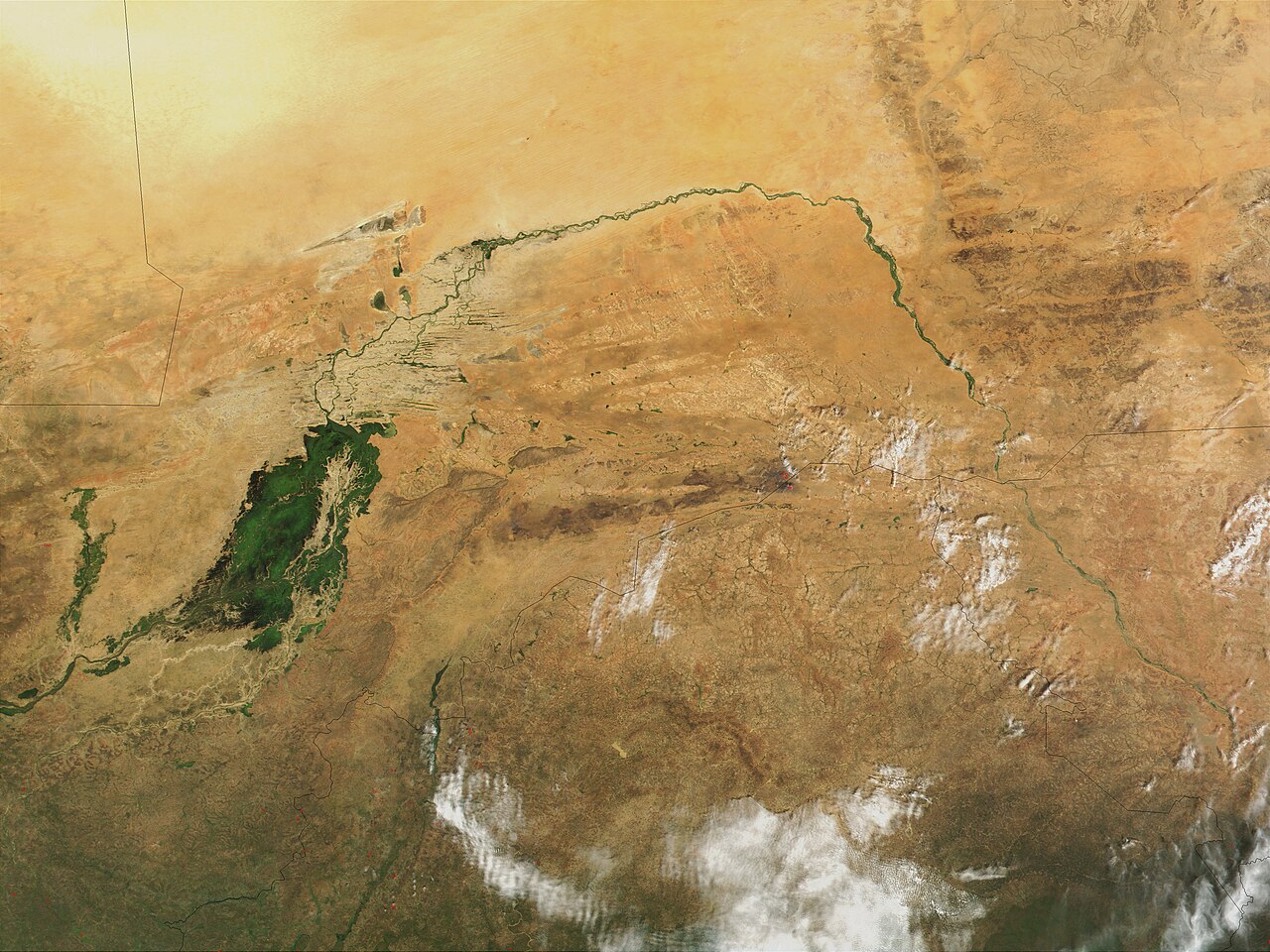
The river begins in the rainy, elevated country of Guinea, flows northeast into Mali where it forms the Inner Niger Delta — a large inland, seasonally flooded area important for fishing and agriculture — then turns southeast through or along the borders of Niger and on the frontier with Benin before traversing Nigeria and discharging into the Atlantic at the extensive Niger Delta. The coastal outlet lies in the Gulf of Guinea and the river’s terminus is an intricate network of channels and wetlands.
Hydrology and tributaries
The Niger’s seasonal cycle of rains and floods shapes livelihoods along its course. Its approximate length and continental rank are often cited in comparative lists of rivers (length comparisons). Major tributary systems carry water from different parts of the basin; the most important single tributary is the Benue River, which joins the Niger in central Nigeria. The river’s flow regime is affected by rainfall patterns, groundwater interactions and human interventions such as reservoirs and irrigation schemes.
History and cultural importance
For centuries the Niger has been central to settlement, trade and state formation in West Africa. Civilizations and empires that emerged in the Sahel and floodplain used the river for transport, fishing and seasonal farming. Riverine towns became nodes of commerce and cultural exchange between the interior and the coastal regions, shaping languages, markets and social networks.
Economy, ecology and uses
The Niger supports diverse uses: flood-recession agriculture, irrigated cultivation in some areas, inland fisheries that supply protein to local populations, and riverine transport where navigation is possible. The lower Niger and its delta are regions of intensive economic activity, including petroleum production that has contributed to national economies while also producing environmental and social challenges. Wetlands along the course are important for migratory birds and for maintaining fisheries.
Environmental issues and management
Key concerns in the Niger basin include water-use conflicts between agriculture, industry and cities; pollution from urban and industrial sources; loss of mangroves and wetlands in the delta; and alterations of flow regimes by dams and irrigation projects upstream. These pressures have prompted national and transboundary efforts aimed at integrated basin management, wetland conservation and attempts to balance development with protection of livelihoods and ecosystems.
Further reading and resources
- General overview and maps
- Regional context for West Africa
- River length and comparisons
- Guinea: source region
- Mali and the Inner Niger Delta
- Niger: basin areas
- Border sections and geography
- Benin and adjacent waterways
- Nigeria: lower basin and delta
- Atlantic outlet and coastal waters
- Delta geography and channels
- Niger Delta: ecology and issues
- Gulf of Guinea: marine context
- Coastal environments
- Comparisons with the Nile
- Comparisons with the Congo
- Tributary networks and basins
- Benue River: principal tributary
Questions and answers
Q: What is the Niger River?
A: The Niger River is the main river of western Africa.
Q: How long is the Niger River?
A: The Niger River is over 4180 km (2500 miles) long.
Q: Which countries does the Niger River go through?
A: The Niger River goes through Guinea, Mali, Niger, on the border with Benin and then through Nigeria.
Q: Where does the Niger River reach the sea?
A: The Niger River reaches the sea at a large delta, called the Niger Delta of the Oil Rivers.
Q: What is the name of the part of the Atlantic Ocean where the Niger River reaches the sea?
A: The part of the Atlantic Ocean where the Niger River reaches the sea is called the Gulf of Guinea.
Q: Which are the two rivers longer than the Niger River in Africa?
A: The two rivers longer than the Niger River in Africa are the Nile and the Congo.
Q: Which is the Niger River's main tributary?
A: The Niger River's main tributary is the Benue River.
Related articles
Author
AlegsaOnline.com Niger River Leandro Alegsa
URL: https://en.alegsaonline.com/art/70110