
Nicola Pisano — Italian sculptor and precursor of Renaissance naturalism
Nicola Pisano (c.1220/25–c.1284) was an Italian sculptor from Apulia whose mid‑13th‑century reliefs and pulpits revived classical forms and influenced later Italian sculpture.
Nicola Pisano (also Niccolò Pisano or Nicola de Apulia) was an Italian sculptor active in the mid‑13th century whose work for the cathedral complex at Pisa and elsewhere helped shift Italian sculpture toward greater naturalism. Born in Apulia around 1220–1225 and working into the 1280s, he combined techniques and motifs taken from surviving Roman monuments with contemporary Gothic elements to create lively narrative reliefs and statues.
Image gallery
10 Images


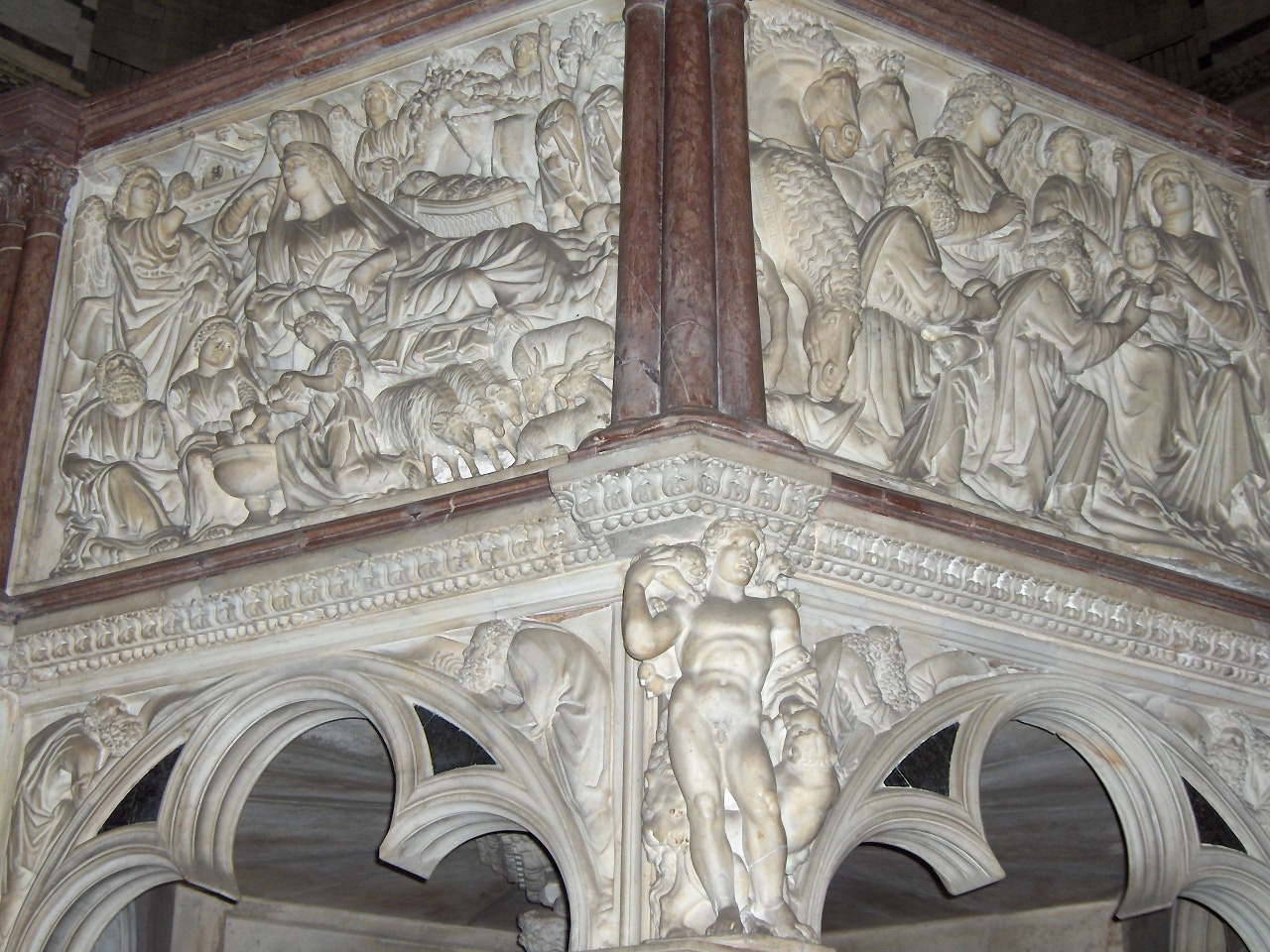


Style and influences
Pisano is best known for integrating visual models drawn from Ancient Roman sculpture into Christian narrative art. Exposure to Roman sarcophagi, capitals and carved reliefs in Pisa encouraged him to adopt fuller, more monumental figure types, robust anatomy, and drapery that falls in voluminous, almost classical folds. At the same time he worked within the medieval program of architectural sculpture: his figures are often arranged in framed compartments or supported by columns and classical motifs such as garlands and acanthus leaves recur in his decoration.
Major works and characteristics
His most celebrated commission is the pulpit created for the Pisa Baptistery in the mid‑13th century, a multi‑panelled marble structure carved with scenes from the life of Christ and other biblical episodes. Other important projects traditionally attributed to him include a pulpit for Siena Cathedral and various sculptural works connected to cathedral complexes in Tuscany. Typical features of Pisano's work include:
- Deeply modeled narrative relief panels with clear storytelling focus
- Figures rendered with weight, volume and classical proportions
- Use of architectural framing and classical ornament
- Combination of naturalism with symbolic medieval iconography
Historical context and legacy
Nicola Pisano worked at a time when European art was dominated by Gothic styles. His selective return to classical sources is often read as an early step toward Renaissance naturalism: artists after him — including his son Giovanni Pisano, who developed a more expressive Gothic idiom — carried forward and transformed these ideas. Art historians frequently point to Nicola's pulpit reliefs as key evidence that classical forms could be reinterpreted for Christian subjects.
Although details of his biography remain partly uncertain, Nicola's reputation rests on the enduring vitality of his carvings and their clear dialogue with Roman sculpture. For general overviews of his work and later influence see catalogues and studies of Italian medieval sculpture and the cathedral complexes at Pisa and Siena; many modern introductions and museum entries discuss his role among early innovators of European monumental sculpture, and images and analyses of his panels are available in art history resources listed at further readings.
Questions and answers
Q: Who was Nicola Pisano?
A: Nicola Pisano was an Italian sculptor who is known for the works he made for Pisa Cathedral.
Q: When was Nicola Pisano born?
A: Nicola Pisano was born around 1220/1225.
Q: What is Nicola Pisano best known for?
A: Nicola Pisano is best known for the works he made for Pisa Cathedral.
Q: What was the style of most artists during Nicola Pisano's time?
A: During Nicola Pisano's time, most artists worked in the Gothic style.
Q: What influenced Nicola Pisano's work?
A: The ancient Roman sculpture that he saw at Pisa influenced Nicola Pisano's work.
Q: Why is Nicola Pisano sometimes called the founder of modern sculpture?
A: Nicola Pisano is sometimes called the founder of modern sculpture because he copied the ancient Roman sculpture style into his own work at a time when most artists were working in the Gothic style.
Q: When did Nicola Pisano die?
A: Nicola Pisano died around 1284.
Related articles
Author
AlegsaOnline.com Nicola Pisano — Italian sculptor and precursor of Renaissance naturalism Leandro Alegsa
URL: https://en.alegsaonline.com/art/70001
Sources
- commons.wikimedia.org : Nicola Pisano