
Nibelungenlied: The Middle High German Epic of Heroes, Treasure and Vengeance
A balanced overview of the Nibelungenlied: its plot, themes, manuscript tradition, historical context, cultural impact and key textual variants.
The Nibelungenlied is the great heroic epic of medieval German literature, often called an epic poem composed in Middle High German. Its narrative weaves two connected cycles: the heroic exploits of the dragon-slayer Siegfried and the later, darker tale of his widow Kriemhild’s long campaign of revenge. The poem explores loyalty, honor and the destructive consequences of vengeance while conserving material drawn from older Germanic legend.
Image gallery
9 Images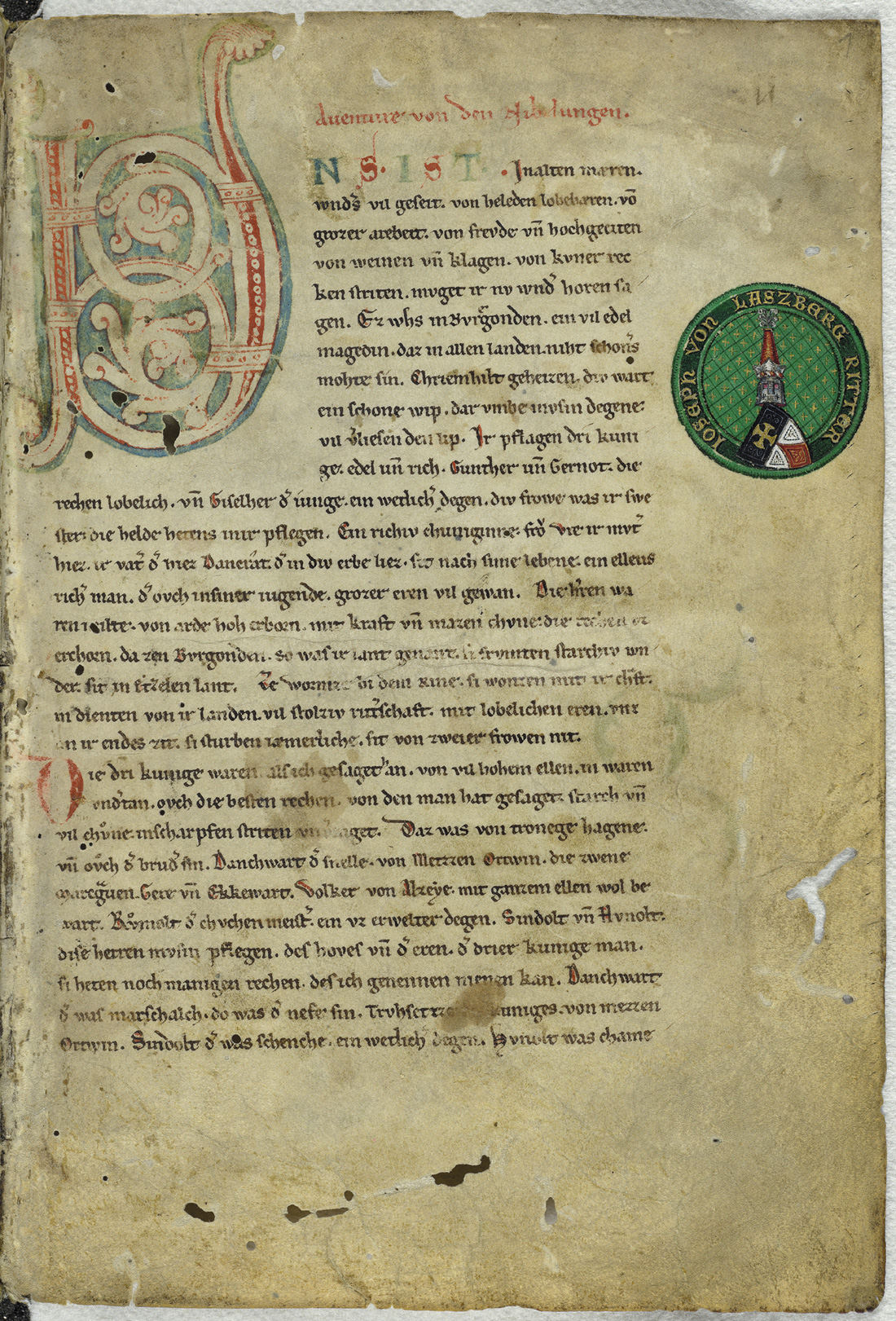


Plot and principal elements
The story begins with Siegfried’s arrival at the Burgundian court, where his extraordinary strength and a series of feats—most famously slaying a dragon and gaining access to the coveted Nibelung hoard and a magical cloak—win him fame. He becomes entangled in courtly intrigues surrounding the queens Brunhild and Kriemhild, and in a deceit that leads to his murder. The second half follows Kriemhild as she marries the powerful foreign king Etzel (historically identified with Attila) and eventually draws her former in-laws into a catastrophic confrontation that annihilates nearly every major character. The poem combines heroic action with moments of courtly ceremony and psychological intensity.
Form, themes and terminology
Composed in stanzaic verse typical of the era, the poem balances oral-derived motifs with a sophisticated literary shaping by an anonymous poet. Major themes include fate, the tension between individual honor and public law, and the corrosive logic of blood-feud. The word "Nibelung" in the poem’s background is associated with a dwarf or dwarf-like hoard-guard in the older legend, an idea reflected in later adaptations and discussions of the treasure that changes the fortunes of the protagonists (Nibelung as dwarf).
Manuscripts and textual tradition
The Nibelungenlied survives in several medieval witnesses that show it circulated widely before and after being written down. It emerges from a background of oral tradition and the increasing habit of recording vernacular narratives in the later Middle Ages. An earlier archetype is lost (original manuscript), but three principal medieval witnesses—usually called A, B and C—form the basis of modern editions. Their provenance and relationship are debated, and each preserves a slightly different text and tone.
- Manuscript A, often associated with the Hohenems-Munich tradition, now held in the Bavarian State Library in Munich.
- Manuscript B, the St. Gallen copy, preserved in the Abbey library of St. Gallen, is frequently considered closest to the earliest written form.
- Manuscript C, the Donaueschingen exemplar, kept in the Badische Landesbibliothek in Karlsruhe, offers a variant text that appears adapted for contemporary listeners or readers.
Reception, adaptations and significance
From its medieval audiences to modern scholarship the Nibelungenlied has been central to German literary history. In the nineteenth century it was rediscovered and debated by philologists and became intertwined with questions of national culture. The poem’s motifs later inspired major adaptations: for example, Richard Wagner incorporated and transformed elements of the same Germanic material in his operatic cycle Der Ring des Nibelungen, and Wagner himself is a pivotal figure in later receptions of the legend (Richard Wagner). Modern novels, films and theatrical productions continue to revisit and reinterpret the tale.
Notable textual distinctions and study
Scholars often distinguish between the so-called "Not" ending found in manuscripts A and B—which close with the formula indicating the fall of the Nibelungs—and the "Lied" ending of manuscript C, which frames the poem as a song or lay. Critics also emphasize differences of tone: some witnesses preserve more abrupt, tragic intensity while others show smoothing and editorial shaping for audience tastes. Today the Nibelungenlied remains a primary source for the study of medieval German narrative, heroic legend, and the transmission of oral tradition into written literature.
Questions and answers
Q: What is the Nibelungenlied?
A: The Nibelungenlied is an epic poem in Middle High German that tells the story of dragon-slayer Siegfried at the court of the Burgundians, and of the revenge of his wife Kriemhild.
Q: What does "Nibelung" mean?
A: Nibelung in this context means "dwarf".
Q: How was it originally passed down?
A: The Nibelungenlied was part of oral tradition, meaning it usually was not written down. During the Middle Ages people started to write down stories more and more.
Q: How many sources are there for this story?
A: There are about 35 German sources and one Dutch source for the story.
Q: What happened to the original manuscript?
A: The original manuscript has been lost.
Q: What are A, B, and C manuscripts?
A: A, B, and C manuscripts are three oldest manuscripts which have been labelled A, B, and C respectively - Hohenems-Munich manuscript (last quarter 13th century), St.Gallen manuscript (mid-thirteenth century) and Donaueschlingen manuscript (second quarter 13th century).
Q: How do these manuscripts differ from each other?
A:Manuscript B seems to be closest to the original; however, the real relation between them is unknown. Manuscripts A and B end with daz ist der Nibelunge not (that is the fall of the Nibelungs); for this reasons they are known as Not versions while Manuscript C ends with daz ist der Nibelunge liet (English : that is song/epic oftheNibeleungs)andisknownasLiedversion .In total ,C text has been edited with regard to publicof time .Itis less dramatic which probably madeitmore popular aestheticallyBtextwouldhavebeen greatest artistic achievementfor contemporarypublic .
Related articles
Author
AlegsaOnline.com Nibelungenlied: The Middle High German Epic of Heroes, Treasure and Vengeance Leandro Alegsa
URL: https://en.alegsaonline.com/art/69920