
Nerve (anatomy, function, and clinical significance)
A nerve is a bundle of axons that transmits signals between the body and the central nervous system; this article explains structure, types, roles, and clinical relevance.
Overview
A nerve is a cordlike structure made up of many specialized nerve cells working together. Each individual cell is a specialized nerve cell, commonly called a neuron. Nerves collect and transmit electrical signals — often described as messages — that allow organs, muscles and sensory receptors to communicate with the central nervous system.
Image gallery
3 Images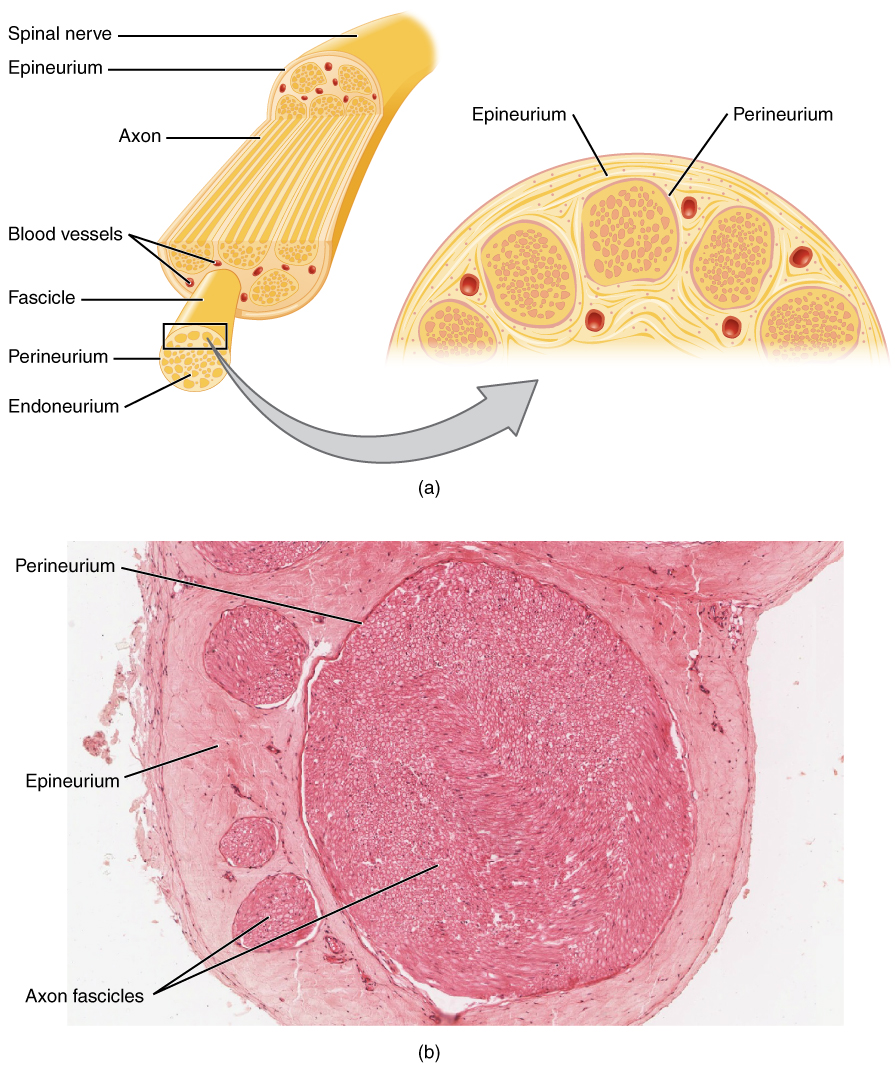


Structure and components
In the peripheral nervous system a typical nerve contains bundles of axons (the long processes of neurons) grouped into fascicles. These fascicles are wrapped by connective tissue layers: the endoneurium surrounding single axons, the perineurium around fascicles, and the epineurium around the whole nerve. Many axons are surrounded by myelin, a fatty insulating sheath formed by Schwann cells in peripheral nerves; myelin increases conduction speed. Nerves also carry small blood vessels that supply oxygen and nutrients.
Types and directions of signaling
Nerves are commonly classified by the direction and type of signals they carry. Major categories include:
- Sensory (afferent) nerves that bring information from receptors toward the central nervous system.
- Motor (efferent) nerves that carry commands from the CNS to muscles and glands.
- Mixed nerves that contain both sensory and motor fibers and are common in limbs.
- Autonomic nerves that control involuntary functions such as heart rate, digestion and blood vessel tone.
Relationship with the central and peripheral systems
The nervous system is organized into the central nervous structures and the peripheral network. The central division — the central nervous system (see the acronym) — comprises the brain and the spinal cord. Nerves that branch away from the spinal cord and reach the rest of the body form the peripheral nervous system. Together, these components constitute the overall nervous system, enabling sensation, movement, reflexes and higher functions such as thought.
Development, history, and distinctions
Historically, studies of nerves established basic principles about directionality of function (sensory versus motor) and about electrical nature of signaling. In anatomy, it is important to distinguish between a nerve — a peripheral bundle of axons — and a tract, which is a comparable bundle inside the CNS. Similarly, a single neuron is an individual cell, while a nerve is the macroscopic cable made from many axons and supportive tissues.
Clinical importance and examples
Nerve health is central to movement, sensation and autonomic control. Common clinical issues include compression injuries (such as carpal tunnel affecting the median nerve), traumatic transection, diabetic and toxic neuropathies, and inflammatory conditions. Peripheral nerves have some ability to regenerate when damaged; this capacity is limited in central pathways. Physicians evaluate nerves with physical examination (reflexes, strength, sensation) and specialized tests such as nerve conduction studies and electromyography. Notable named nerves include the sciatic nerve in the leg and the median and ulnar nerves in the arm, each with distinct functional territories and clinical consequences when injured.
Questions and answers
Q: What is a nerve?
A: A nerve is a group of specialized neurons that are grouped together in parallel.
Q: What is another term for a nerve cell?
A: Another term for a nerve cell is a neuron.
Q: What is the function of nerves in the human body?
A: The special neurons grouped together in nerves take information (messages) to and from the human body to the central nervous system.
Q: What is the CNS?
A: The CNS is an acronym for the central nervous system, which includes the brain and spinal cord.
Q: What is the spinal cord?
A: The spinal cord is a large cord that extends from the brain into the back, and carries all the information that goes from the brain to the nerves in the body.
Q: What is the PNS?
A: The PNS is an acronym for the peripheral nervous system, which includes all the nerves in the body that make up everything except the brain and spinal cord.
Q: What is the nervous system?
A: The nervous system is made up of the CNS and PNS, which work together to transmit information throughout the body.
Related articles
Author
AlegsaOnline.com Nerve (anatomy, function, and clinical significance) Leandro Alegsa
URL: https://en.alegsaonline.com/art/69220