
Neptunium: properties, history, and uses of element 93
Neptunium is a silvery, radioactive actinide with atomic number 93. Discovered in 1940, it is the first transuranic element and appears as a by-product in nuclear reactors and research applications.
Neptunium is a chemical element of the actinide series with the symbol Np and atomic number 93. It is the first transuranic element — that is, the first element discovered after uranium — and is radioactive. The element appears as a silvery metal under clean surfaces, but its outer layers oxidize in air. For a concise reference, see element information and its position on the periodic table.
Image gallery
10 Images


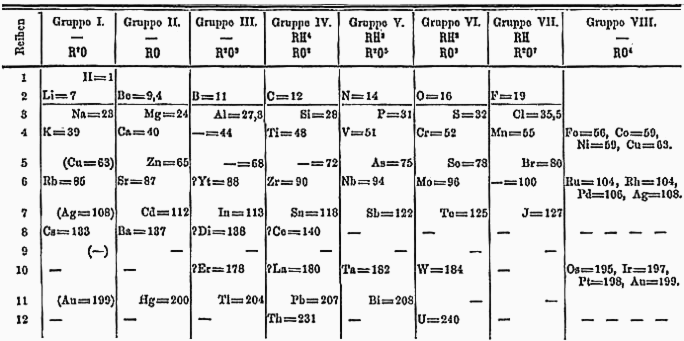
Basic characteristics
Neptunium atoms contain 93 protons and, in a neutral atom, 93 electrons; these facts are summarized at proton count and electron configuration. Its most commonly cited atomic mass refers to the isotope Np-237. Physically, neptunium has a metallic appearance and shows several allotropes and oxidation states that influence its chemical behavior. For a simple description of atomic structure see atomic notes.
History and name
Neptunium was first produced and identified in 1940 by Edwin McMillan and Philip H. Abelson at the University of California, Berkeley. The name derives from the planet Neptune in keeping with the naming pattern that linked early actinides to planets; for example, uranium was named after Uranus, and neptunium after Neptune. Historical context and original reports can be found via archival sources.
Chemistry, isotopes and uses
Chemically, neptunium behaves like other actinides and can adopt multiple oxidation states (commonly +3 to +6), forming oxides, halides and complex ions. Several isotopes exist; some are short-lived while others, such as Np-237, are long-lived enough to be significant in nuclear fuel cycles. Neptunium is produced in small amounts in reactors as a by-product of uranium fission and neutron capture. It has been used in research, as a precursor in producing certain isotopes of plutonium, and studied for its role in nuclear waste management.
Safety and environmental notes
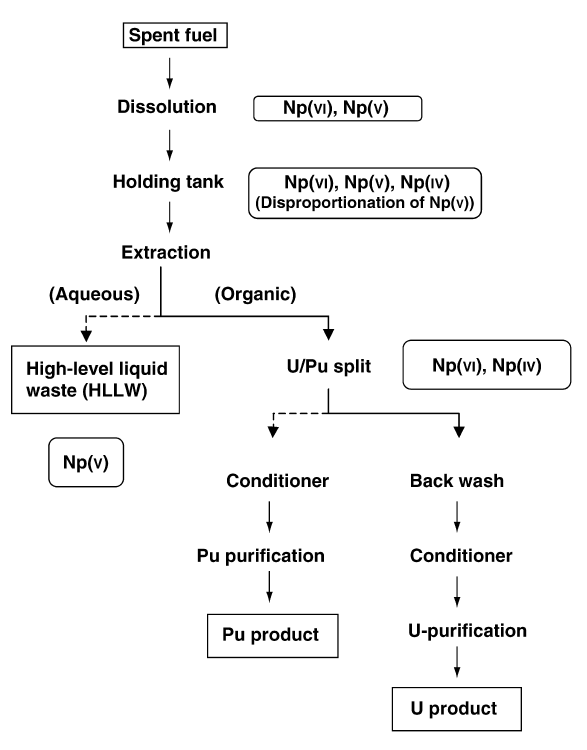
Neptunium is radioactive and chemically toxic. Handling requires specialized facilities, remote tools and regulatory controls. Its long-lived isotopes are considered in strategies for storage and disposal of spent nuclear fuel and radioactive waste. Environmental mobility depends on chemical form and oxidation state.
Key facts (summary)
- Symbol: Np; atomic number: 93; element class: actinide.
- Appearance: silvery metal that tarnishes in air; multiple oxidation states.
- Discovery: 1940 at Berkeley by McMillan and Abelson; named after Neptune (planet reference).
- Primary contexts: nuclear research, reactor by-product, studies of radioactive waste.
For further reading and technical details consult specialized references and databases via electron data and periodic table resources.
Questions and answers
Q: What is neptunium?
A: Neptunium is a chemical element with the symbol Np on the periodic table.
Q: What is the atomic number of neptunium?
A: The atomic number of neptunium is 93, which means it has 93 protons and electrons in its atoms.
Q: How did neptunium get its name?
A: Neptunium is named after the planet Neptune, in the same way that Uranium is named after the planet Uranus.
Q: Who discovered neptunium?
A: Neptunium was discovered in 1940 by Edwin McMillan and Phillip H. Abelson at the Berkeley Radiation Center of the University of California.
Q: What are the physical properties of neptunium?
A: Neptunium is a silvery-metallic element and is radioactive. Its melting point is 637 degrees Celsius and its boiling point is 4000 degrees Celsius.
Q: What is the atomic mass of neptunium?
A: The atomic mass of neptunium is 237.
Q: Where is neptunium located on the periodic table?
A: Neptunium is located in the actinide series of the periodic table.
Related articles
Author
AlegsaOnline.com Neptunium: properties, history, and uses of element 93 Leandro Alegsa
URL: https://en.alegsaonline.com/art/69198