
Neotominae — New World rats and mice (subfamily of Cricetidae)
Neotominae is a subfamily of New World cricetid rodents including deer mice, packrats, and grasshopper mice, found mainly in North America and important in ecology, research, and paleoenvironmental studies.
Overview
Neotominae is a group of New World rodents commonly called New World rats and mice. Members of this subfamily occupy a wide range of habitats across North America and adjacent regions, from forests and grasslands to deserts and rocky outcrops. Well-known representatives include deer mice, white-footed mice, packrats and grasshopper mice.
Image gallery
1 Image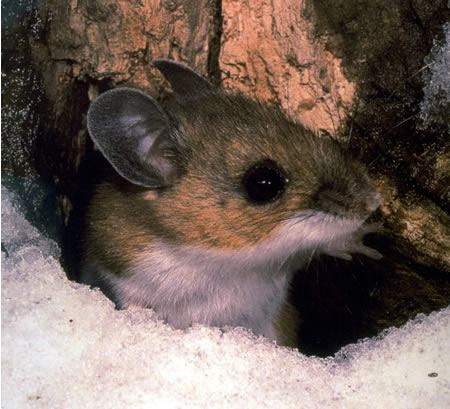
Taxonomy and classification
Neotominae belongs to the family Cricetidae. The subfamily is conventionally divided into three tribes and about 16 genera and many species; estimates vary among authorities (genera, species). These rodents are one of the principal New World muroid groups often contrasted with other American subfamilies such as Sigmodontinae and Tylomyinae. Some taxonomists treat these groups together under a broader Sigmodontinae, reflecting ongoing debate over relationships.
Physical traits and ecology
Neotomines range from small to medium size and typically have large eyes and ears, well-adapted hind feet and tails of variable length. Diets vary by genus: many are omnivorous seed- and insect-eaters, while grasshopper mice are noteworthy for a more carnivorous habit and predation on arthropods. These rodents occupy diverse niches: arboreal, terrestrial and burrowing lifestyles are all represented. Their broad ecological roles include seed dispersal, soil turnover and serving as prey for larger predators.
Representative genera and examples
- Deer mice (genus Peromyscus): widespread small omnivores frequently used in ecological studies.
- White-footed mice (a Peromyscus species group) common in woodlands and suburban areas.
- Packrats (genus Neotoma): builders of characteristic middens that preserve plant material for centuries.
- Grasshopper mice (genus Onychomys): specialized predators of insects and other small animals.
History, research and human importance
Neotomines have a long presence in North America as indicated by fossil and biogeographic evidence; they radiated into a variety of habitats over millions of years. Several species are important in scientific research: Peromyscus species are widely used in studies of behavior, genetics and ecology because of their tractability in the lab and natural variation. Packrat middens provide valuable paleoecological records used by scientists to reconstruct past vegetation and climate.
Notable facts and conservation
Some members of this group can be synanthropic or considered pests where they enter buildings or damage crops, while others are of conservation concern when restricted to specialized habitats. Certain species can act as reservoirs for pathogens affecting humans and wildlife, so they are studied for disease ecology. Geographic focus and higher-level relationships with other New World rodents remain active areas of taxonomic and evolutionary research (New World rats and mice, North America, comparative subfamilies).
Questions and answers
Q: What is Neotominae?
A: Neotominae is a subfamily of the family Cricetidae.
Q: How many tribes are there in Neotominae and how many genera and species of rats and mice does it consist of?
A: Neotominae consists of three tribes, 16 genera, and many species of New World rats and mice.
Q: Where are most Neotomines found?
A: Most Neotomines are found in North America.
Q: What are some well-known Neotomines?
A: Some well-known Neotomines are deer mice, white-footed mice, packrats, and grasshopper mice.
Q: What are the other two subfamilies of mice in the New World related to Neotominae?
A: The other two subfamilies of mice in the New World related to Neotominae are Sigmodontinae and Tylomyinae.
Q: What do many authorities do with the three subfamilies of mice in the New World?
A: Many authorities place them all in a single subfamily, Sigmodontinae.
Q: Is Neotominae found outside North America?
A: No, Neotominae is not found outside North America.
Related articles
Author
AlegsaOnline.com Neotominae — New World rats and mice (subfamily of Cricetidae) Leandro Alegsa
URL: https://en.alegsaonline.com/art/69169