
Negroid — historical racial classification and its modern reassessment
An overview of the term 'Negroid': its historical use as a racial category, typical physical traits once ascribed to it, why modern science rejects it, and recommended contemporary terminology.
The word "Negroid" was historically used in anthropology and popular language to label people thought to share a set of physical traits associated with populations from parts of Africa. It appears in older texts as the name of one of several racial groupings, often contrasted with categories such as "Mongoloid" and "Caucasoid." Today the term is widely regarded as outdated, imprecise, and offensive; scholars and public-health professionals now prefer descriptive and culturally sensitive phrases such as "people of African descent" or "Black" depending on context.
Image gallery
4 Images

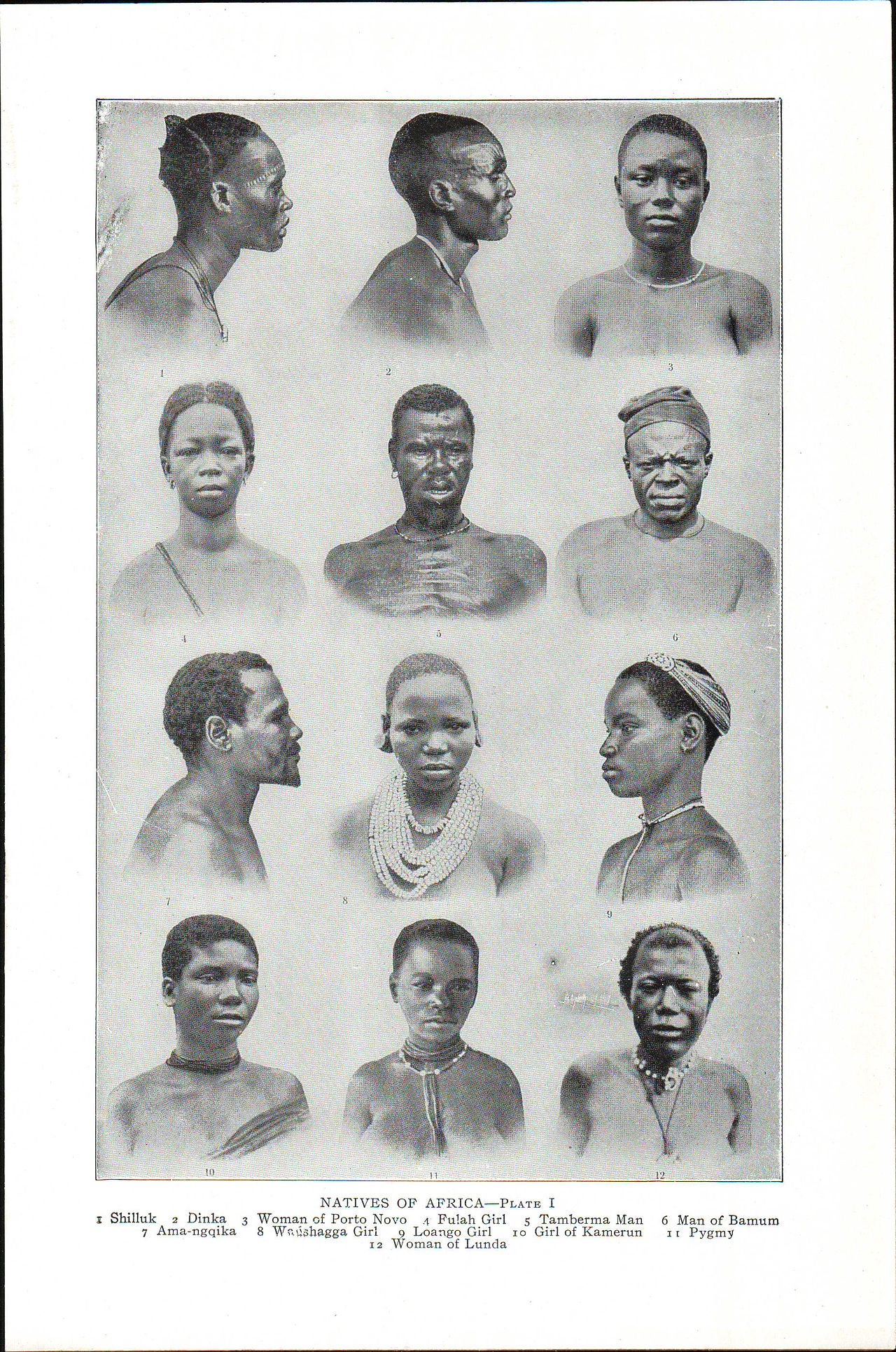

History and usage
From the 18th century through the early 20th century many European and American writers used typological schemes that divided humanity into a few large ‘‘races.’’ Those classifications relied on visible physical traits and geographic assumptions rather than genetic evidence. Within those schemes, populations from much of sub‑Saharan Africa were commonly grouped under the label "Negroid." The geographic reference is often linked to regions such as Sub‑Saharan Africa, but the label also circulated in colonial, medical and popular literature across the world.
Traits once ascribed
Writers who used the term typically listed a small set of external features as characteristic. Commonly mentioned traits included:
- darker skin pigmentation;
- tightly curled or coiled hair texture;
- a broader nasal aperture and specific facial proportions.
These observations reflected superficial patterns in appearance, but they were presented as categorical and immutable in older typologies.
Scientific reassessment
Since the mid‑20th century advances in genetics, population biology, and anthropology have undermined the biological basis for dividing humans into a few discrete races. Modern research shows that human genetic variation is continuous and clinal rather than partitioned into clear groups; most genetic differences occur within so‑called populations, not between them. Large-scale genetic studies and syntheses have therefore rejected the simple threefold racial model as an inaccurate representation of human diversity; see contemporary surveys of genetic research for accessible summaries (genetic studies).
Social impact and contemporary guidance
Terms like "Negroid" are now discouraged because they carry a legacy of scientific racism and were frequently used in hierarchies that justified discrimination. In modern writing, social services, medicine and research, practitioners are advised to use precise, respectful language: for example, "people of African ancestry," "Black communities," or specific national and ethnic identifiers when known (such as Nigerian, Somali, or Afro‑Caribbean). Authorities discussing historical literature may quote older terms for context but should explain their problematic nature and prefer current terminology in ongoing discourse.
For an account of the older racial categories and how they changed over time see historical overviews of racial classification (racial classification history). For accessible summaries of the genetic evidence that supports a single human species and continuous variation see resources on modern human genetics (genetic studies).
Questions and answers
Q: What is the meaning of the word "Negroid"?
A: Negroid is a term used to describe a person from Sub-Saharan Africa.
Q: What was the group of people from Sub-Saharan Africa called?
A: The group of people from Sub-Saharan Africa was called the "Negroid race".
Q: How did people in the past divide human beings?
A: In the past, people divided human beings into three races – Negroid, Mongoloid, and Caucasoid.
Q: What do scientists agree on regarding human race?
A: Scientists agree that there is only one human race.
Q: Why was the idea of three races considered wrong by modern genetic research?
A: Modern genetic research has shown that the idea of three races was wrong because there is actually only one human race.
Q: What were some typical physical features attributed to the Negroid race?
A: Some physical features typically attributed to the Negroid race were a wider nose, curly hair, and dark skin.
Q: Is the term "Negroid" still widely used today?
A: No, the term "Negroid" is no longer widely used today as it is considered an outdated and offensive term.
Related articles
Author
AlegsaOnline.com Negroid — historical racial classification and its modern reassessment Leandro Alegsa
URL: https://en.alegsaonline.com/art/69032
Sources
- books.google.com : Human Variation: Races, Types, and Ethnic Groups
- books.google.com : Crime Scene Investigation
- books.google.com : The Use of Forensic Anthropology
- biorxiv.org : "Modern human origins: multiregional evolution of autosomes and East Asia origin of Y and mtDNA"
- doi.org : 10.1101/101410 · archive.org
- google.com : The Peoples of Southern Africa: Studies in Diversity and Disease
- google.com : Anthropological glossary