
Neanderthal (Homo neanderthalensis): overview, anatomy, behaviour and legacy
Neanderthals were a close human relative that lived across Europe and parts of western Asia until about 40,000 years ago. This article summarizes their anatomy, culture, discovery, range and importance to modern humans.
Overview
The Neanderthal is an extinct member of the genus Homo that lived in Europe and parts of western Asia during the Pleistocene. Referred to scientifically as Homo neanderthalensis (and historically sometimes as Homo sapiens neanderthalensis), Neanderthals were close relatives of modern humans, sharing a last common ancestor with us several hundred thousand years ago. Modern genetic studies have shown limited interbreeding between Neanderthals and early modern humans, leaving small amounts of Neanderthal ancestry in many people outside Africa (see genetic evidence).
Image gallery
10 Images


Anatomy and adaptations
Neanderthals are recognizable from their fossilized bones by a set of characteristic anatomical traits adapted to a cold, physically demanding environment. Their skeletons and skulls differ in consistent ways from those of most modern humans.
- Skull and face: large brow ridges, a long and low skull vault, and a projecting midface.
- Body build: shorter, stockier torso and limbs compared with many modern humans—an efficient form for conserving heat.
- Skeleton: robust bones with strong muscle attachments, indicating considerable strength and heavy physical activity.
- Teeth and diet: tooth wear patterns and stable isotope studies indicate a mixed diet of meat and plant resources, with regional variation.
Behavior, technology and culture
Neanderthals made and used a distinctive set of stone tools often associated with the Mousterian tradition; these tools were efficient for cutting, scraping and hunting. Archaeological evidence also points to complex behaviours: they controlled fire, built shelters, hunted large game, used medicinal plants, and sometimes placed objects in ways that suggest symbolic practice. Skeletal remains frequently show healed injuries and long-term care of injured or elderly individuals, implying social support networks.
Discovery, classification and research history
The first recognized Neanderthal fossils were recovered from the Neander Valley near Düsseldorf in the 19th century; early investigators such as Johann Carl Fuhlrott and Hermann Schaaffhausen argued these bones represented an ancient human type. Subsequent finds across Europe, the Levant and parts of western Asia widened the picture. Ongoing debates about whether Neanderthals should be classified as a separate species or a subspecies of modern humans have largely settled toward separate species status, though discussion continues as new genetic and fossil data appear. For introductory references see general summaries and regional site reports (fossil sites, excavation records).
Geographic range and extinction
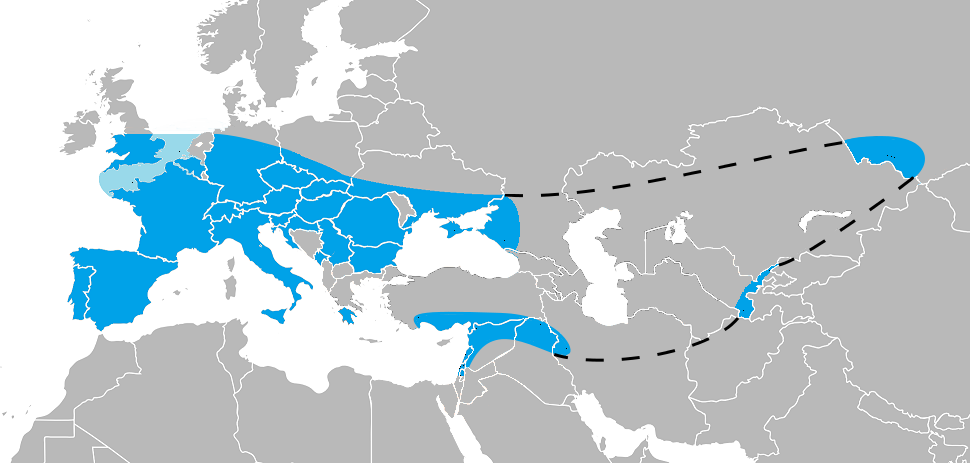
Neanderthal remains and archaeological sites are concentrated across most of Europe, parts of western Asia, the Levant and into western Central Asia, including locations such as the Zagros Mountains. Their last populations disappeared from the fossil record roughly around 40,000 years ago, though dating remains subject to refinement. Causes of extinction were likely complex and may have included changing climates, competition with incoming modern humans, demographic pressures and disease. Key finds and chronologies continue to be refined by improved dating techniques (dating methods, stratigraphic studies).
Significance and modern connections
Neanderthals are central to understanding human evolution. Sequencing of Neanderthal DNA in recent decades transformed the field, revealing episodes of interbreeding with modern humans and giving insight into genome regions that affect immunity, skin, hair and metabolism today. Current research integrates fossils, archaeology and genomics to explore Neanderthal lifeways, cognition and interactions with Homo sapiens (genomic analyses, archaeological syntheses). Ongoing discoveries from sites, new analytical techniques and interdisciplinary studies keep refining our view of these relatives (site reports, laboratory studies, recent reviews).
Questions and answers
Q: What is the scientific name of the Neanderthal?
A: The scientific name of the Neanderthal is Homo neanderthalensis or Homo sapiens neanderthalensis.
Q: Where were Neanderthal fossils found?
A: Neanderthal fossils were only found in Europe, Asia Minor and up to central Asia.
Q: Who discovered the first fossil?
A: The first fossil was discovered by one of the workers in a limestone quarry near Düsseldorf.
Q: When did experts believe that Neanderthals became extinct?
A: Experts believed that Neanderthals became extinct about 40,000 years ago. However, recent research suggests this date may be earlier.
Q: From which species did Neanderthals evolve from?
A: It is believed that Neanderthals evolved from Homo heidelbergensis.
Q: When did modern humans split off from their last common ancestor with Neanderthals?
A: Modern humans split off from their last common ancestor with Neanderthals between 700,000 and 300,000 years ago.
Q: Where have remains of Neanderthals been found outside of Europe?
A: Remains of Neandethal have been found in Zagros Mountains and in the Levant outside of Europe.
Related articles
Author
AlegsaOnline.com Neanderthal (Homo neanderthalensis): overview, anatomy, behaviour and legacy Leandro Alegsa
URL: https://en.alegsaonline.com/art/68923
Sources
- anthro.palomar.edu : Neandertals